The short answer
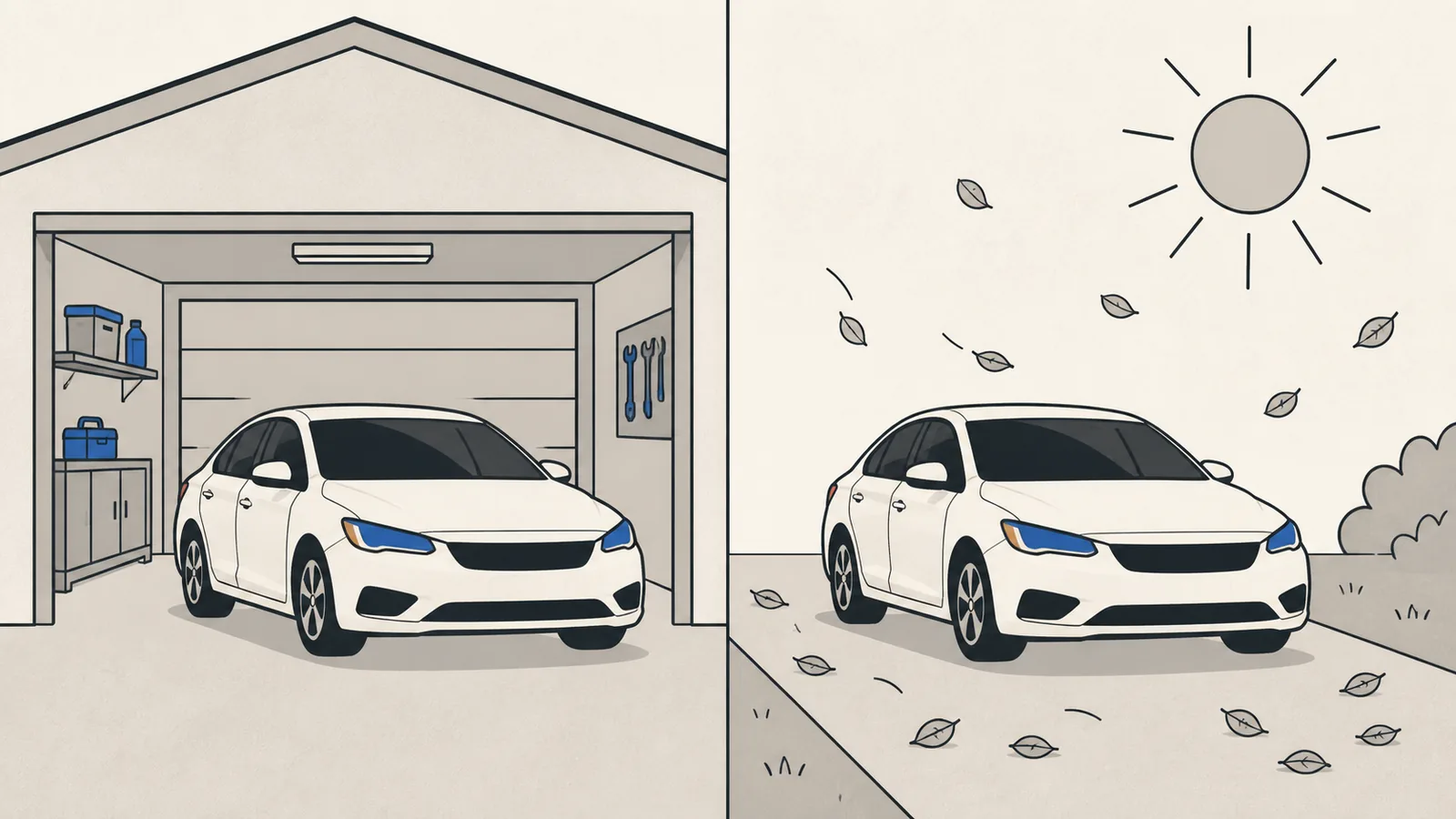
A garage removes UV, tree sap, bird droppings, sprinkler overspray, and most temperature cycling. That roughly doubles how long protection lasts and halves how often the car needs attention.
A driveway-parked car in North Texas needs washing every two weeks, protection three times a year, and interior UV protectant before summer. A garaged car can stretch to monthly washes and twice-yearly protection.
What the garage actually prevents
| Exposure | Effect on a driveway car | In a garage |
|---|---|---|
| UV and heat | Fades paint, cooks wax off, cracks dash and leather | Almost eliminated |
| Bird droppings and sap | Etching within a day in summer | Eliminated |
| Sprinkler overspray | Bonded hard-water spots | Eliminated |
| Pollen | Weekly film, mildly acidic | Greatly reduced |
| Hail | Real risk in spring | Eliminated |
| Temperature cycling | Stresses trim, seals, and interior surfaces | Reduced |
Outdoor exposure, item by item
Schedules for each
- Driveway: wash every two weeks, sealant every four months, interior UV protectant before June, full detail annually.
- Garage: wash every three to four weeks, sealant twice a year, full detail annually, and less urgency about everything.
- Mixed, garaged at night and parked outside at work: treat it as a driveway car. The daytime exposure is the one that matters most.
Buy the schedule your parking actually needs
Cars that live outside benefit most from a rhythm rather than occasional rescues, which is what a recurring schedule is for, from $99 a visit. Garaged cars often do better with two big details a year from $225.
If you have no garage
Covered parking is the next best thing and it is worth paying for at an apartment complex. A carport removes most UV, all bird droppings, and all hail risk, which are four of the six things on the list above.
If nothing is available, protection becomes the substitute: keep a sealant fresh, use a windshield sunshade every day, and deal with deposits immediately. That combination gets a driveway car most of the way to a garaged one's condition.
Making an outdoor spot less hostile
If a garage is not available, the exposure can still be reduced substantially, and most of it costs nothing.
- Park facing away from the afternoon sun so the dash and front seats take less direct UV.
- Use a windshield sunshade every single time, which is the highest-return habit for any car parked outside in Texas.
- Avoid parking under trees that drop sap, and avoid anything within reach of a lawn sprinkler.
- Choose the far end of a lot with a shade structure over the close spot in full sun.
- Keep a sealant fresh, since protection is doing the job a garage roof would otherwise do.
The car cover question
A cover helps only if it is clean, soft-lined, and fitted, and only if the car underneath is clean when it goes on. A cover thrown over a dusty car turns into a large abrasive pad that moves in the wind, and that produces exactly the fine marring people buy covers to prevent.
In practice a cover suits a car that sits for weeks at a time. For a daily driver taken in and out, the handling risk outweighs the protection.
This is an educational guide written to help DFW drivers budget and decide with confidence. It is not a binding quote. Your price is confirmed up front before any work begins, with no deposit.