The short answer
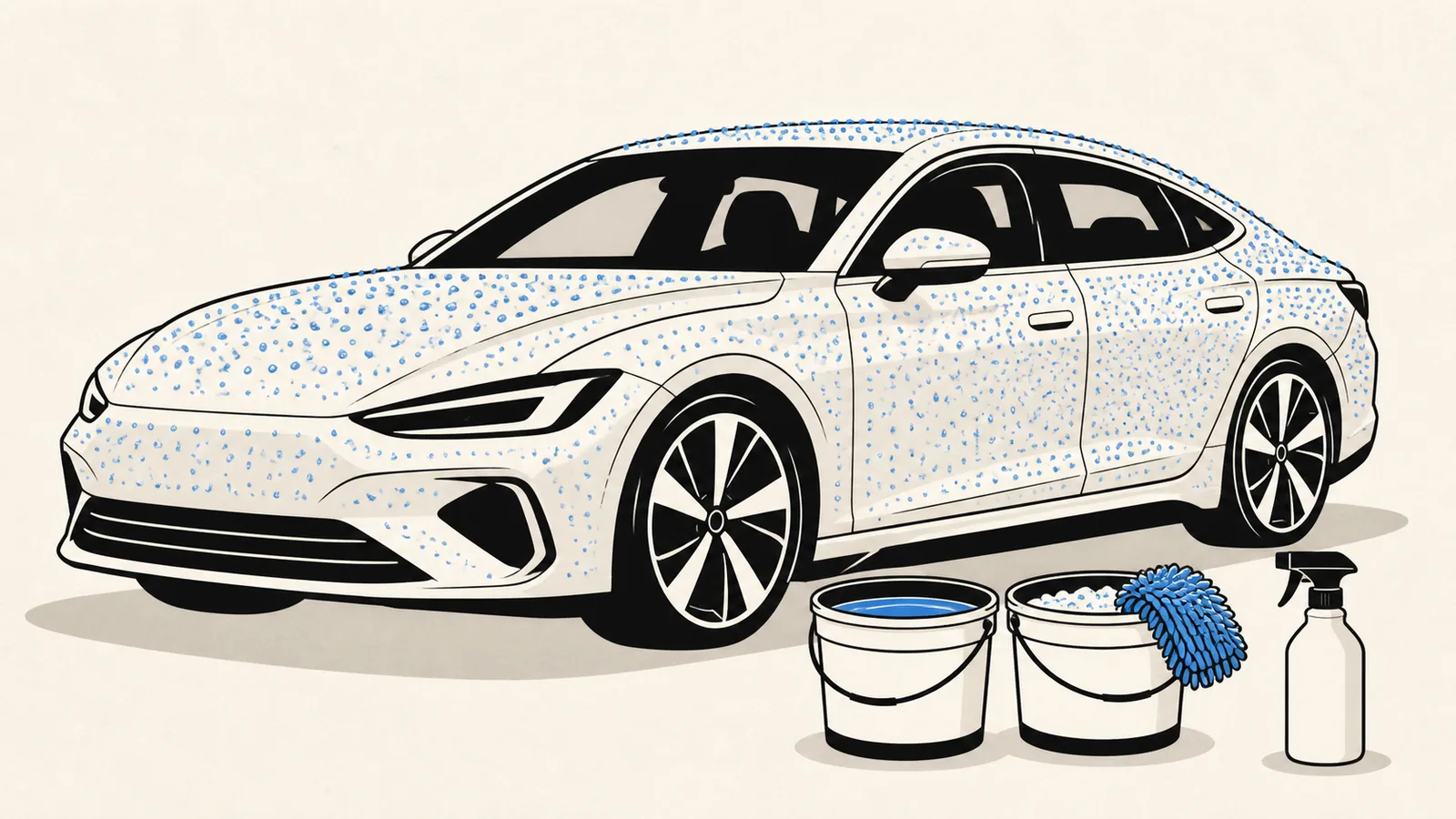
Wash every two weeks with a pH-neutral shampoo, two buckets, and clean media. Never use an automatic wash with brushes. Dry with forced air or a plush towel, never let hard water evaporate on the surface, and top up with a coating-safe booster a few times a year.
That is the entire routine, and it is what separates a coating that performs for three years from one that is functionally dead in twelve months.
The routine
- 1Rinse thoroughly before any contact, to carry off the grit.
- 2Wash top down with a pH-neutral shampoo and two buckets with grit guards.
- 3Use separate media for wheels and lower panels.
- 4Rinse and dry immediately, ideally with forced air, so hard water never dries in place.
- 5Every few months, apply a coating-safe maintenance booster to restore surface behavior.
- 6Once a year, have the paint decontaminated with an iron remover rather than clayed aggressively.
What to keep away from it
| Avoid | Why |
|---|---|
| Automatic washes with brushes | Abrades the coating exactly like it abrades clear coat |
| Dish soap and degreasers | Strip the hydrophobic behavior early |
| Acidic wheel cleaners on bodywork | Attack the coating chemistry |
| Aggressive clay on coated paint | Physically removes the coating layer |
| Letting hard water dry on the surface | Mineral deposits bond on top and dull it |
The coating killers
Maintenance washing without the DIY
We wash coated cars with pH-neutral shampoo, filtered water, and forced-air drying, which is the routine a coating needs. Maintenance exteriors from $99, and you can put them on a repeating schedule so the routine holds itself.
Annual reality check
Once a year, look at the water behavior and feel the surface after washing. If water still forms tight beads and the paint feels slick, the coating is doing its job. If water lies flat and the surface drags, it has degraded regardless of how many years the warranty claims.
At that point the honest options are a professional inspection and reapplication, or dropping back to a sealant routine. What does not work is spraying more product over a dead coating and hoping.
The seasonal jobs a coated car still needs
A coating removes work rather than eliminating it, and three jobs still belong on the calendar in North Texas.
| When | Job | Why |
|---|---|---|
| Every 2 weeks | pH-neutral hand wash | Contaminants sit on the coating and dull it if left |
| Every few months | Coating-safe booster | Restores surface behavior between full services |
| Twice a year | Iron decontamination | Fallout bonds on top of the coating, not into it |
| Annually | Honest assessment | Decide whether it is performing or has expired |
Coated-car maintenance calendar
Wheels, glass, and trim on a coated car
Coating maintenance advice usually stops at the paint, and the rest of the car gets treated the way it always was, which is where damage happens.
- Keep acidic wheel cleaners off coated bodywork, including the overspray that drifts onto lower panels.
- Do not clay coated paint routinely; use an iron remover first and reserve clay for what chemistry cannot lift.
- Coated glass wears in the wiper sweep path first, so expect that area to need renewing before the rest.
- Trim dressings that contain solvents can attack coating edges where trim meets paint.
- Use pH-neutral products for everything that touches the car, not just the shampoo.
This is an educational guide written to help DFW drivers budget and decide with confidence. It is not a binding quote. Your price is confirmed up front before any work begins, with no deposit.