The short answer
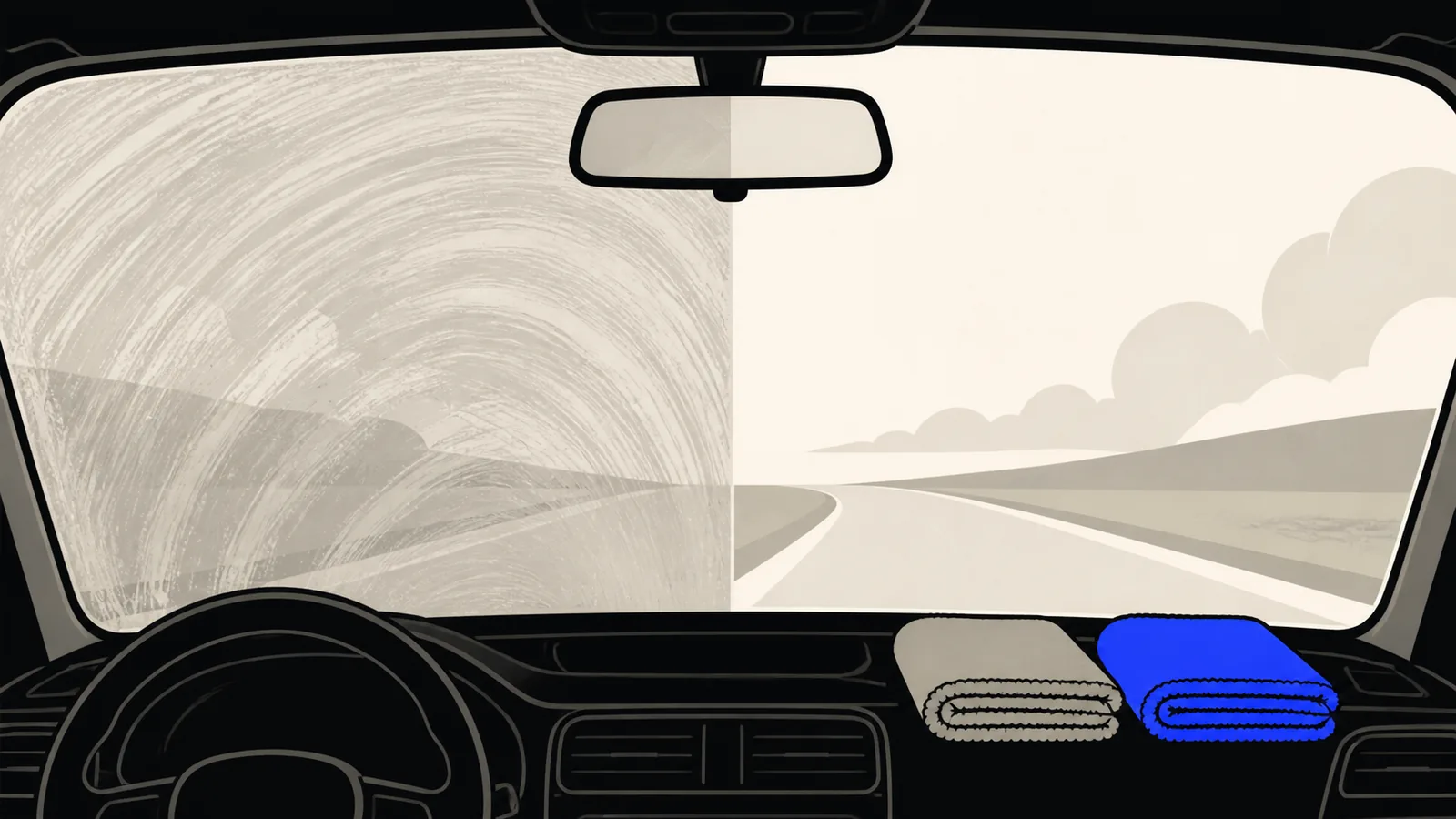
Streaks are almost always film being moved around rather than removed. The inside of a windshield collects a haze of plasticizer off-gassed from a hot dashboard, plus smoke, cooking oils, and whatever your last cleaner left behind. Wiping that with a spray and one towel smears it into a different pattern.
The fix is two towels and two passes. First pass with cleaner on a folded microfiber to break the film, second pass with a completely dry waffle-weave towel to buff. Work in the shade, never in direct sun, and do the inside last so you can see what you missed against the clean outside.
What the haze on the inside actually is
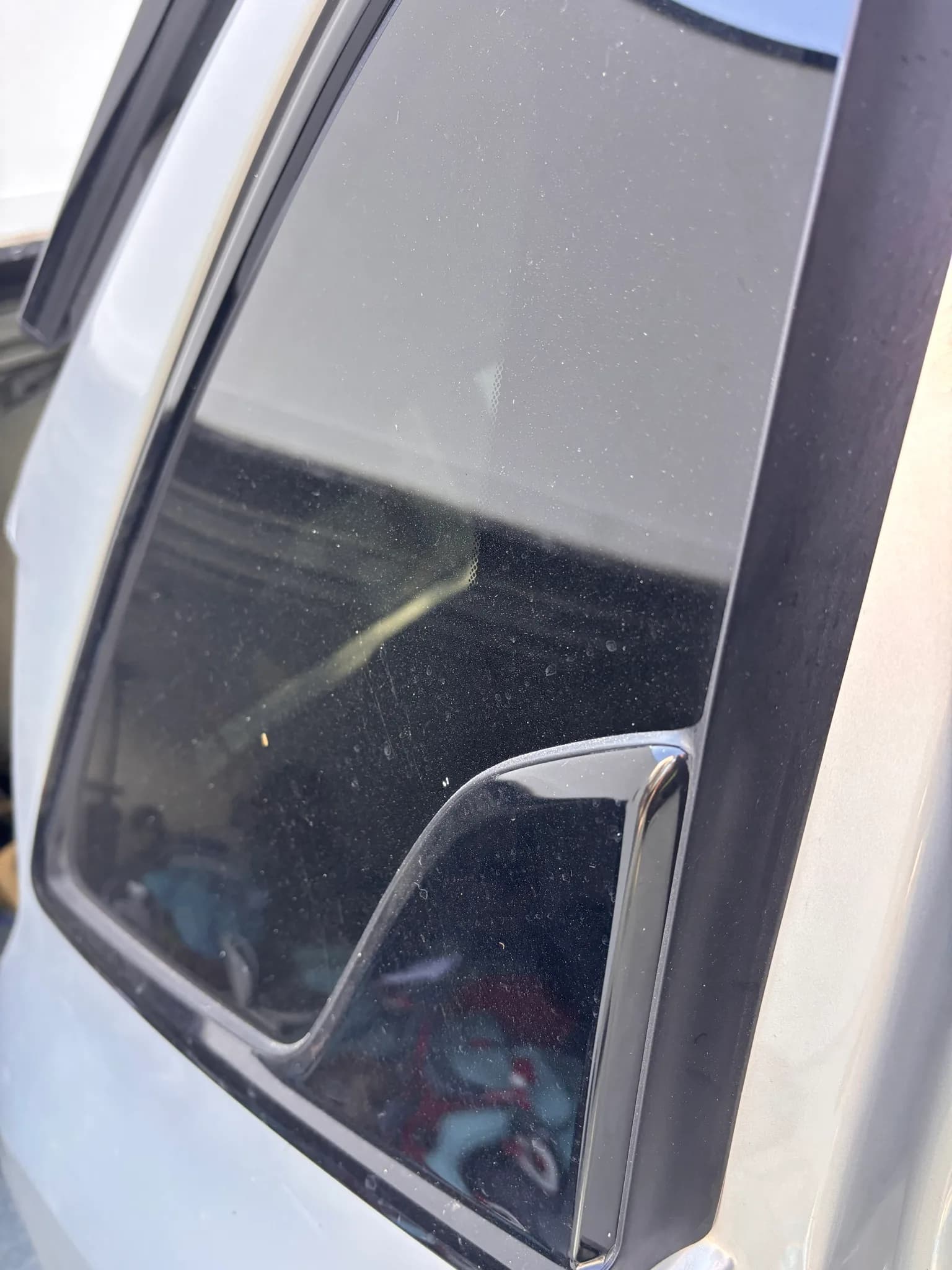
In a DFW summer a parked car's dash surface can far exceed the outside air temperature, and heat drives plasticizers out of the vinyl and plastic in the cabin. Those vapors condense on the coolest large surface in the car, which is the inside of the windshield. That is the film that appears as glare the moment you drive toward a low sun.
The same layer collects anything else in the air. Smoke is the worst offender, and it is the reason a smoker's car needs the glass cleaned twice before it comes clean. Air freshener aerosols, fast food steam, and dashboard dressings applied too heavily all contribute.
This is also the honest argument against greasy dash dressings. A product that leaves a wet shine on the dash is a product that will end up on your windshield.
The two-towel method
This is the whole technique. It takes about ten minutes for a full car and it works with almost any decent cleaner.
- 1Park in the shade with cool glass. Cleaner evaporating on hot glass is the single most common cause of streaks.
- 2Use two towels: a plush or waffle-weave microfiber for cleaning, and a separate bone-dry one for buffing. Neither should ever have seen fabric softener.
- 3Spray the towel, not the glass, so the cleaner does not run onto the dash, door cards, or trim.
- 4Clean in one direction on the outside and the opposite direction on the inside. When a streak shows up you will know instantly which side it is on.
- 5Buff immediately with the dry towel while the glass is still damp.
- 6Roll each window down two inches and clean the top edge. That strip is the line of grime that shows up whenever the window is closed.
- 7Check your work from the driver's seat at an angle, not standing outside square to the glass.
When it is not film, it is damage or water spots
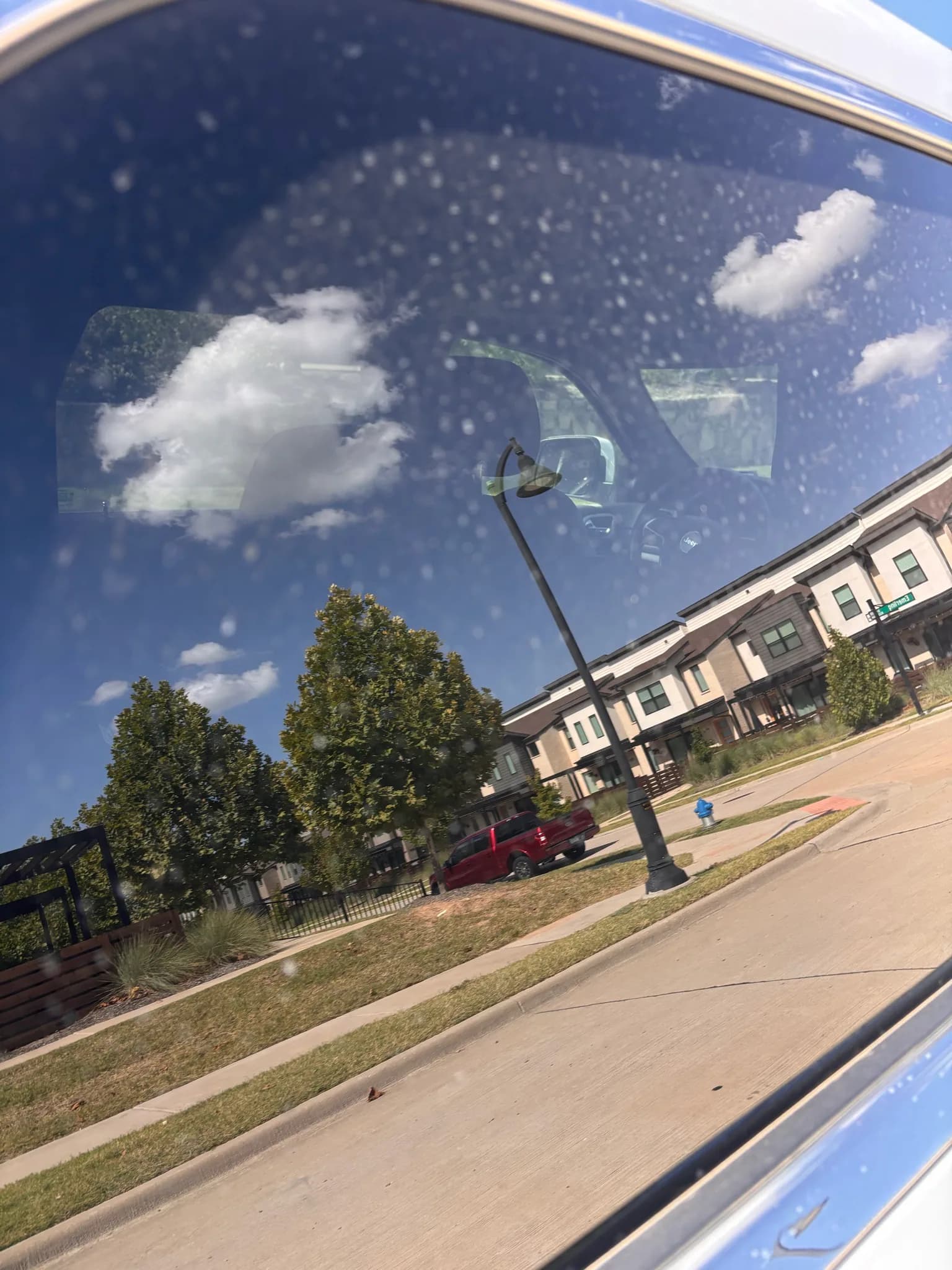
If a haze survives a proper two-towel clean, it is not on the surface any more. DFW water is hard, and mineral deposits from sprinklers and drying rain bond to glass much more aggressively than they do to paint. Those need a dedicated glass polish or a clay pass, not more cleaner.
| What you see | What it is | What fixes it |
|---|---|---|
| Streaks that move when you wipe | Film, being smeared | Two-towel method, cool glass |
| Cloudy spots that survive cleaning | Bonded mineral deposits | Glass polish or clay decontamination |
| Fine arcs across the windshield | Wiper scratches from grit or worn blades | Replace the blades; deep scratches are permanent |
| Wipers judder and smear when wet | Contaminated glass or hardened blades | Decontaminate the glass, then replace the blades |
Telling the four common glass problems apart
Deal with the spots a cleaner cannot touch
Glass decontamination is part of every full detail, and a hydrophobic glass coating that makes rain bead and roll off above about 40 mph runs $89. It is the single most useful upgrade for driving in Texas rain.
Why sealed glass is a safety upgrade, not a luxury
A hydrophobic coating on the windshield changes how the car drives in weather. Above roughly 40 mph the airflow pushes water off the glass on its own, so you use the wipers less and see more during the sudden hard rain that is normal here from spring through fall.
It also makes the glass easier to keep clean afterward. Bugs, road film, and mineral deposits sit on the coating instead of bonding to the glass, so a routine wash removes what would otherwise need a polish. Coated glass typically holds up for months, and it is renewed rather than repaired when it wears.
Two things to stop doing
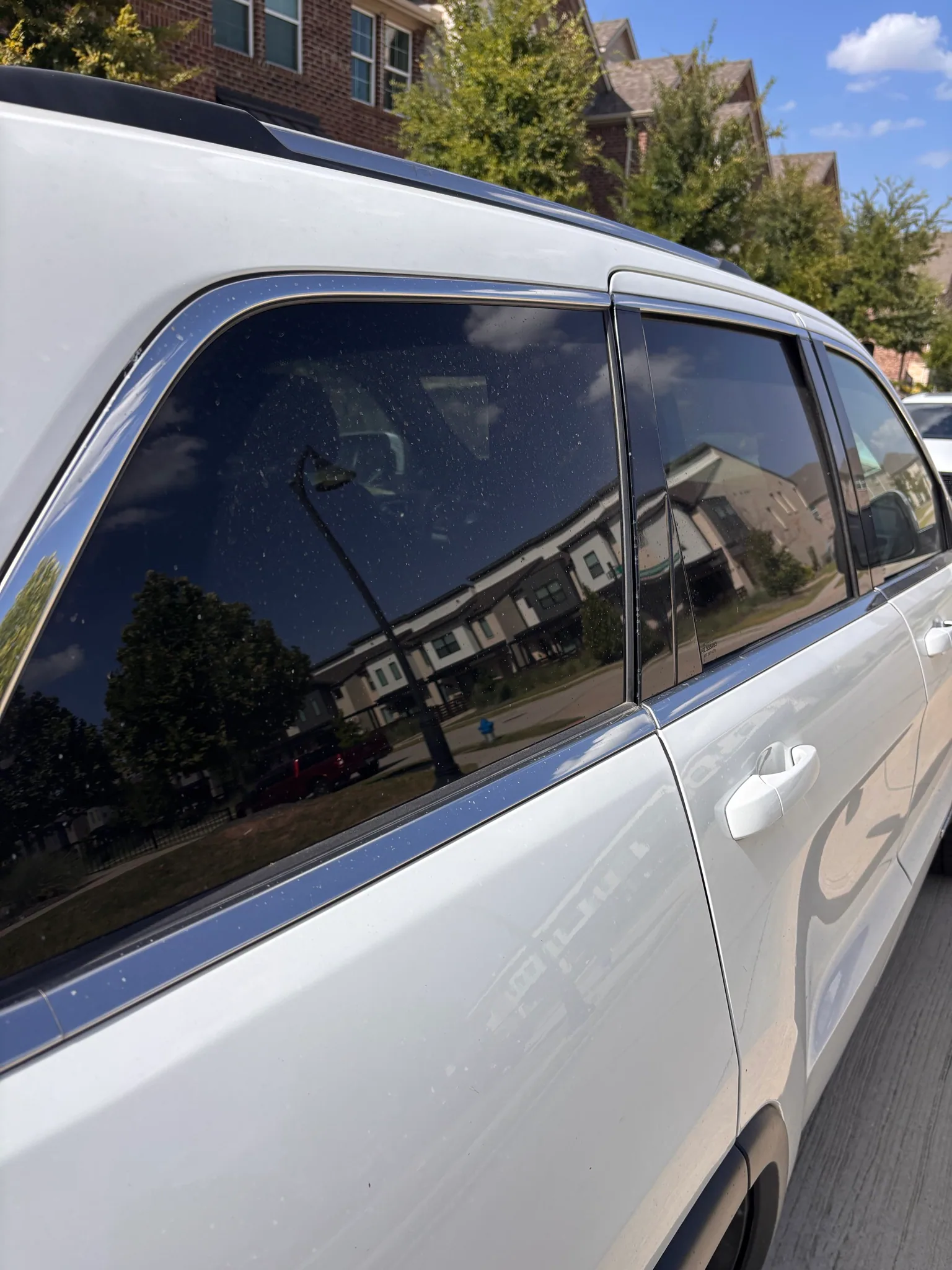
Stop using ammonia-based household glass cleaner in a car. It attacks the adhesives and the metallic elements in window tint and rear defroster grids, and once tint has hazed or bubbled the only fix is a re-tint. Buy an automotive glass cleaner, or use distilled water and a drop of dish soap.
And stop cleaning windows with paper towels or newspaper. Both leave lint, both are far more abrasive than a microfiber, and on tinted interior glass they are a reliable way to add fine scratches to something you were trying to make clearer.
This is an educational guide written to help DFW drivers budget and decide with confidence. It is not a binding quote. Your price is confirmed up front before any work begins, with no deposit.