The short answer
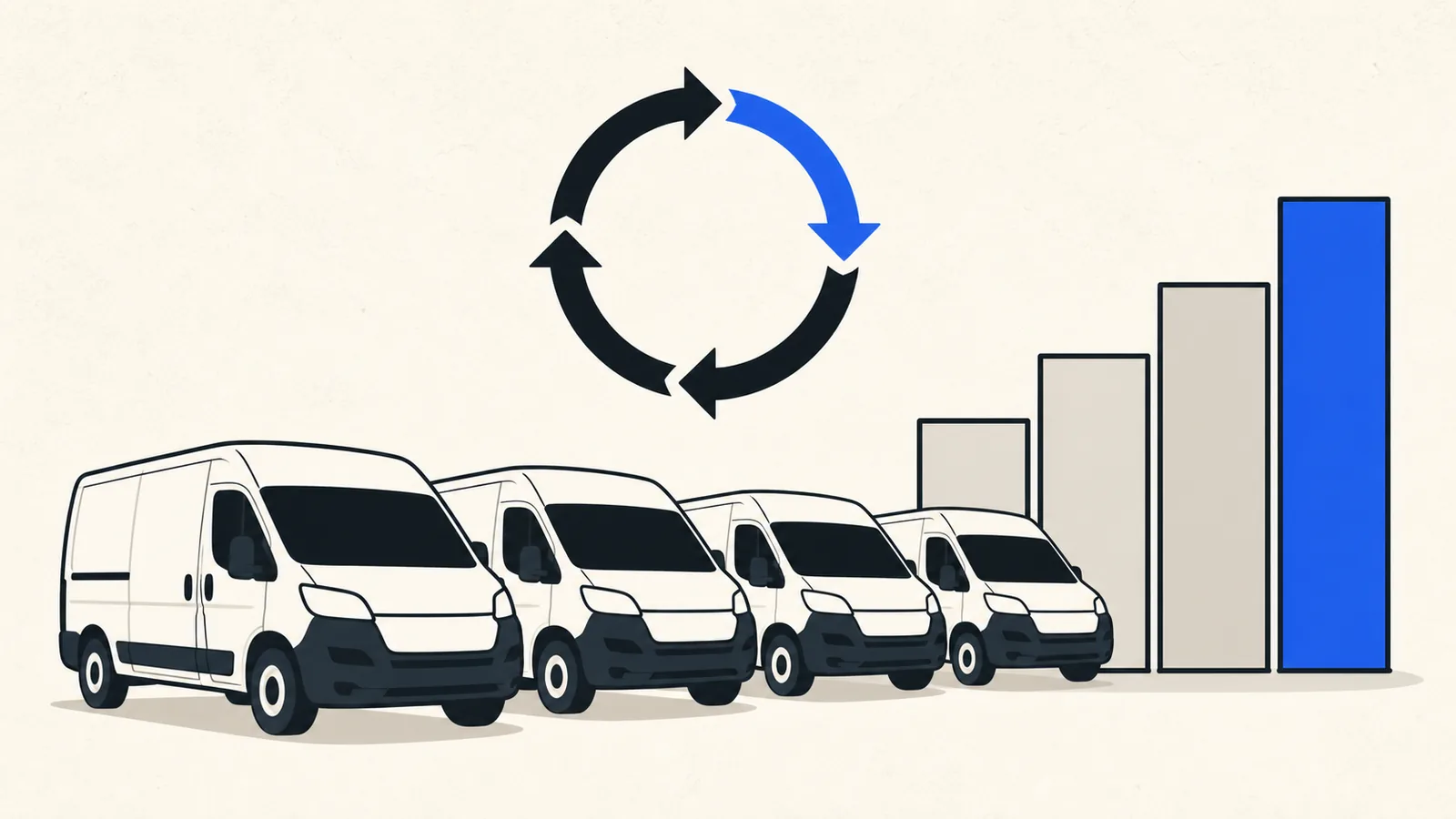
The return shows up in four places: end-of-life value or lease return condition, wrap and paint longevity, driver behavior, and the impression your vehicle makes before your technician says a word.
Only the first two are easy to measure, and they are usually enough on their own to justify a regular schedule on a fleet that is kept for several years.
Where the money is
| Category | Mechanism | Measurable? |
|---|---|---|
| Resale and lease return | Condition grading, avoided excess-wear charges | Yes |
| Wrap and paint life | Contaminants removed before they bond and fade print | Partly |
| Driver care | Clean vehicles get treated better, consistently | No, but reliable |
| Customer impression | The van arrives before the technician speaks | No |
| Recruitment | Equipment condition signals how a company operates | No |
Return by category
The lease return arithmetic
Excess wear charges on returned commercial vehicles are assessed against the standards in the lease, and they focus on the things regular cleaning prevents: permanent staining, odor, damage to interior surfaces, and neglected exteriors.
That makes the calculation straightforward. Compare the cost of a quarterly interior across the lease term against the charges typically assessed on a neglected vehicle, and the schedule usually pays for itself on the interior alone.
Scope it against your fleet
Fleet work is quoted on vehicle count, condition, and rhythm rather than booked per vehicle. Tell us the fleet and the schedule and we will put a number against it.
What not to buy
Multi-year coatings on a fleet that turns over in three years. Aggressive correction on vehicles that will collect new marks on the next job site. And premium tiers on vehicles nobody sees, which for many fleets is the trailer rather than the van.
Spend on frequency and on interiors instead. That is where fleet condition is actually won or lost.
How to start without committing
Pick three vehicles: your best-kept, your worst, and an average one. Put them on a schedule for a quarter and compare them against the rest of the fleet at the end.
It is the cheapest way to find out whether the effect is real for your operation, and it gives you an internal comparison rather than a vendor's promise.
What to measure if you want a real answer
Fleet detailing is easy to justify with anecdotes and hard to justify with numbers, unless you decide up front what you are tracking.
- End-of-term charges per vehicle, compared across the vehicles on a schedule and those not.
- Interior condition at return, which is where excess-wear charges concentrate.
- Wrap and print condition at three years, which is a direct replacement cost.
- Driver-reported vehicle issues, which tend to rise when a vehicle is treated as disposable.
- Customer comments that mention the vehicle, which are rare and telling when they appear.
This is an educational guide written to help DFW drivers budget and decide with confidence. It is not a binding quote. Your price is confirmed up front before any work begins, with no deposit.