The short answer
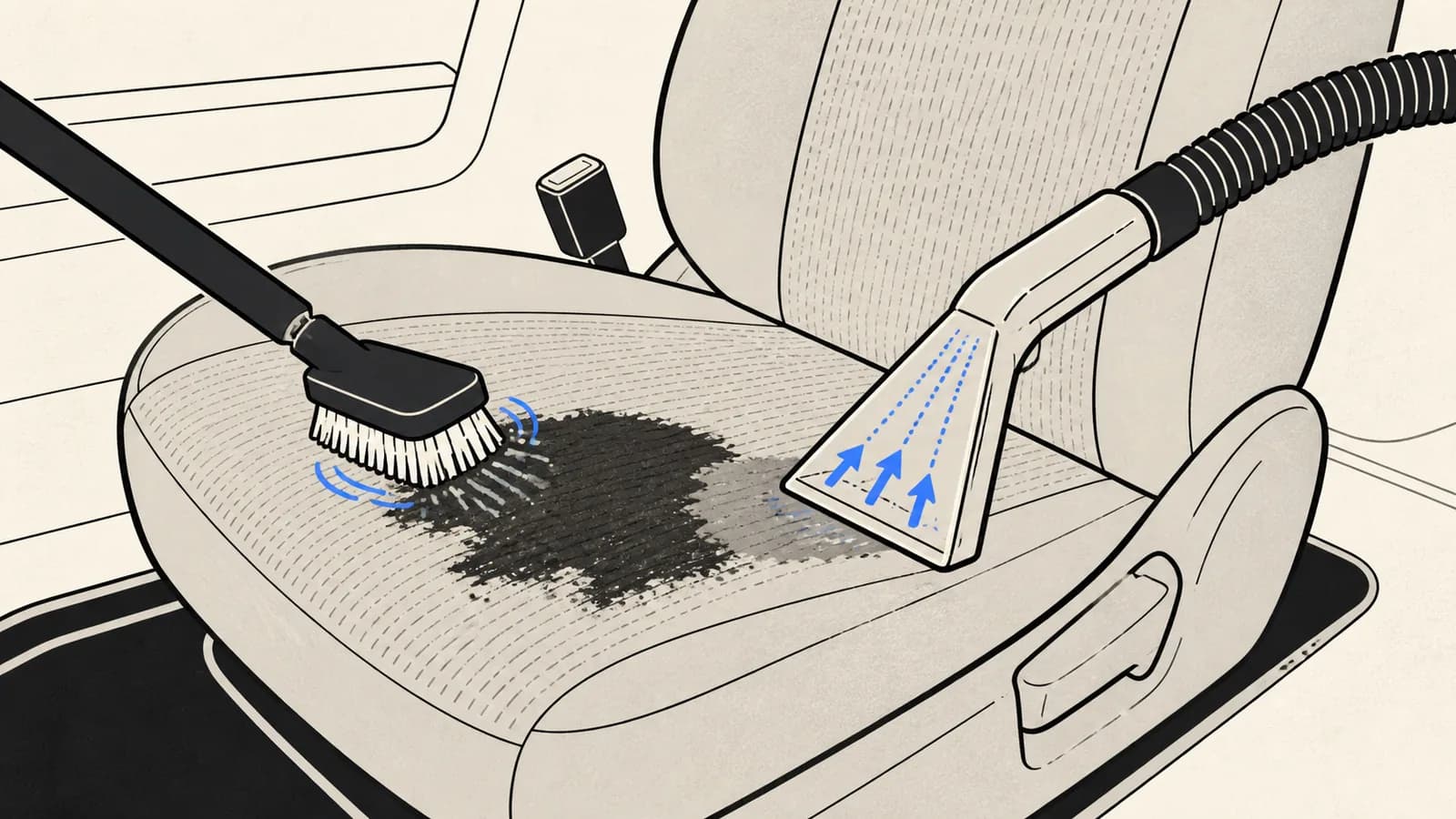
Vacuum thoroughly, pre-treat the stain, agitate with a soft brush, and then get the moisture back out. That last step is the one home attempts skip, and it is why stains reappear a day later as a ring.
Cloth seats have foam behind them. Anything you put in has to come back out, or it wicks back to the surface as it dries and brings the stain with it.
The method
- 1Vacuum first, including the seams and the gap where the backrest meets the base. Cleaning a seat with grit still in it grinds the grit into the fibers.
- 2Test your cleaner somewhere hidden, like the lower side of the seat base.
- 3Spray the cleaner onto the brush or lightly onto the fabric, not until it is soaked.
- 4Agitate in overlapping passes with a soft upholstery brush. Let the chemistry work rather than scrubbing hard.
- 5Blot with a clean, dry microfiber, pressing rather than rubbing, and keep turning to a clean face.
- 6Repeat lightly on what is left rather than escalating pressure or product.
- 7Dry the seat fast: windows down, fans on, or a shop fan pointed at it. A seat that stays damp overnight smells musty by morning.
Why stains come back
Wicking. When a spill soaks through the fabric into the foam, cleaning the surface leaves the reservoir underneath. As it dries, moisture travels up through the fibers and carries the staining material with it, redepositing it in a ring exactly where the spot was.
The professional answer is hot-water extraction: the machine injects cleaning solution and immediately vacuums it back out along with the dissolved soil, so nothing is left in the foam to travel back up.
When the stain keeps coming back
Hot-water extraction pulls the contamination out of the foam rather than pushing it around. It is part of the Interior Detail from $149, and full extraction on every seat and carpet comes with the Interior Detail from $149.
What not to use
| Product | Problem |
|---|---|
| Dish soap | Leaves residue that attracts dirt and re-soils fast |
| Laundry detergent | Foams heavily and is very hard to rinse out of foam |
| Bleach or oxygen bleach | Removes the dye along with the stain |
| A stiff scrub brush | Fuzzes the fabric permanently, which reads as a stain in the light |
| A garden hose | Soaks the foam, which is a mold problem three days later |
Common home products and what they do to car upholstery
Preventing the next stain
- A fabric protector, which makes fibers repel liquid so a spill beads long enough to blot.
- All-weather mats, which stop the footwell becoming the dirtiest part of the interior.
- A small towel and a spray bottle kept in the car, so a spill is dealt with in minutes rather than days.
- A rule about where drinks live, since most seat stains start in a cupholder that was never designed for that cup.
- Reapplying protection after any deep clean, because extraction removes it along with the soil.
This is an educational guide written to help DFW drivers budget and decide with confidence. It is not a binding quote. Your price is confirmed up front before any work begins, with no deposit.