The short answer
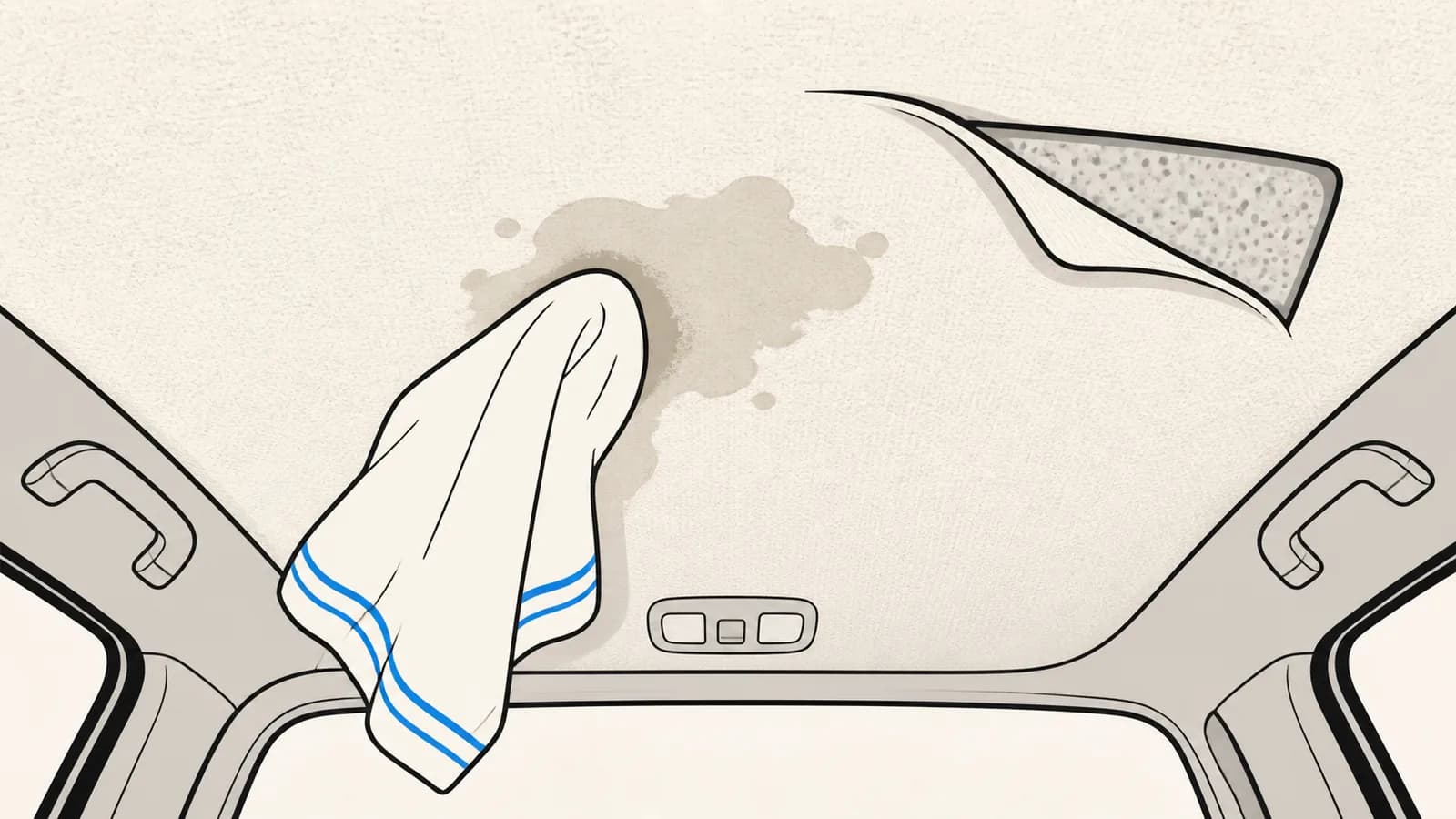
Use as little moisture as possible. A headliner is thin fabric glued to a foam board, and soaking it dissolves the adhesive, which causes the sagging that is expensive and permanent to fix.
Dab, do not scrub. Work from the outside of a stain inward, use a light interior cleaner on a microfiber rather than sprayed on the surface, and dry it quickly with airflow.
The method
- 1Vacuum the headliner gently with a soft brush attachment to remove loose dust first.
- 2Test any product in a hidden area, near the rear edge or behind a visor.
- 3Spray lightly onto a microfiber, never onto the headliner itself.
- 4Dab the stain from the outside inward. Do not rub, because rubbing pulls the fabric away from the backing.
- 5Immediately blot with a dry towel to lift both the soil and the moisture.
- 6Open the doors and let air move across it until dry.
Why sagging happens
The fabric is bonded to a foam substrate with adhesive, and that adhesive breaks down with heat and moisture. In Texas, heat alone eventually gets there on older cars, which is why so many DFW cars over ten years old have a drooping headliner.
Adding moisture accelerates it dramatically. Once the bond releases, no cleaning fixes it: the fix is a re-trim, which means dropping the headliner board out of the car and re-covering it.
For smoke residue or widespread staining
A whole discolored headliner needs low-moisture steam and careful technique rather than a spray bottle. It is included in the Interior Detail from $149, where the headliner is spot-treated as part of the service.
What we will not promise
Old water stains from a leaking sunroof drain often will not come out, because the mark is mineral deposit left behind after the water evaporated through the fabric. We can lighten them and we will tell you honestly when that is the ceiling.
The same is true of a headliner already starting to sag. We will clean it carefully, but any moisture at all risks accelerating what is already happening.
Common headliner stains, and what each needs
| Stain | Approach | Realistic outcome |
|---|---|---|
| Finger marks and general grime | Light interior cleaner on a microfiber, dabbed | Comes out |
| Smoke discoloration | Low-moisture steam, repeated light passes | Improves substantially |
| Water stain from a leak | Fix the leak first, then light cleaning | Often lightens only |
| Grease or food | Solvent-free degreaser on the cloth, blotted | Usually comes out if fresh |
| Adhesive from a mount or hook | Adhesive remover on a cloth, minimal contact | Comes out, may leave a sheen |
By stain type
This is an educational guide written to help DFW drivers budget and decide with confidence. It is not a binding quote. Your price is confirmed up front before any work begins, with no deposit.