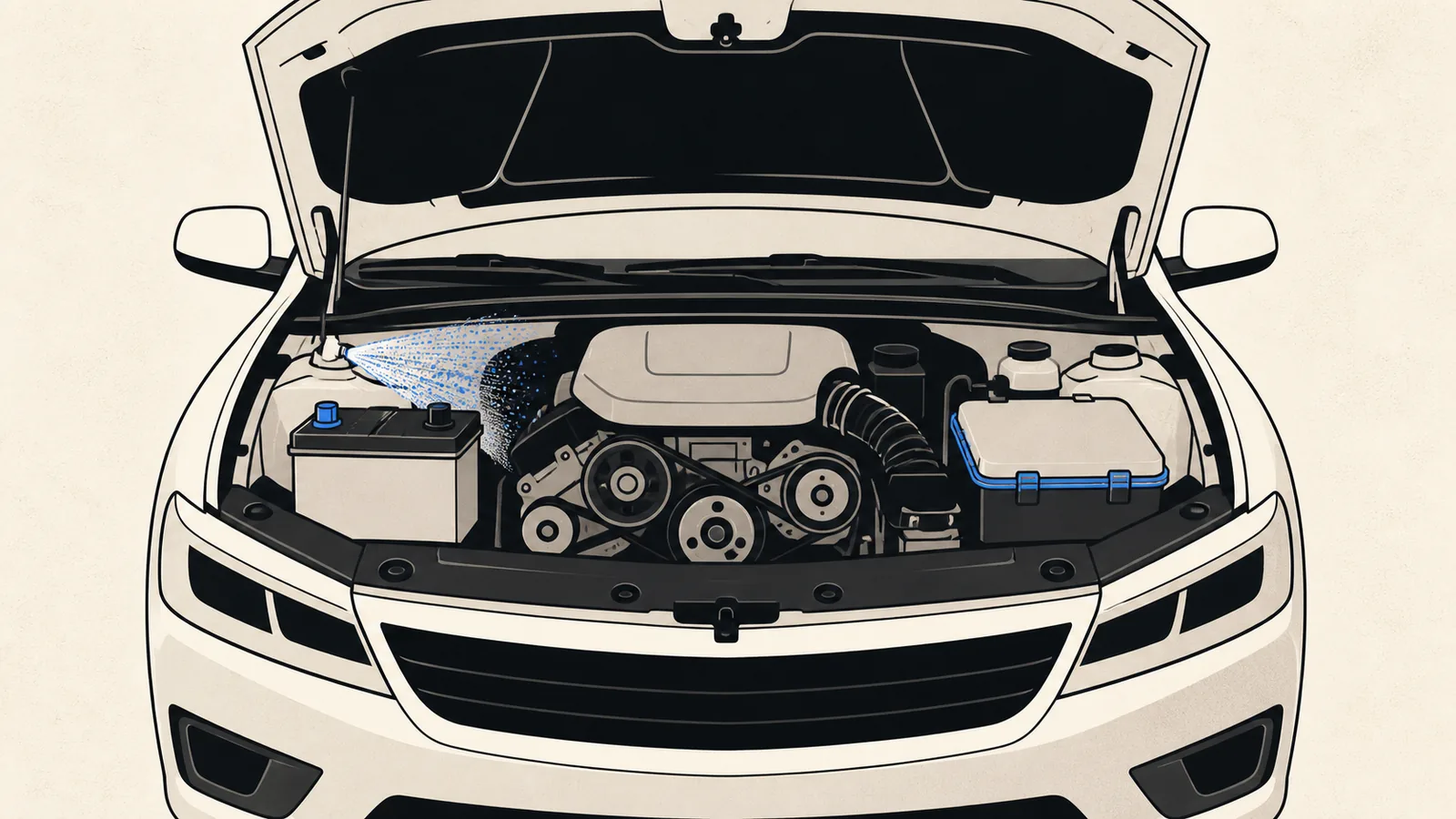
The short answer
Yes, when it is done on a cool engine, with the sensitive electrical components covered, using a gentle degreaser and low water volume rather than a pressure washer. That is the entire safety story. Every engine bay damaged by cleaning was cleaned hot, blasted with high pressure, or left with water sitting in connectors that were never covered.
An engine bay detail with us runs from $79 and takes under an hour. It is the cheapest way to make an older car feel maintained, and it makes an oil or coolant leak visible instead of hidden under a decade of grime.
What actually causes damage
Three things, in order of how often we see them.
- 1Heat. Cold water on a hot exhaust manifold or a hot alloy component is thermal shock, and cold degreaser flashing off hot metal leaves staining that does not come back out.
- 2Pressure. A pressure washer will push water past connector seals and under fuse box lids that were designed to shed rain, not to take a direct 2,000 psi jet.
- 3Nothing covered. Alternators, exposed intakes, fuse boxes, and battery terminals need a plastic bag over them, not a hope that the water goes around.
How a proper engine bay detail runs
The sequence matters more than the products. Ours goes like this, and any detailer worth hiring will describe something close to it.
- 1Let the engine cool to ambient. If the hood is warm to the touch, we wait.
- 2Cover the alternator, fuse boxes, exposed intake, and battery terminals.
- 3Blow the loose leaves, pine needles, and dust out of the cowl and the corners dry, before any water goes in.
- 4Apply a diluted degreaser to the grime, let it dwell, and agitate with detailing brushes.
- 5Rinse with low-pressure water, working top down, using as little volume as the job allows.
- 6Force-dry with compressed air, especially in connectors and seams.
- 7Dress the plastics and hoses with a non-greasy protectant, then run the engine to evaporate anything left.
What a clean engine bay is actually worth
Two practical things, plus one that is honestly just pride.
| Reason | How much it matters | Notes |
|---|---|---|
| Finding leaks | High | A fresh oil or coolant weep is obvious on clean metal and invisible under old grime |
| Resale and trade-in | High | A buyer who opens the hood and sees clean assumes maintained. It is the cheapest trust signal on the car |
| Heat and component life | Moderate | Thick grime and packed leaf litter hold heat and moisture against components and hoses |
| Pre-sale photos | Moderate | Private-party listings with a clean bay get taken more seriously |
| Performance | None | A clean engine does not make power. Anyone telling you otherwise is selling something |
Reasons to clean an engine bay, and how much each one matters
Add it to a detail you were booking anyway
An engine bay detail is $79 on a sedan and takes under an hour. It is the single best add-on before selling a car or listing it privately.
When we say no
There are engine bays we will not wet-clean, and we would rather tell you up front than find out halfway through. Exposed aftermarket wiring, a cracked or missing fuse box lid, an intake with no filter housing, a known electrical gremlin, or a battery terminal already corroded to a green crust: those all get a dry clean, compressed air and brushes only, or nothing at all.
Older cars with distributor caps and exposed ignition components get the same caution. The goal of the service is a car that starts, runs, and looks maintained. Nothing about a shiny engine bay is worth a no-start in your driveway.
How often is worth doing
Once or twice a year is plenty for most cars, and once before you sell. If you park under trees, check the cowl at the base of the windshield every fall, because that is where leaf litter collects, blocks the drains, and eventually sends water somewhere it should not go.
Between details, the useful habit is popping the hood while the car is cool and just looking. You are checking for fresh wet spots, chewed insulation, and anything nesting. On a clean bay that inspection takes ten seconds.
This is an educational guide written to help DFW drivers budget and decide with confidence. It is not a binding quote. Your price is confirmed up front before any work begins, with no deposit.