The short answer
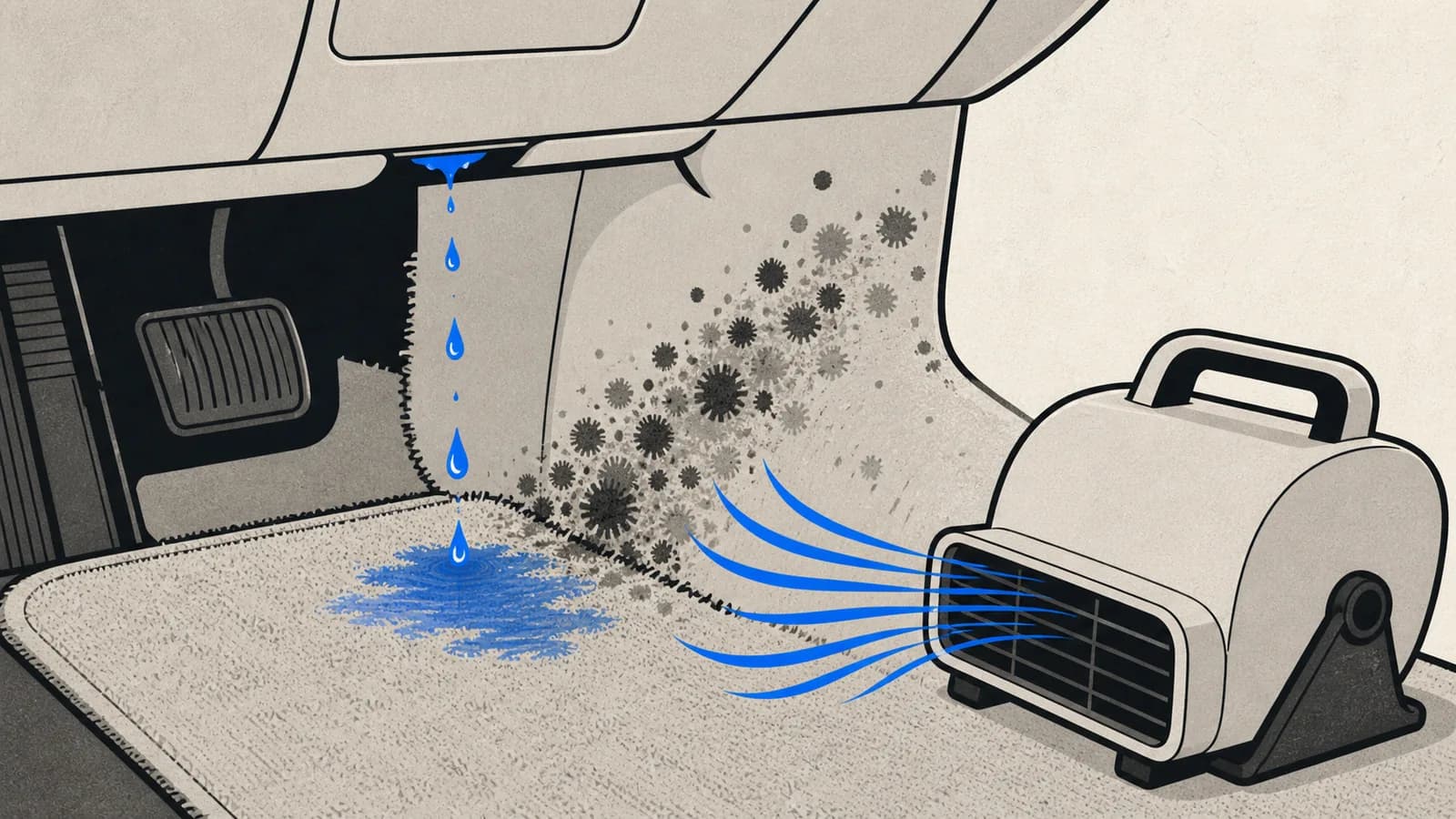
Mold needs moisture, and in a car that moisture always comes from somewhere specific: a blocked cowl drain, a failed door or windshield seal, a clogged A/C evaporator drain, a sunroof drain, or something wet that was left inside. Find and fix the source first, or any cleaning is temporary.
Then clean it properly: protective gear, remove what is porous and unsalvageable, treat with an antimicrobial, extract, and dry thoroughly. Public health guidance is consistent that porous materials with heavy growth are replaced rather than cleaned.
Where the water is coming from
| Source | Where the damp shows up |
|---|---|
| Blocked cowl drains at the windshield base | Front passenger footwell |
| Clogged A/C evaporator drain | Front footwell, worse in summer |
| Sunroof drain tubes | Headliner edges and A-pillars |
| Failed door membrane or seal | Under the door card, along the sill |
| Trunk or taillight seal | Spare well, and it can sit unnoticed for months |
| Wet gear left in the car | Wherever it was left |
The usual sources, in order of how often we find them
How to clean it safely
- 1Wear an N95 mask, gloves, and eye protection, and work with the doors open outdoors.
- 2Remove and dispose of heavily affected porous items: floor mats, trunk liners, and foam that has been saturated.
- 3Vacuum with a HEPA vacuum rather than a shop vac that will exhaust spores back into the air.
- 4Clean surfaces with an antimicrobial cleaner suitable for automotive interiors, not bleach, which damages upholstery and does not solve porous growth.
- 5Extract, then dry aggressively with air movers until the padding is dry, not just the surface.
- 6Fix the water source before putting the car back into service.
When it is beyond a weekend job
Established mold usually lives in the padding under the carpet, which needs extraction, antimicrobial treatment, and forced drying. Full odor and biological cleanup runs from $199, with a biohazard tier at $150 for severe cases.
Why we ask about the leak before we quote
Because we would rather not take your money twice. If the cowl drain is blocked or the evaporator drain is clogged, the carpet will be wet again after the next rain or the next humid week, and the mold will be back with it.
That repair is usually cheap and often something a competent shop handles in under an hour. Detailing is what happens after it.
How to check whether the carpet is wet
Carpet can look and feel dry on top while the padding underneath is saturated, which is why leaks go unnoticed for months.
- 1Press a folded dry towel firmly into the footwell with your body weight and hold it for a few seconds.
- 2Check both front footwells and behind the front seats, not just the driver's side.
- 3Lift the trunk floor panel and check the spare well, which is where water pools invisibly.
- 4Feel the underside of the carpet edge where it meets the sill, which is usually the first place to show damp.
- 5Look for a tide line or discoloration on the lower door card, which indicates a seal or membrane failure.
This is an educational guide written to help DFW drivers budget and decide with confidence. It is not a binding quote. Your price is confirmed up front before any work begins, with no deposit.