The short answer
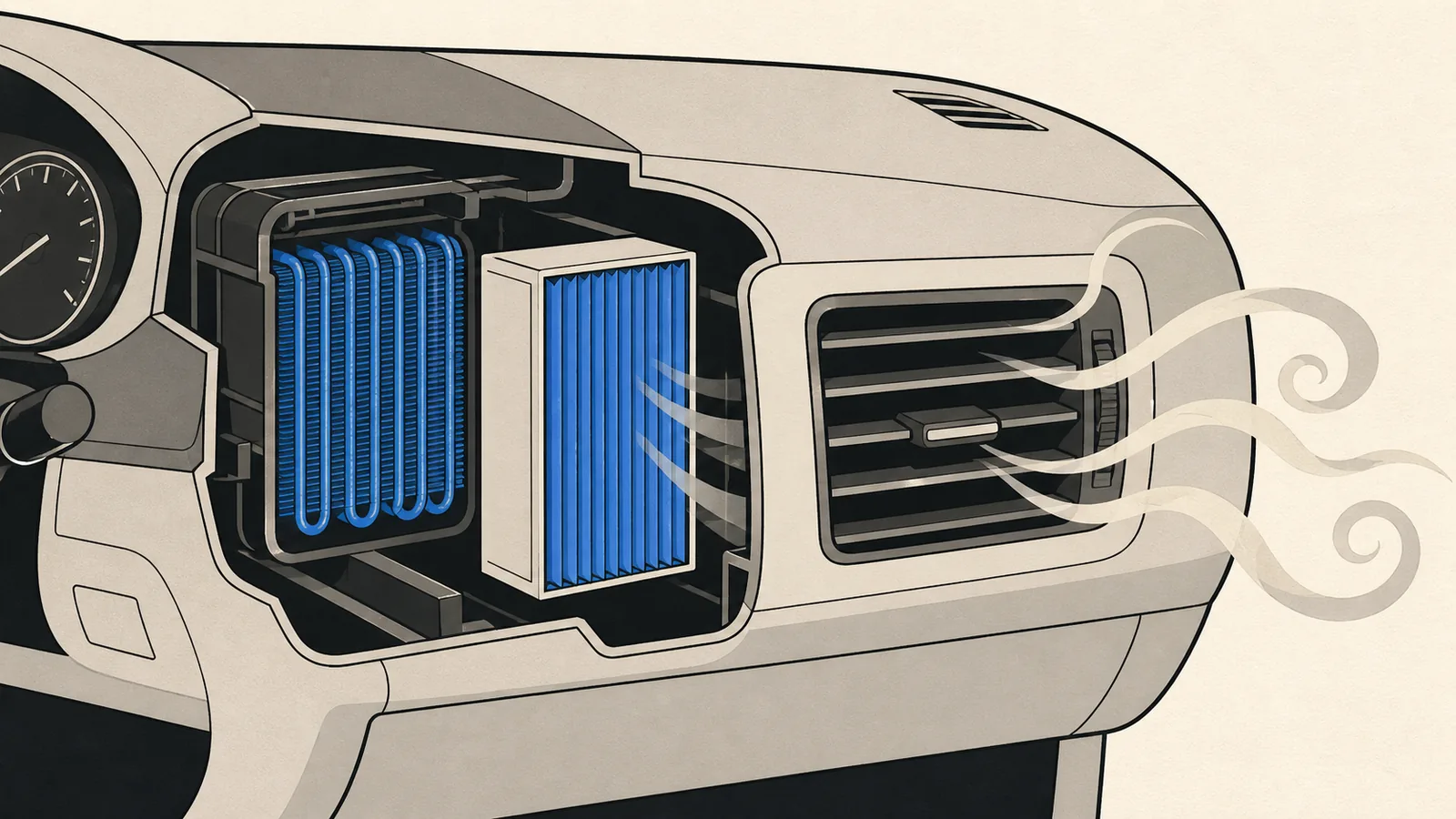
The evaporator core behind your dash is cold and wet whenever the A/C runs. In a humid climate it stays wet after you park, and biological growth on that surface is what you smell for the first few seconds of the next drive.
Prevention is free: switch the A/C compressor off but leave the fan running on fresh air for the last two or three minutes of your drive. That dries the core before you park.
Why it is worst here
North Texas humidity plus long air conditioning seasons means the evaporator spends more of the year wet than it does in a dry climate. Add a cabin air filter loaded with a spring of oak pollen and you have a damp surface with organic material sitting on it.
The smell being strongest at startup is the diagnostic clue. If it fades within a minute of driving and comes back at the next start, the source is the evaporator rather than the cabin.
The fix, in order of cost
| Step | What it does | Cost |
|---|---|---|
| Fan-only for the last few minutes | Dries the evaporator before parking | Free |
| Replace the cabin air filter | Removes the loaded organic material | Low |
| Check the evaporator drain is clear | Standing water is the other half of the problem | Low |
| Evaporator and duct treatment | Kills the growth on the core itself | Service |
| Full odor elimination with ozone | Treats the cabin, ducts, and any secondary source | $199 |
What to try, cheapest first
When the habit is not enough
An HVAC treatment plus full odor elimination handles the evaporator, the ducts, and the cabin together for $199. An ozone treatment alone is $50.
What does not work
Spraying air freshener into the vents adds a scent on top of the smell and does nothing to the growth. Aerosol bombs set off inside the cabin treat the air, not the wet metal surface behind the dash where the problem lives.
Running the heat on full to bake it dry helps marginally and briefly, but it does not remove what has already established. The cabin filter and the drain are the two cheap physical fixes worth doing before anything else.
Recirculation, and the setting that causes half of this
Leaving the climate control on recirculate permanently is comfortable in a Texas summer and it keeps humid cabin air cycling over a cold, wet evaporator with nowhere to go.
Use recirculate when you need rapid cooling or when you are behind something unpleasant in traffic, then switch back to fresh air. Combined with running the fan for the last few minutes of a drive, that one habit change resolves a surprising share of musty-smell complaints without any product at all.
This is an educational guide written to help DFW drivers budget and decide with confidence. It is not a binding quote. Your price is confirmed up front before any work begins, with no deposit.