The short answer
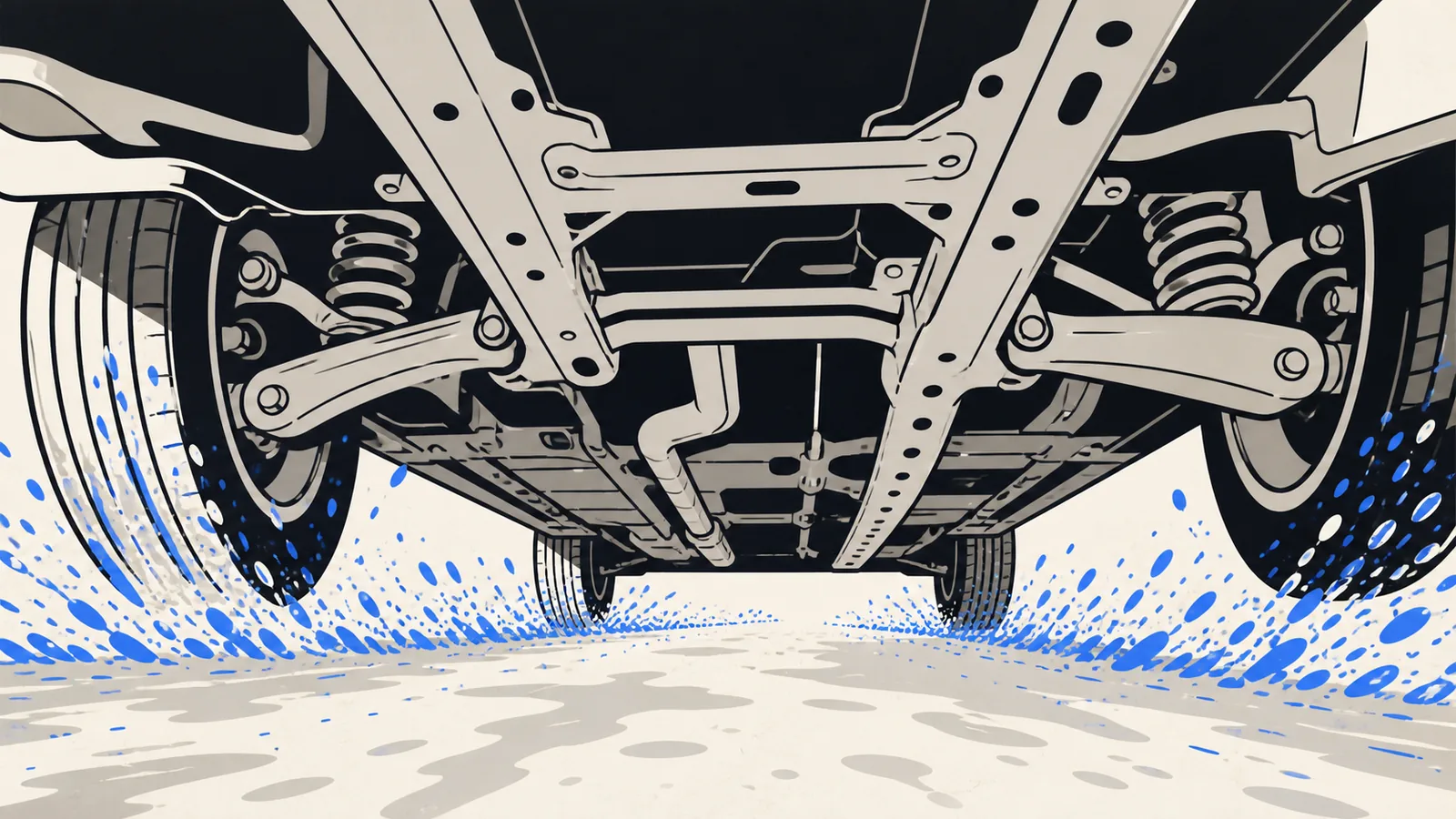
Before an ice event, North Texas agencies pre-treat highways and bridges with a liquid brine. It works, and it also coats the underside of every vehicle that drives through it. Brine holds moisture against metal long after the road is dry, and that is what starts corrosion on suspension components, brake hardware, and exposed fasteners.
The fix is a plain water rinse of the undercarriage within a few days of the event. It takes minutes and almost nobody in DFW does it, because the region has no salt-belt habits.
Why Texas cars are more exposed, not less
In a northern state, drivers rinse the underbody all winter out of habit and cars are built and optioned for it. Here, the brine arrives a handful of days a year, gets ignored, and sits.
The other factor is humidity. Corrosion needs moisture, and a salt film is a moisture magnet. A car that lives outside through a damp North Texas February with brine on the frame is in a worse position than one that got rinsed twice in Minnesota.
What to check after an ice event
- The underbody and frame rails, where spray collects.
- Inside the wheel wells and behind the wheel liners.
- Brake calipers, hardware, and exposed lines.
- The lower door edges and rocker panels, where film runs down and stays.
- The cowl and drains, if leaf litter is also holding water there.
The fix, in order
None of this is complicated. It is just the step that gets skipped.
- 1Wait for the roads to be genuinely clear so you are not re-coating the car on the drive home.
- 2Rinse the undercarriage with plain water first, before anything else touches the car.
- 3Then wash the exterior normally, top down.
- 4Pay attention to the lower quarter of every panel, where salt film clings.
- 5Re-protect the paint if the wash stripped what was left of the sealant.
Get the salt off before it settles in
The Exterior Detail includes wheels, wheel wells, and a full hand wash from $99, and it is the right service after an ice event. We bring our own water, so a February rinse does not involve standing outside with a hose.
What brine does not do
It does not eat your paint overnight, and a single exposure will not rust a modern car. Body panels are galvanized and coated, and the paint on top of them is not the vulnerable part.
The vulnerable parts are the ones nobody looks at: fasteners, brackets, brake hardware, and suspension components with chipped coatings. That is a slow problem, which is exactly why it goes unnoticed until something seizes.
What else a cold snap does to a car here
- Tire pressures drop with temperature, and a warning light on the first cold morning is usually physics rather than a puncture.
- Door and trunk seals freeze to the paint if the car was washed and not dried, which tears the rubber when the door is forced.
- Wiper blades freeze to the glass, and pulling them free takes the rubber edge with them.
- Washer fluid rated for summer can freeze in the lines and the reservoir.
- Cabin condensation rises when wet shoes and coats live in the car, which is a mold risk in a closed vehicle.
This is an educational guide written to help DFW drivers budget and decide with confidence. It is not a binding quote. Your price is confirmed up front before any work begins, with no deposit.