The short answer
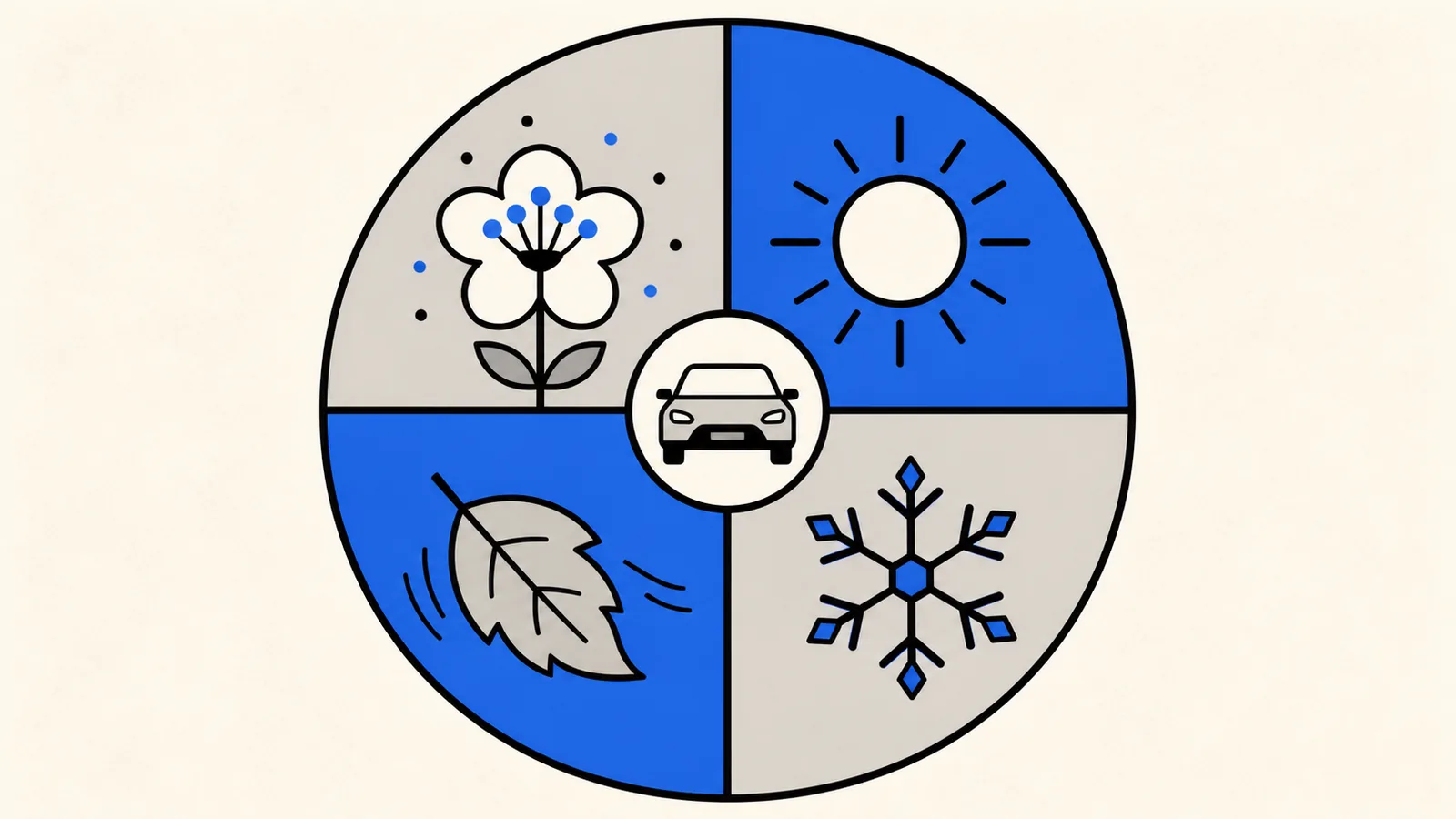
North Texas has four car-care seasons and they do not line up with the calendar seasons. Cedar pollen runs December through February, oak and tree pollen March through May, hail risk peaks March through June, brutal UV runs June through September, and love bugs show up twice, around May and again around September.
You do not need to do something every month. You need to do the right thing in five specific windows.
The year, in order
| Window | What is happening | What to do |
|---|---|---|
| Dec to Feb | Cedar pollen, occasional road brine after ice events | Rinse the underbody after any brine event, book the year's first detail in the quiet season |
| Mar to May | Oak and tree pollen, peak hail risk | Frequent washes, keep protection fresh, have a covered plan for hail days |
| May | First love bug generation | Front-end protection and prompt removal, never scrub dry |
| Jun to Sep | 100F-plus air, 150F-plus hood surfaces, hard UV | Sealant refresh, interior UV protectant, wash early or late, never at noon |
| Sep | Second love bug generation, ragweed | Same as May, plus interior filter attention |
| Oct to Nov | Leaf litter and sap, secondary hail peak | Clear the cowl drains, interior deep clean before the holidays |
What North Texas does to your car, month by month
The five jobs that matter
Everything else is optional. These five, done in the right window, cover most of the damage this climate causes.
- 1Refresh paint protection twice a year, ideally in April before the heat and October after it.
- 2Decontaminate once a year. Pollen, fallout, and hard-water minerals bond over a season and a wash will not touch them.
- 3Treat glass before summer. Sealed glass sheds the hard rain that arrives with spring storms.
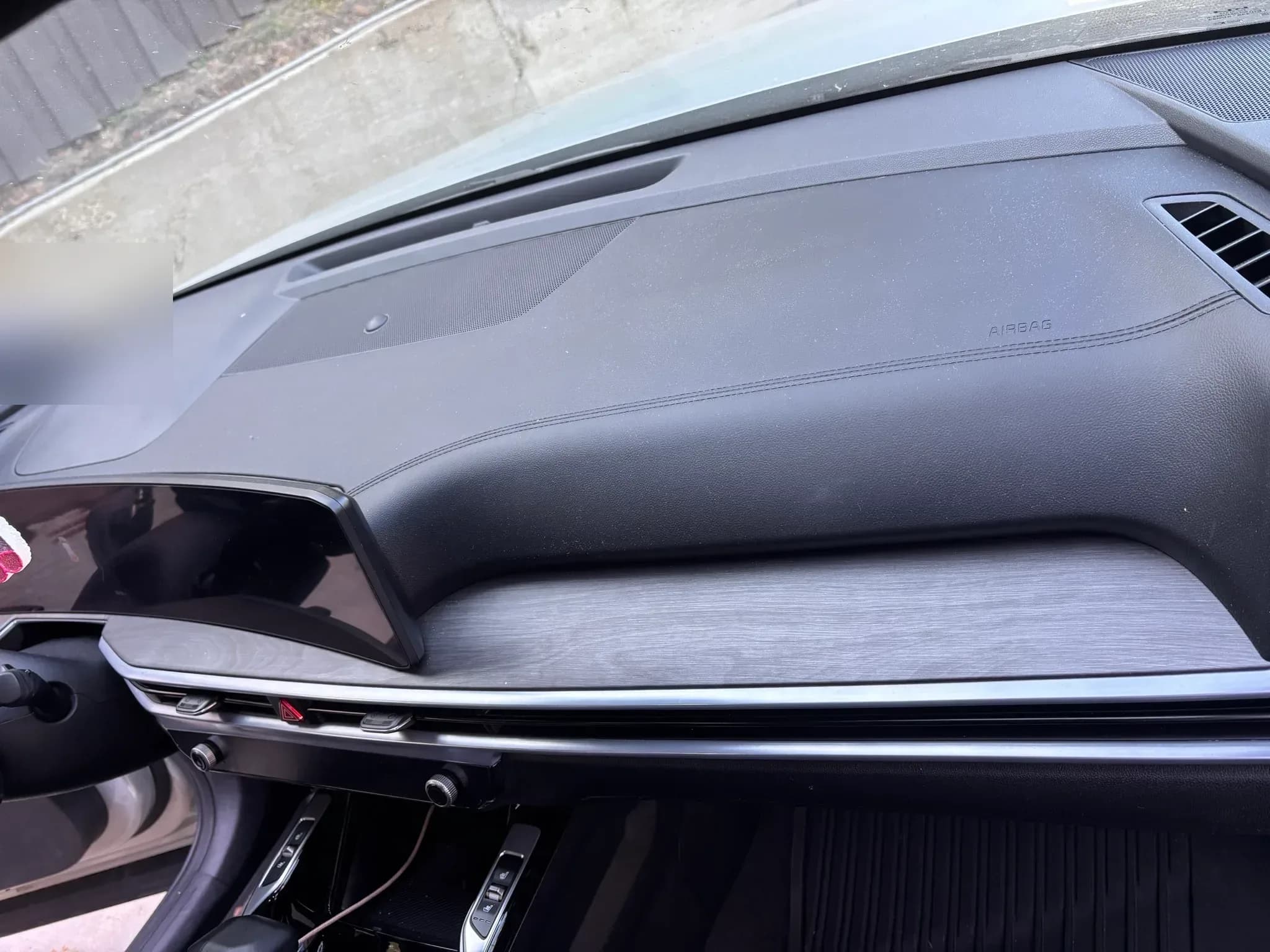
- 4Run a UV protectant on the dash and door tops before June, because that is what stops the cracking.
- 5Rinse the underbody after any winter brine event, which in DFW is a handful of days a year that most people ignore.
Get on the rhythm instead of reacting
A repeating schedule puts the maintenance washes on autopilot so the seasonal jobs are the only thing left to plan. Or book the two big details a year and let us tell you which window to use.
The DFW-specific traps
Hard water is the one almost nobody plans for. North Texas municipal water is hard enough that a car rinsed and left to air dry in the sun will hold mineral spots that a later wash cannot remove. Dry the car, or wash in the shade, or both.
The second is the noon wash. Washing a hot car in direct Texas sun evaporates the water before it can be dried, which turns a wash into a spotting event. Early morning and evening are the only good windows from May through September.
The one-page version
If you remember nothing else from this calendar, these five dates cover most of what North Texas does to a vehicle.
- 1April: decontaminate and protect the paint, before the heat arrives.
- 2Before June: UV protectant inside, and a sunshade in the car permanently.
- 3May and September: front-end attention for the two love bug generations.
- 4October: full detail, removing a summer of bonded contamination and re-protecting.
- 5After any ice event: rinse the underbody once the roads are clear.
This is an educational guide written to help DFW drivers budget and decide with confidence. It is not a binding quote. Your price is confirmed up front before any work begins, with no deposit.