The short answer
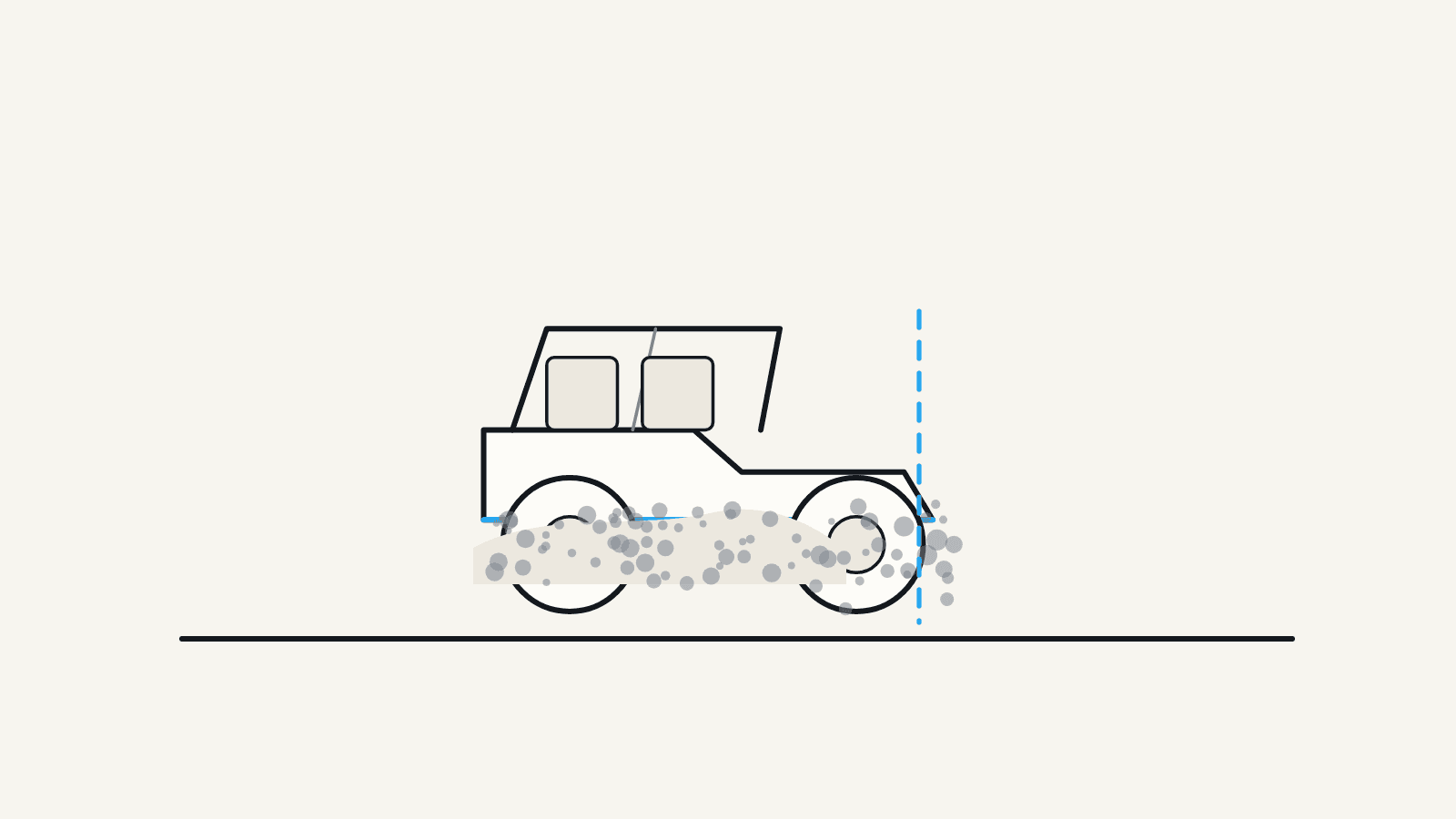
A loaded side-by-side is not a dirty vehicle, it is a vehicle carrying an active problem. Packed mud is abrasive against every seal it touches, it holds moisture against bare metal for as long as it stays there, it adds real weight, and where it packs against a radiator or a clutch intake it directly threatens the driveline.
So mud recovery comes before detailing rather than being part of it. Ours is $99 on top of a package, and it exists because you cannot detail a surface you cannot see.
After the recovery, the rig details at the normal flat powersports rates: $109 for a Wash & Protect, $209 for a Full Powersports Detail.
Why mud is worse than it looks
Three mechanisms, and none of them are cosmetic.
It is abrasive. Trail mud carries sand and grit, and every time a shock shaft strokes through a coating of it, or a wheel bearing turns behind it, that grit is being dragged across a sealing surface. Seals do not fail suddenly, they fail from exactly this.
It holds water. A frame rail under a quarter inch of dried mud stays damp for days after the surface looks dry, which is a far better corrosion environment than simply being wet and then drying.
It insulates. Mud packed into a radiator or an oil cooler is a blanket over the thing whose entire job is shedding heat, and a rig that overheats on the next ride usually did so because of what was left on it after the last one.
Where the damage actually happens
| Area | What goes wrong | How it has to be cleaned |
|---|---|---|
| Radiator and oil cooler | Packed fins block airflow and the rig overheats | Soaked, then flushed gently from the fan side outward. Never at pressure, which folds the fins flat |
| CVT belt housing intake and exhaust ducts | Water or mud inside means belt slip and belt failure | Never sprayed into. Ducts protected, housing cleaned externally only |
| Skid plates and frame | Mud packs on top and holds moisture against steel for days | Plates dropped when it is serious, cleaned above and below, dried |
| Shock shafts and bushings | Grit scores the shaft and destroys the seal | Soaked and wiped by hand, never blasted along the shaft |
| Wheel bearings and axle boots | Pressure drives water and grit straight past the seal | Rinsed at distance and low pressure, boots inspected for splits |
| Electrical connectors and the fuse box | Water forced into a connector corrodes it from inside | Kept out of the spray path entirely, wiped by hand |
| Cab floor and seat foam | Drains clog, water stands, foam holds it and starts to smell | Drains cleared first, then extraction rather than more water |
The parts of a side-by-side that decide the outcome
Bring it back loaded, we will handle it
Mud recovery is $99 and clears the undercarriage, skid plates, and frame so the actual detailing happens on a surface rather than on a crust. We come to you, with our own water and power.
The pressure washer question
A side-by-side is the one machine in this category where a pressure washer belongs in the process at all, and it is still the tool that causes most of the damage we get called about.
The useful version is a wide fan tip, held well back, used to move bulk mud off flat, robust surfaces: bed, body panels, tires, and the underside of a skid plate that is off the vehicle. That is genuinely faster and no worse than a hose.
The destructive version is a narrow tip held close, worked into recesses because that is where the mud is. That is how radiator fins get folded flat, how water gets past a wheel seal, how a shock seal gets a grit-loaded jet run along it, and how water ends up inside a clutch housing.
The rule that keeps it safe is simple: pressure only where you can see what is behind the panel, and never at anything that spins, seals, or plugs in.
Dried-on versus fresh
Fresh mud is easy and it is worth the twenty minutes on the trailer ramp before you drive home. It rinses.
Dried mud is a different job, and the mistake is trying to remove it with force. Dried trail mud is essentially a weak concrete bonded to whatever it dried on, and knocking it off dry drags every bit of grit in it across the surface underneath. On plastics that means scratching, on painted frames it means chipping, and on decals it means edges lifting.
The correct approach is patience: soak it, let the water get behind it and break the bond, then soak it again, and only then move it. It takes longer and it takes off less of your machine.
There is also a runoff consideration. Mud, sediment, and whatever the trail carried are the pollutants in that wash water, and what reaches a storm drain reaches the waterway untreated, which is why the EPA publishes vehicle and equipment washing as a stormwater practice. A driveway that drains to the street is worth thinking about before you start moving several pounds of trail off a machine.
After it is clean, the part that pays off
- Dry it out properly, including the cab, the frame recesses, and anywhere water was forced. Everything above is undone by leaving it wet.
- Inspect what you can now see. Split boots, weeping seals, loose skid plate hardware, and bent radiator fins are all far cheaper to find at a wash than on a trail.
- Get the plastics protected with something carrying UV inhibitors. Exposed UTV plastics fade fast in North Texas sun, and faded plastic is a permanent look rather than a cleaning problem.
- Seal the wheels. Mud releases from a sealed wheel enormously more easily, and it makes the next recovery a fraction of the work.
- Grease the fittings, which is a maintenance job rather than a detailing one, and it is the right day to do it because water has just been everywhere.
- Store it dry and covered if you can. A rig put away damp under a tarp will smell before the next ride.
This is an educational guide written to help DFW drivers budget and decide with confidence. It is not a binding quote. Your price is confirmed up front before any work begins, with no deposit.