The short answer
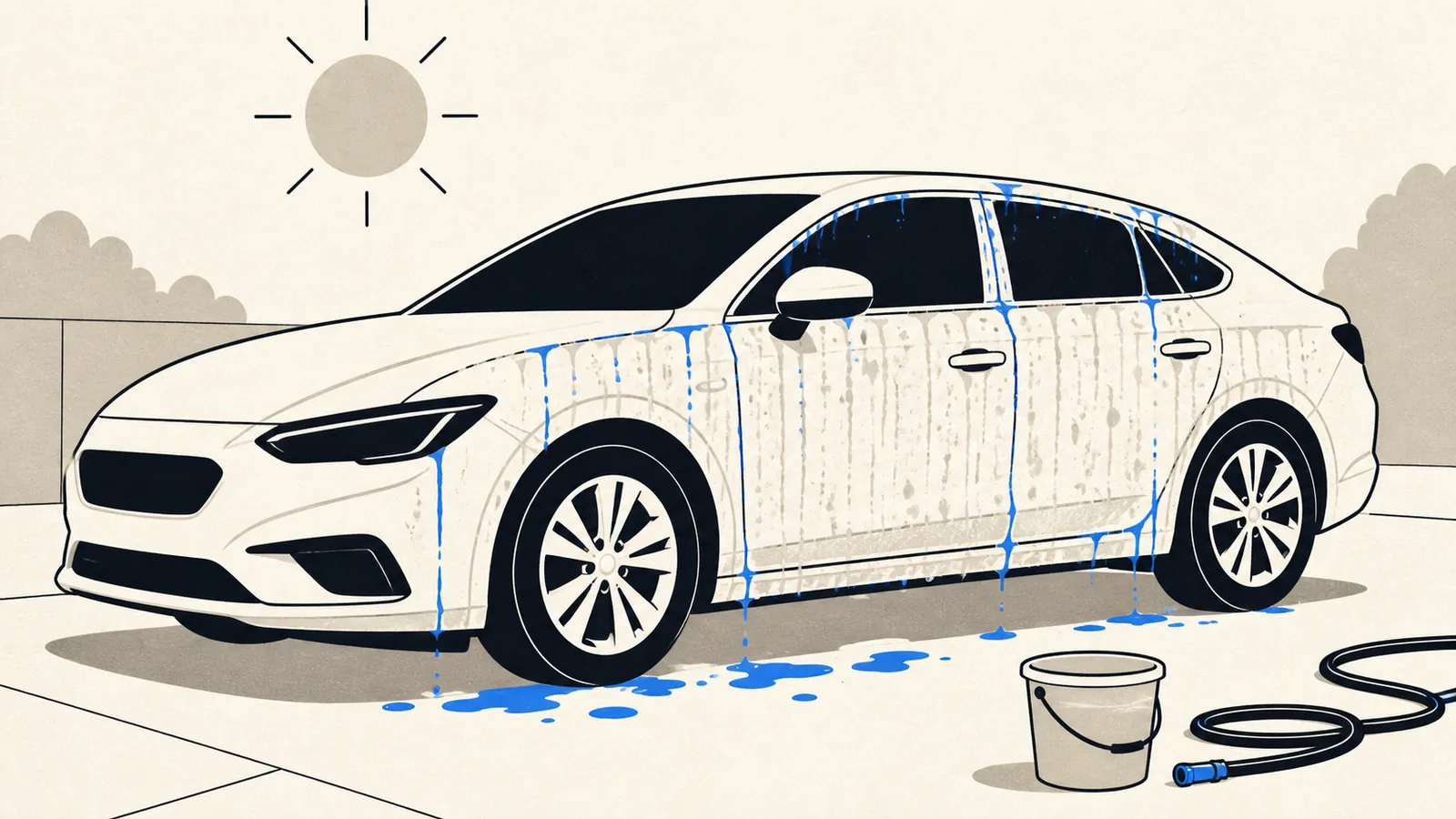
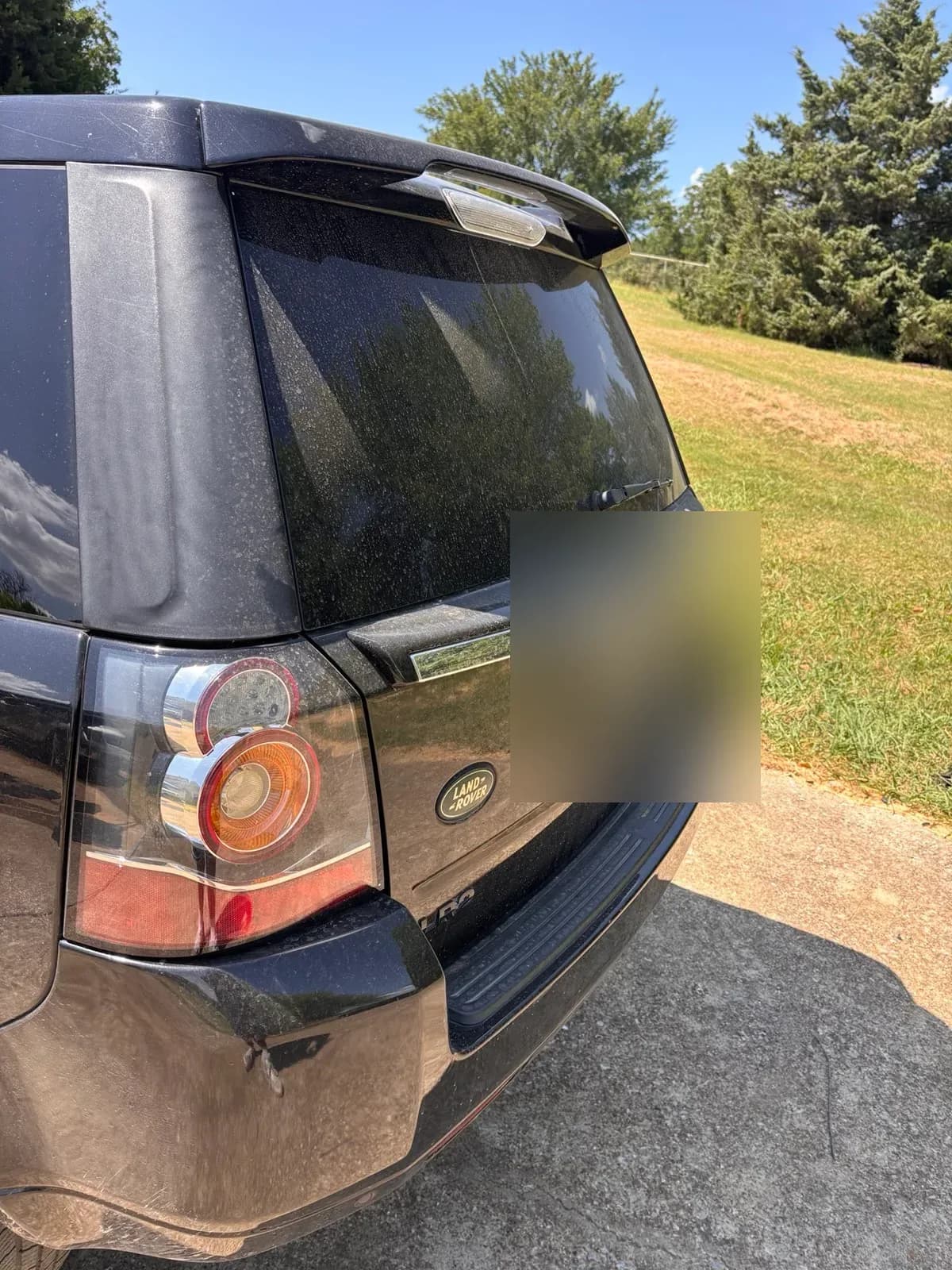
On a hot panel, water and soap evaporate faster than you can rinse and dry them. What is left behind is dried surfactant and dissolved minerals bonded to the clear coat, which is why a car often looks worse after a midday summer wash than before it.
Wash before 10 a.m. or after 6 p.m. from May through September, or work in shade, and dry each panel as you go rather than washing the whole car and drying at the end.
What is actually happening
- Hood and roof surfaces on a Texas summer afternoon can exceed 150F, well above the temperature any car wash chemistry is designed for.
- Soap dries into a film that then needs another wash to remove.
- Hard water minerals concentrate and bond as the droplet shrinks.
- Any product applied, from wheel cleaner to spray sealant, flashes off before it can be worked, leaving streaks.
- The paint is softer when hot, so any contact carries slightly more risk of marring.
The right sequence in hot weather
- 1Work in the shade, or early or late in the day.
- 2Rinse the whole car first to cool the panels down.
- 3Wash one panel at a time, top down, and rinse that panel before moving on.
- 4Dry each section immediately with a plush towel or forced air.
- 5Do wheels first and separately, and never let wheel cleaner dry on a hot wheel.
- 6Apply any protection last, on cool paint, out of direct sun.
Or skip the heat entirely
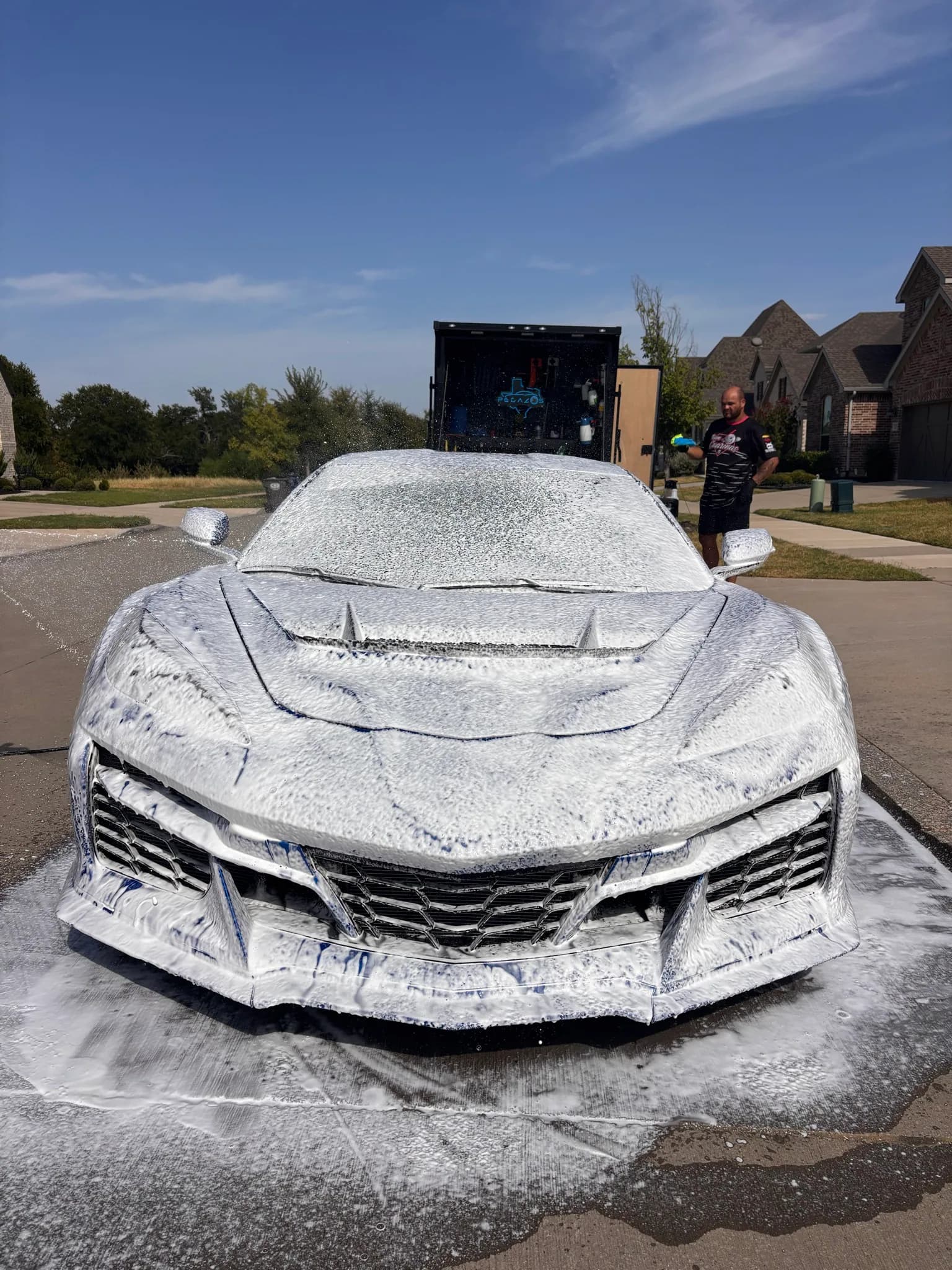
Our summer appointments run early, late, or under a canopy, and every panel is force-dried with filtered water. Maintenance exteriors from $99, on their own or on a repeating schedule you set.
The other driveway mistakes
One bucket instead of two, which puts the grit you just removed straight back onto the paint. Dish soap, which strips protection and dries out trim. A single towel used on wheels and paint. And washing bottom-up, which drags the dirtiest water across the cleanest panels.
None of these are exotic mistakes. They are the default way most people wash a car, and together they explain most of the swirl marks on cars that have never seen a tunnel wash.
The two-bucket method, if you are washing at home
If you are going to wash the car yourself, this is the part that matters most. It is not complicated and it removes most of the risk.
- 1Fill two buckets: one with shampoo solution, one with plain rinse water, both with grit guards.
- 2Rinse the whole car first to carry away loose grit before anything touches the paint.
- 3Do the wheels first, with separate tools and a separate bucket, then set those tools aside.
- 4Load the mitt from the soap bucket, wash one panel, then rinse the mitt in the rinse bucket before reloading.
- 5Work top down, and rinse each panel before the shampoo can dry on it.
- 6Dry immediately with forced air or a plush towel and a drying aid.
This is an educational guide written to help DFW drivers budget and decide with confidence. It is not a binding quote. Your price is confirmed up front before any work begins, with no deposit.