The short answer
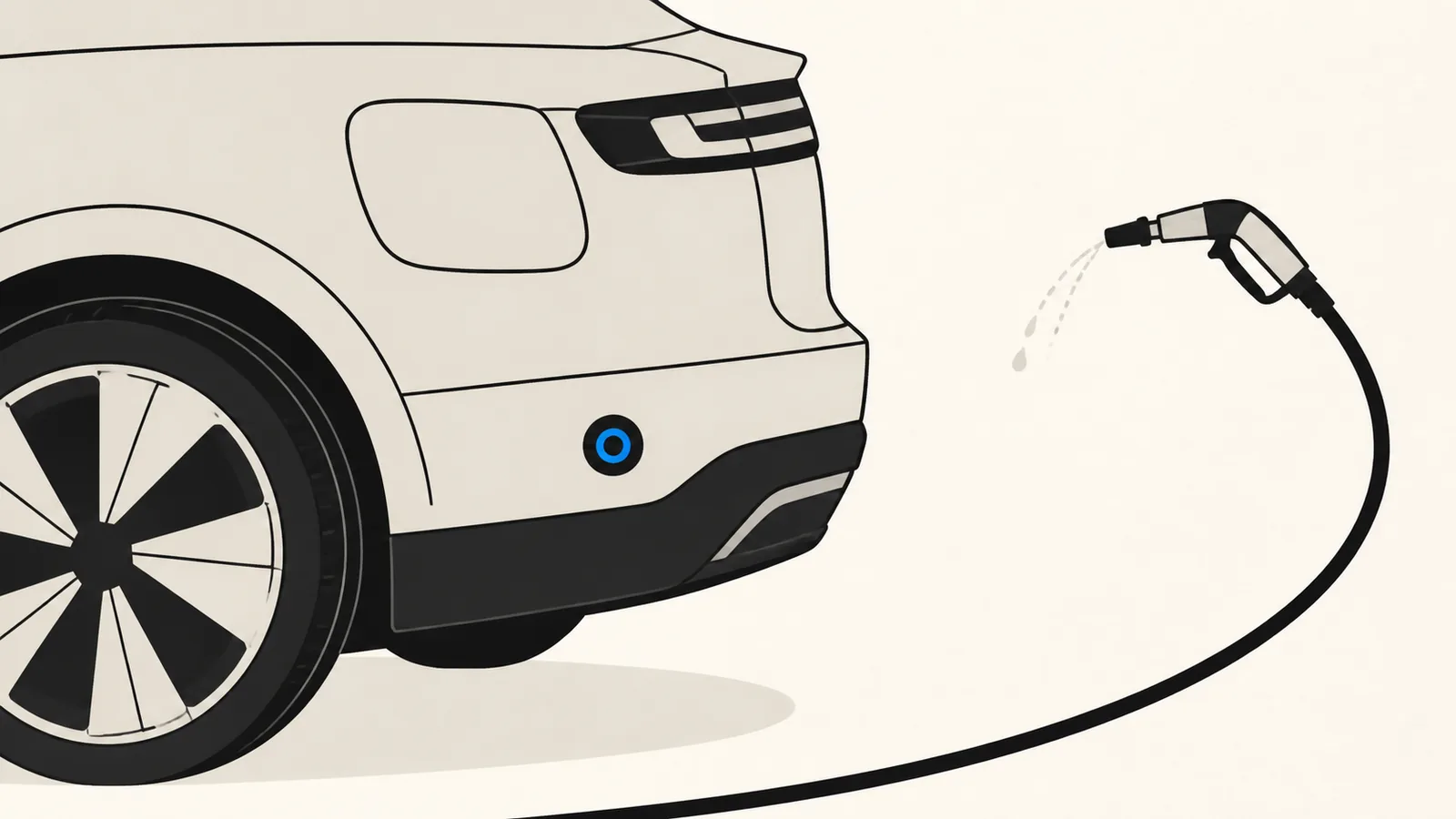
EVs are designed to be washed and driven through rain and standing water. The high-voltage system is sealed and isolated. What needs care is the charge port, exterior sensors and cameras, and any place a pressure washer can force water past a seal.
Keep the charge port closed and never wash while charging, clean sensors by hand, and keep high pressure away from panel gaps and camera housings. That is the whole list.
The four rules
- 1Never wash while the car is charging, and make sure the port is closed and dry before you start.
- 2Keep pressure washers away from the charge port, camera housings, sensor pucks, and panel gaps. Distance and a wide fan pattern are your friends.
- 3Clean cameras and sensors by hand with a damp microfiber or a dedicated swab, never with a brush or a jet.
- 4Do not use an automatic wash with brushes, which is bad for any paint and can knock sensor calibration on some cars.
The frunk and the seals
The frunk is the EV-specific area people forget. Its seal collects grit and its drain channels collect leaves, which is what leads to water finding its way somewhere it should not.
Open it during a wash, clean the channel, and check the seal is seated. It takes a minute and it is the kind of maintenance nobody thinks about until there is water in the carpet.
Washed properly, at your charger
We wash EVs with the charge port closed and dry, sensors cleaned by hand, and no high pressure near seals or housings. Maintenance exteriors from $99.
What about the underside
The battery pack forms much of the underbody on most EVs, and it is sealed and designed for road water. Rinsing the underside is fine and worth doing after any winter brine event.
What is not fine is a pressure washer held close to the pack seams or the charging hardware. Use a wide pattern and keep your distance, exactly as you would with any modern vehicle's underbody.
Winter, standing water, and the questions people actually worry about
Electric vehicles are engineered for the same weather as any other car. They are tested in rain, they drive through standing water, and their high-voltage systems are sealed and isolated from the body.
The realistic cautions are mundane: do not charge with a wet port cover open, do not aim high-pressure water into a charge port or a sensor housing, and do not let a car sit with water pooled in the frunk drain channels through a cold snap.
This is an educational guide written to help DFW drivers budget and decide with confidence. It is not a binding quote. Your price is confirmed up front before any work begins, with no deposit.