The short answer
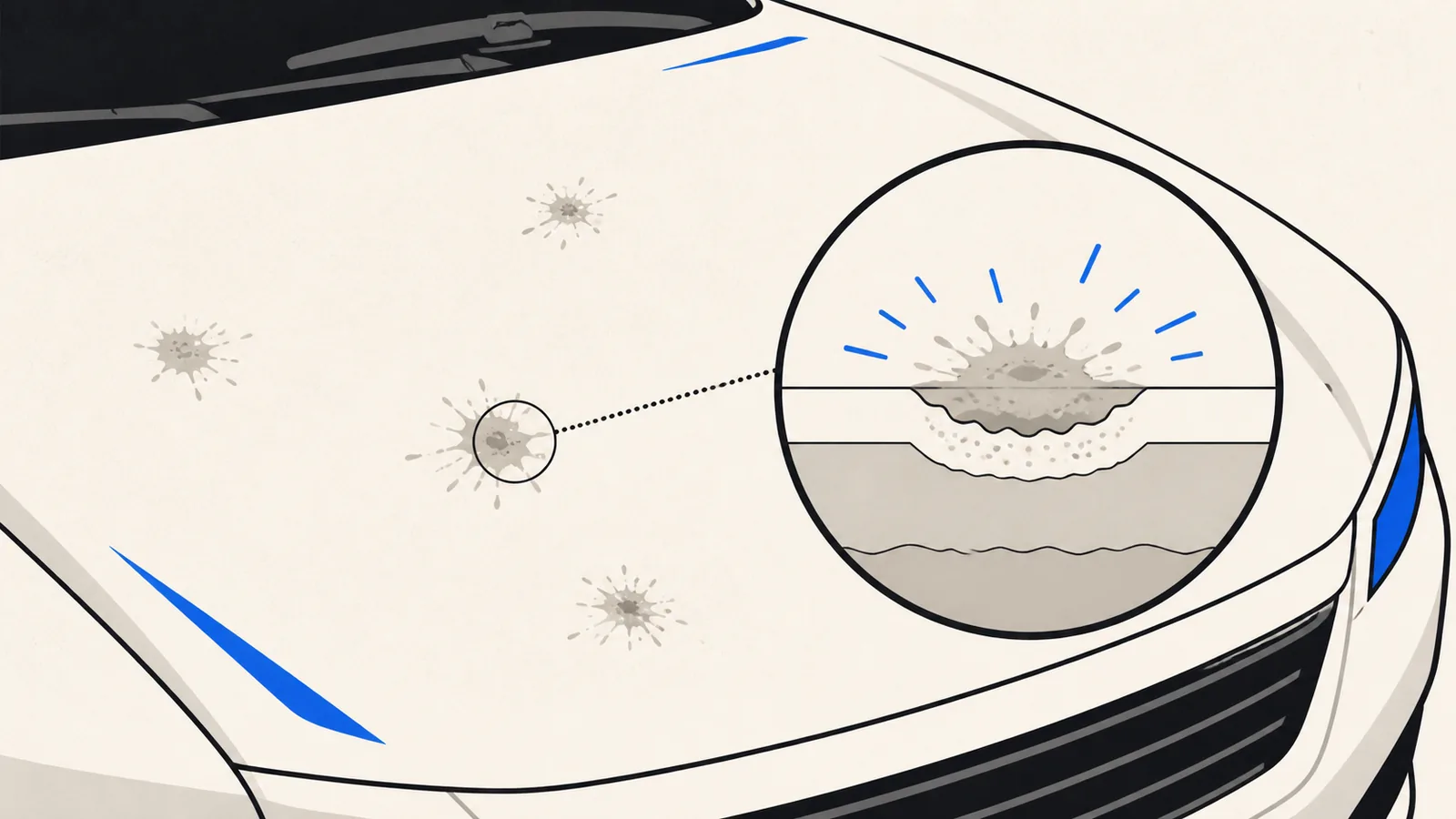
Get it off the same day. Bird droppings, bug residue, and tree sap are all acidic or resinous deposits that attack clear coat, and Texas heat speeds the reaction up dramatically. Soften the deposit with a damp microfiber laid on top for a minute, then lift it away without dragging. Never scrub a dry deposit: the grit in it will scratch the paint worse than the deposit would have etched it.
If a dull ring or an outline is left behind after the deposit is gone, the clear coat has already been etched, and cleaning will not remove it. That needs decontamination and, in the worse cases, machine polishing.
Why heat is the multiplier
The deposit is only half of the problem. The other half is what the sun does to it. Heat evaporates the water out of a dropping or a bug splatter, which concentrates whatever acid is in it exactly where it touches your clear coat. At the same time, hot clear coat is softer and more permeable than cool clear coat, so it takes the concentrated deposit in more readily. When the panel cools overnight, whatever soaked in is trapped.
That is why the same bird dropping that would be a nuisance in a mild climate becomes a permanent mark on a car parked in a DFW parking lot in July. It is also why the advice you read online, that you have a couple of days, is written for somewhere else.
The four contaminants, and what each one does
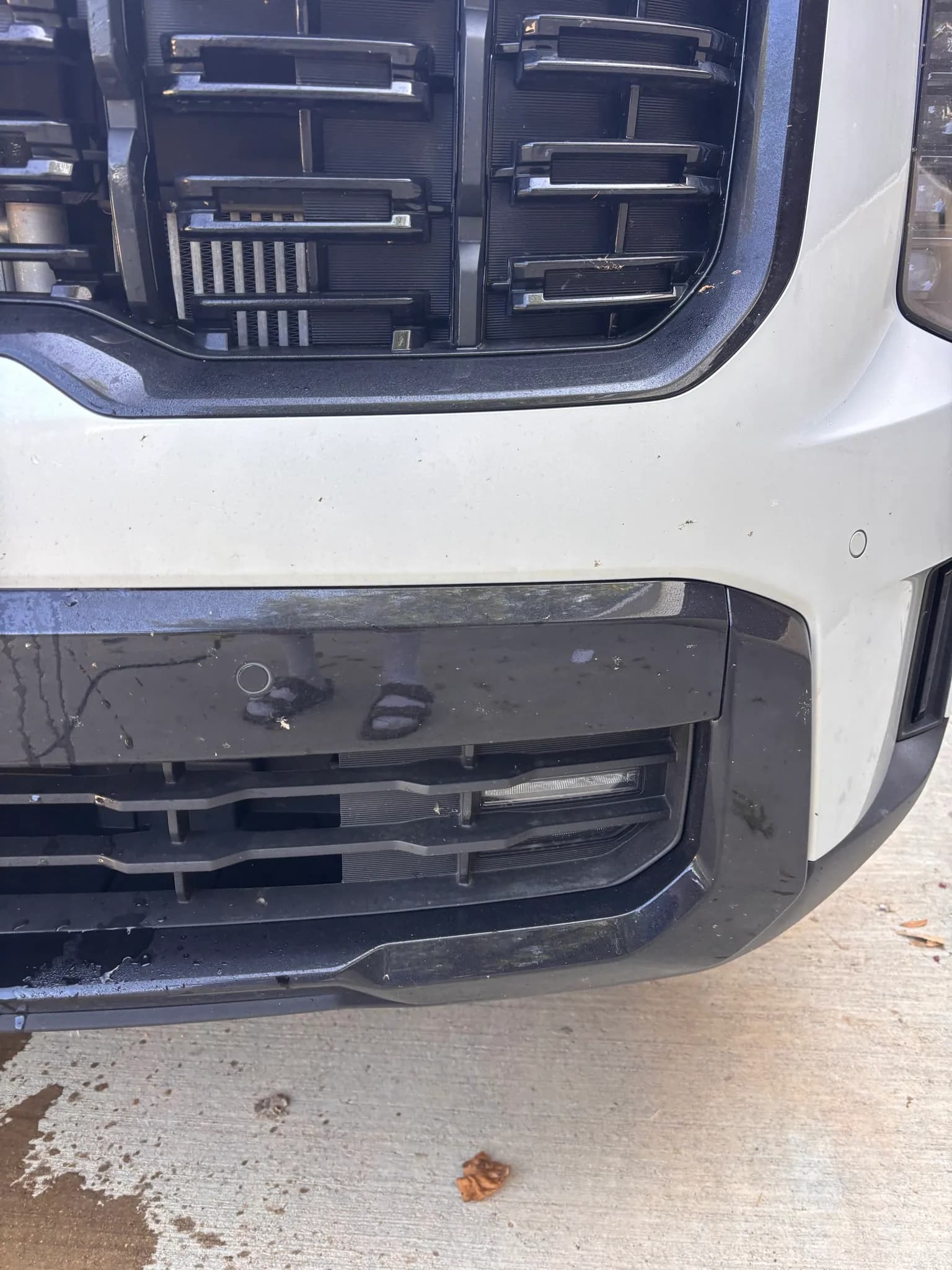
They are not interchangeable. Each attacks the surface differently, which changes both the urgency and the removal method.
| Contaminant | How fast it matters | Safe removal |
|---|---|---|
| Bird droppings | Same day in summer heat | Soak with a damp microfiber or detail spray, then lift, do not wipe |
| Bug splatter | Days, faster on a hot front bumper | Dedicated bug remover with dwell time, then a gentle wash |
| Tree sap | Days to weeks, hardens fast in sun | Dedicated sap or tar remover on a soaked microfiber; never pick at it |
| Industrial fallout and brake dust | Weeks to months, bonds progressively | Iron remover plus clay-bar decontamination |
Common paint contaminants, urgency, and safe removal
The safe removal sequence
Every mistake we see in this category comes from the same instinct: grabbing whatever cloth is in the car and rubbing. Do this instead.
- 1Work in the shade, on a cool panel. Product flashing off on hot paint causes its own marks.
- 2Soak the deposit. Lay a microfiber wet with detail spray or plain water over it and leave it a full minute. Let chemistry and time do the work.
- 3Lift, do not drag. Pick the softened deposit straight up in the towel. Dragging turns grit into a scratch.
- 4Repeat rather than escalate. A second soak beats more pressure every time.
- 5Rinse the area and check the paint in direct light for a dull outline.
- 6Re-protect the spot. Removing a deposit usually takes the wax or sealant with it, leaving bare clear coat exposed.
When it has already etched
If the deposit is gone but the ghost of it is still there, you are looking at etching in the clear coat. Light etching often comes out with proper decontamination: an iron remover for bonded fallout, then a clay-bar pass until the paint is glass-smooth. That is included in our exterior detail.
Deeper etching, where the outline is visibly recessed or the surface has wrinkled, needs machine polishing to level the clear coat around it, and there is a limit to how much clear coat can safely be removed. We will look at it and tell you straight which category yours is in. What we will not do is promise a wash will fix something only correction can.
Deal with what is already bonded
Iron decontamination and a clay-bar pass are what remove the deposits a wash leaves behind, and a six-month sealant is what buys you time on the next one. Both are included in the Full Detail, from $225.
How to stop losing this fight
Two habits do almost all of the work. Keep protection on the paint, so a deposit lands on a sacrificial layer instead of your clear coat and comes off with far less effort. And keep a plush microfiber and a bottle of detail spray in the trunk, so the response time on a bird dropping is minutes rather than the next free weekend.
Beyond that, park with intent. The shade of the tree you park under is worth less than the sap and the birds it delivers, and the covered spot at the far end of the lot is usually the better trade in a Texas summer.
This is an educational guide written to help DFW drivers budget and decide with confidence. It is not a binding quote. Your price is confirmed up front before any work begins, with no deposit.