The short answer
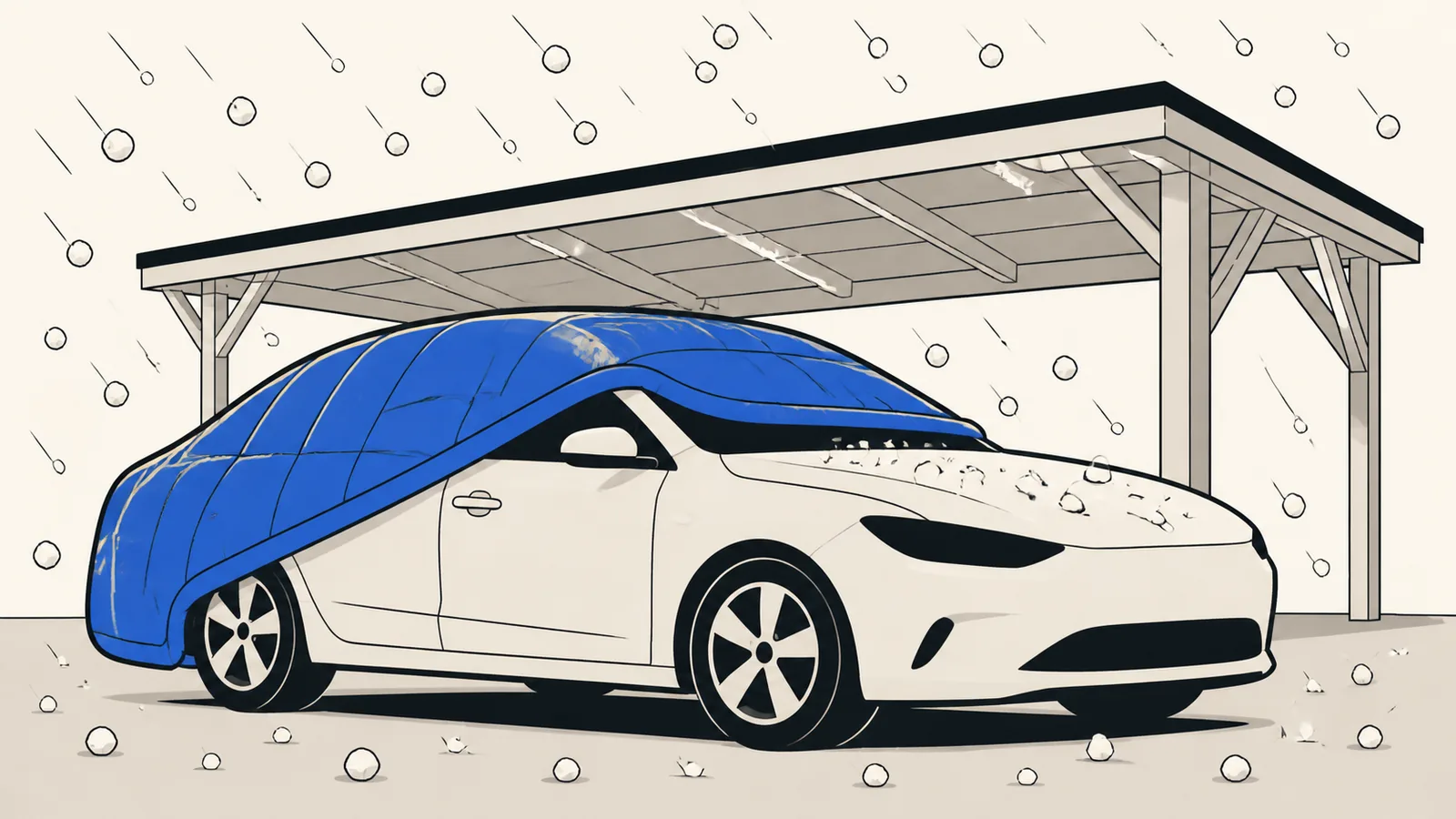
Nothing you can apply to paint stops hail damage. Covered parking is the only real protection, and a purpose-made padded hail cover is a distant second. Coatings, sealants, and film change nothing about dent risk.
What detailing does matter for is afterward: cleaning and inspecting the finish so damage can be assessed properly, and dealing with the paint damage that hail leaves behind even when there are no visible dents.
What actually protects a car
| Option | Effectiveness | Practicality |
|---|---|---|
| Enclosed garage | Complete | The obvious answer if you have one |
| Covered parking or carport | High | Worth arranging in advance during spring |
| Purpose-made padded hail cover | Moderate | Takes minutes to fit, needs to be on before the storm |
| Blankets and moving pads | Low, better than nothing | They blow off in the wind that precedes hail |
| Ceramic coating or PPF | None against dents | Neither product is impact protection |
Hail protection ranked
After a hailstorm, in order
- 1Photograph the car where it sits, before moving it, with wide and close shots in daylight.
- 2Check the glass and lights for cracks before driving.
- 3Wash the car gently. Hail comes with dirt and debris, and assessment needs a clean surface.
- 4Inspect in direct sun from low angles, which reveals dents that vanish in flat light.
- 5File the claim before doing any repair work.
- 6Get paintless dent repair quotes, which is the right route for dents where the paint is intact.
The detail that helps a claim
A clean car is an assessable car, and an assessor working over a dirty finish misses damage that is yours to claim. A full exterior detail with decontamination is $99 and makes every dent visible.
The damage people miss
Hail does not only dent. It strips protection off the impact points, chips paint on edges, and drives grit against the finish at speed, which leaves fine marring across horizontal panels. Those are the parts detailing genuinely fixes.
If the car escapes without dents, it still usually needs decontamination and re-protection afterward, because the storm stripped whatever was on the paint.
Before the storm: a ten-minute plan
Hail warnings usually arrive with enough notice to move a car, and having decided in advance is what makes that possible.
- 1Know your covered options now: a garage, a carport, a parking deck, or a covered spot at work.
- 2If you rely on a padded hail cover, keep it where you can reach it in two minutes, not in the attic.
- 3Move the car before the wind arrives, since covers and blankets are useless once it does.
- 4Park facing the storm if you have no cover, so the windshield rather than the rear glass takes the impact. A windshield is laminated and holds together.
- 5Photograph the car before the storm if damage is likely, so pre-existing condition is documented.
This is an educational guide written to help DFW drivers budget and decide with confidence. It is not a binding quote. Your price is confirmed up front before any work begins, with no deposit.