The short answer
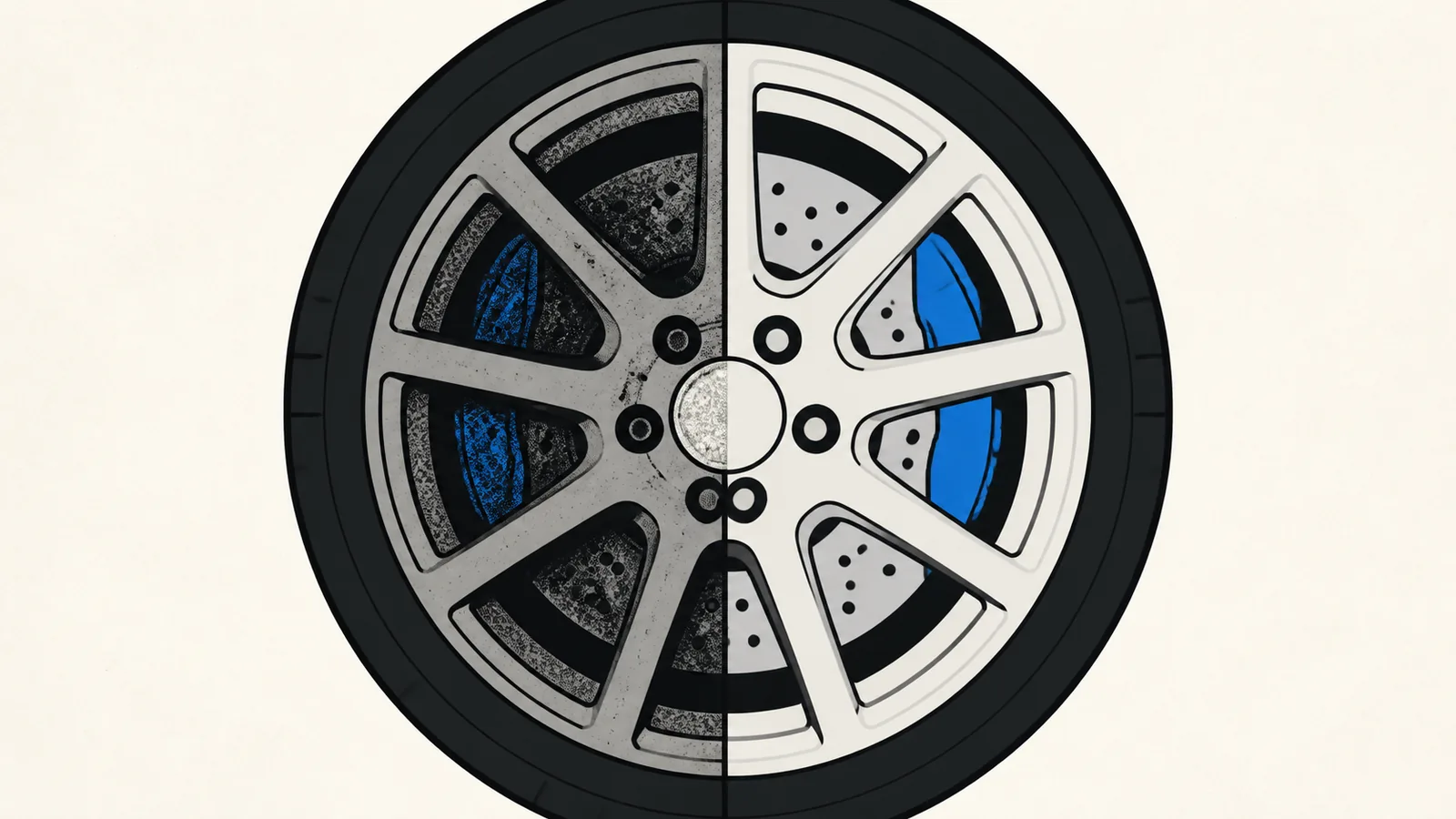
Brake dust is hot iron shaved off the rotor and pad, and it embeds itself in the wheel finish while it is still hot. Soap does not lift it because it is not sitting on the surface, it is stuck in it. You need a pH-balanced wheel cleaner or an iron remover, dwell time, and a brush that actually reaches the barrel behind the spokes.
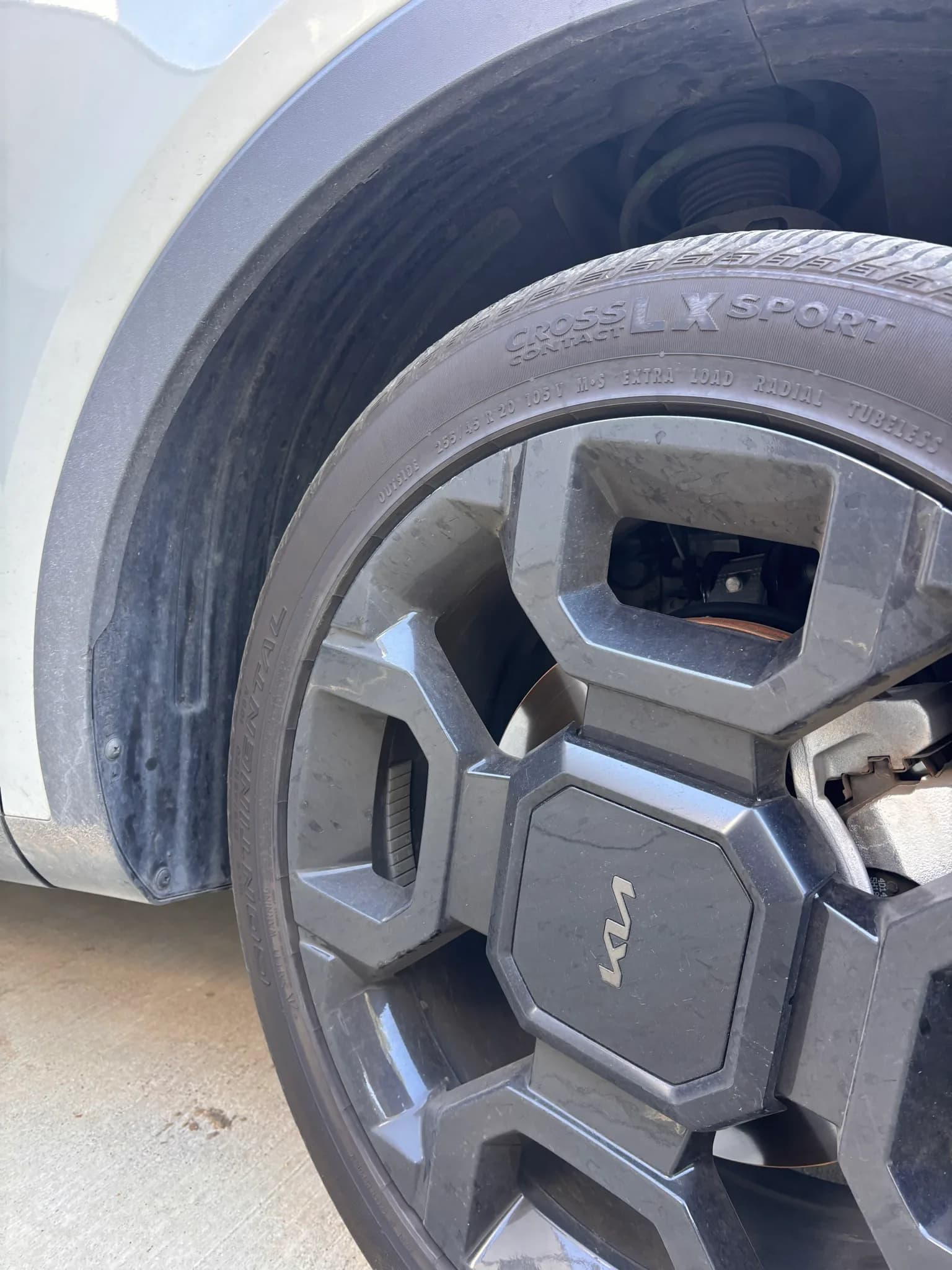
Tire shine slings and streaks for one reason: it was applied to a tire that was still dirty. The brown bloom on an old tire is antiozonant that migrated to the surface, and dressing over it is like painting a dusty wall.
Why your wheels look dirty two days after a wash
Every stop you make grinds pad material and rotor iron into a fine hot powder, and the wheel is the nearest surface. Those particles land at temperature, so they bond rather than settle. That is why a wheel can look clean, get rinsed, and still be grey to the touch, and why the same wash that keeps your paint clean for two weeks buys your wheels about two days.
It is also why the front wheels are always worse than the rear. Front brakes do most of the stopping on almost every car, so the front wheels take most of the iron. On a car with performance pads, the difference is dramatic.
The wheel finishes, and what each one tolerates
This is where permanent damage happens. An acidic cleaner strong enough to make painted wheels look effortless will stain polished aluminum and etch anodized finishes, and it will do it on the first application.
| Finish | Safe cleaner | What to avoid |
|---|---|---|
| Painted or clear-coated alloy (most cars) | pH-balanced wheel cleaner or iron remover | Strong acids, abrasive pads |
| Gloss black or powder-coated | pH-balanced cleaner, soft brushes only | Anything abrasive; the finish scratches and it shows |
| Polished or bare aluminum | Dedicated aluminum-safe cleaner | Acids and alkaline degreasers, both stain it permanently |
| Anodized | Mild soap and water | Acids, which strip the anodizing and cannot be undone |
| Chrome | pH-balanced cleaner, then a metal sealant | Steel wool and abrasive polishes |
Wheel finishes and what is safe to use on them
The safe wheel cleaning sequence
Wheels come first in any wash, before the paint, because wheel cleaner and brake dust are the last things you want splashing onto a clean panel.
- 1Work on cool wheels, out of direct sun. Cleaner flashing off a hot wheel stains it.
- 2Rinse first to carry away the loose grit before any brush touches the finish.
- 3Spray a pH-balanced cleaner or iron remover and let it dwell. If it turns purple, that is the iron dissolving, and that is the part soap could never do.
- 4Agitate the face with a soft brush, the barrel with a long-handled barrel brush, and the lug seats with a detailing brush.
- 5Do the tire sidewall separately with a stiff brush and an all-purpose cleaner, until the rinse water runs clear and no brown bloom comes back.
- 6Rinse thoroughly, including behind the spokes, and dry the face so it does not water-spot.
- 7Seal the wheel face. A sealed wheel sheds the next round of brake dust instead of holding it.
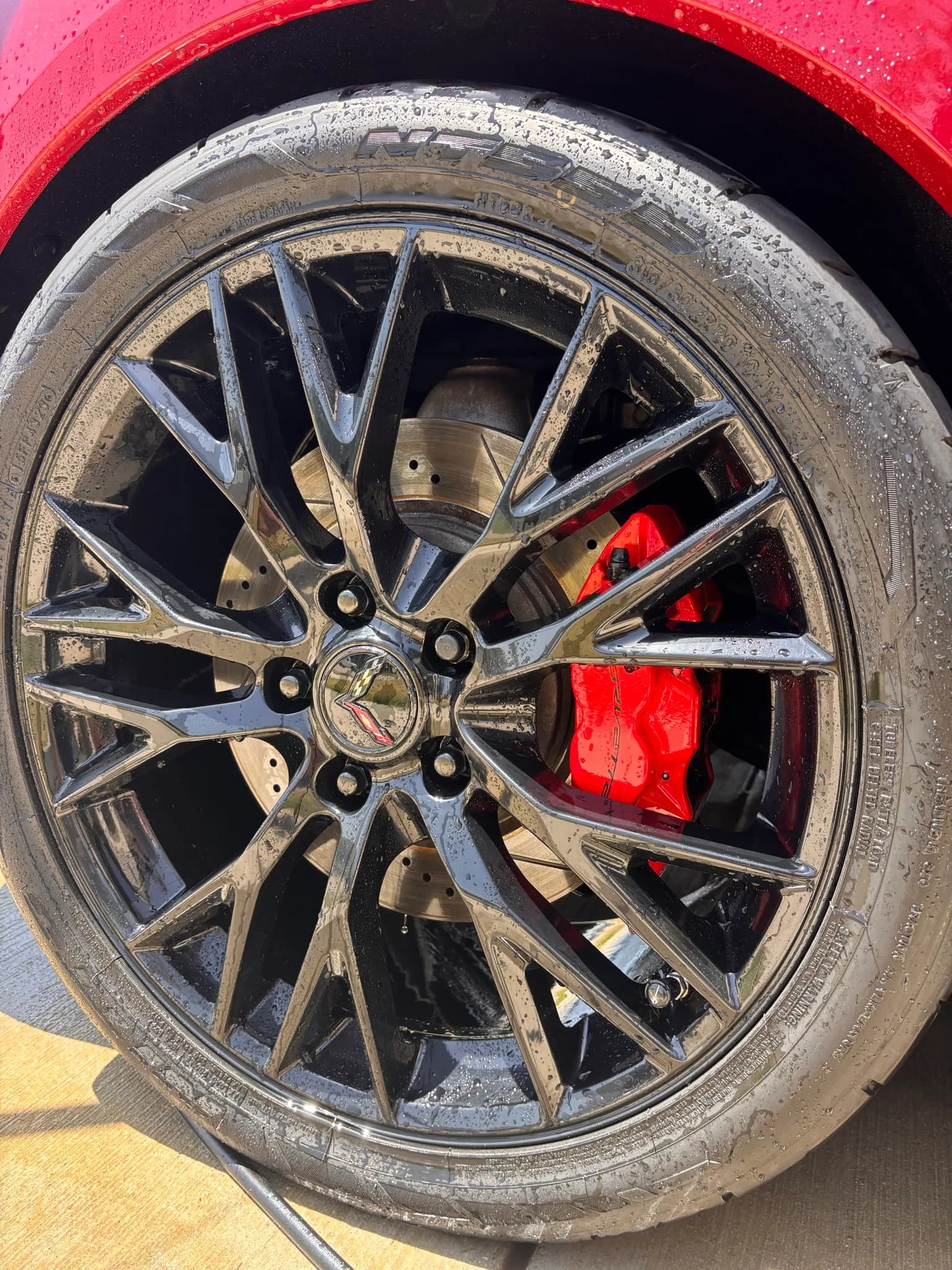
Get the barrels, not just the faces
Wheels, tires, and wheel wells are cleaned in every exterior detail, from $99, and the wheel barrels and calipers get their own pass in the Signature tiers. Sealed wheels stay clean roughly twice as long.
Why tire shine slings, streaks, or turns brown
Tires contain antiozonants that migrate to the surface over time to protect the rubber from cracking. That migration is what turns a black sidewall brown, and it is doing its job. But dressing applied over it never bonds, so it streaks in the first rain and flings onto your clean paint on the first drive.
The fix is unglamorous: scrub the sidewall until the suds stop coming back brown, let the tire dry, then apply a thin coat of dressing and level it. One thin layer that has been leveled outlasts three heavy layers, and it does not sling. Water-based dressings look like a clean tire, solvent-based dressings look wet and glossy, and only one of those two is a matter of taste.
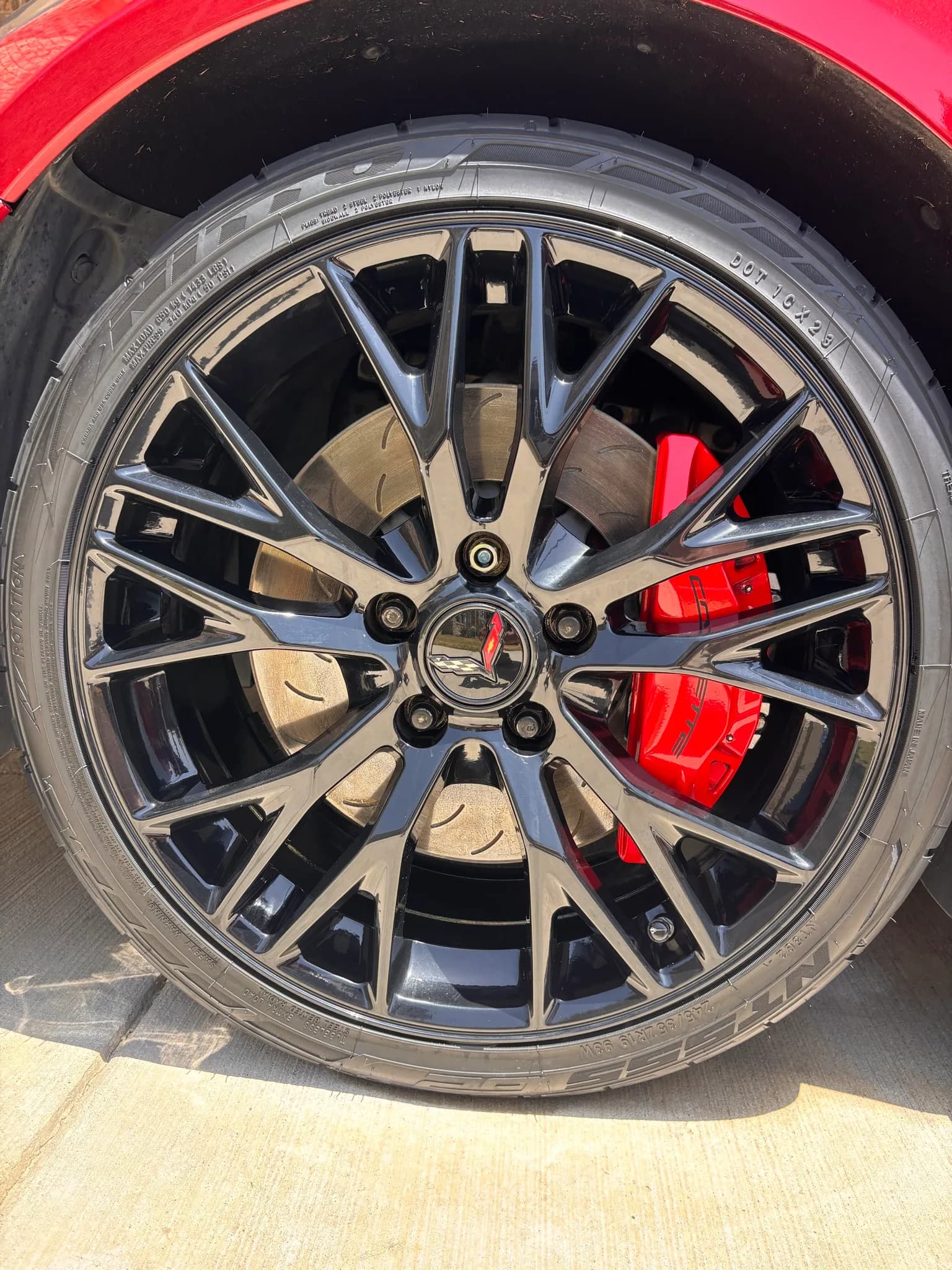
While you are down there, check the tires
Wheel cleaning is the only time most people crouch next to a tire, so use it. Check the pressure when the tires are cold, look at the tread depth across the width of the tire, and look at the sidewalls for cracking, bulges, and curb damage. Uneven wear across the tread is an alignment problem, and it will not fix itself.
Underinflated tires wear faster, run hotter, and cost you fuel economy, and in a DFW summer the temperature swing between an overnight low and a July afternoon is enough to move your pressures meaningfully.
This is an educational guide written to help DFW drivers budget and decide with confidence. It is not a binding quote. Your price is confirmed up front before any work begins, with no deposit.