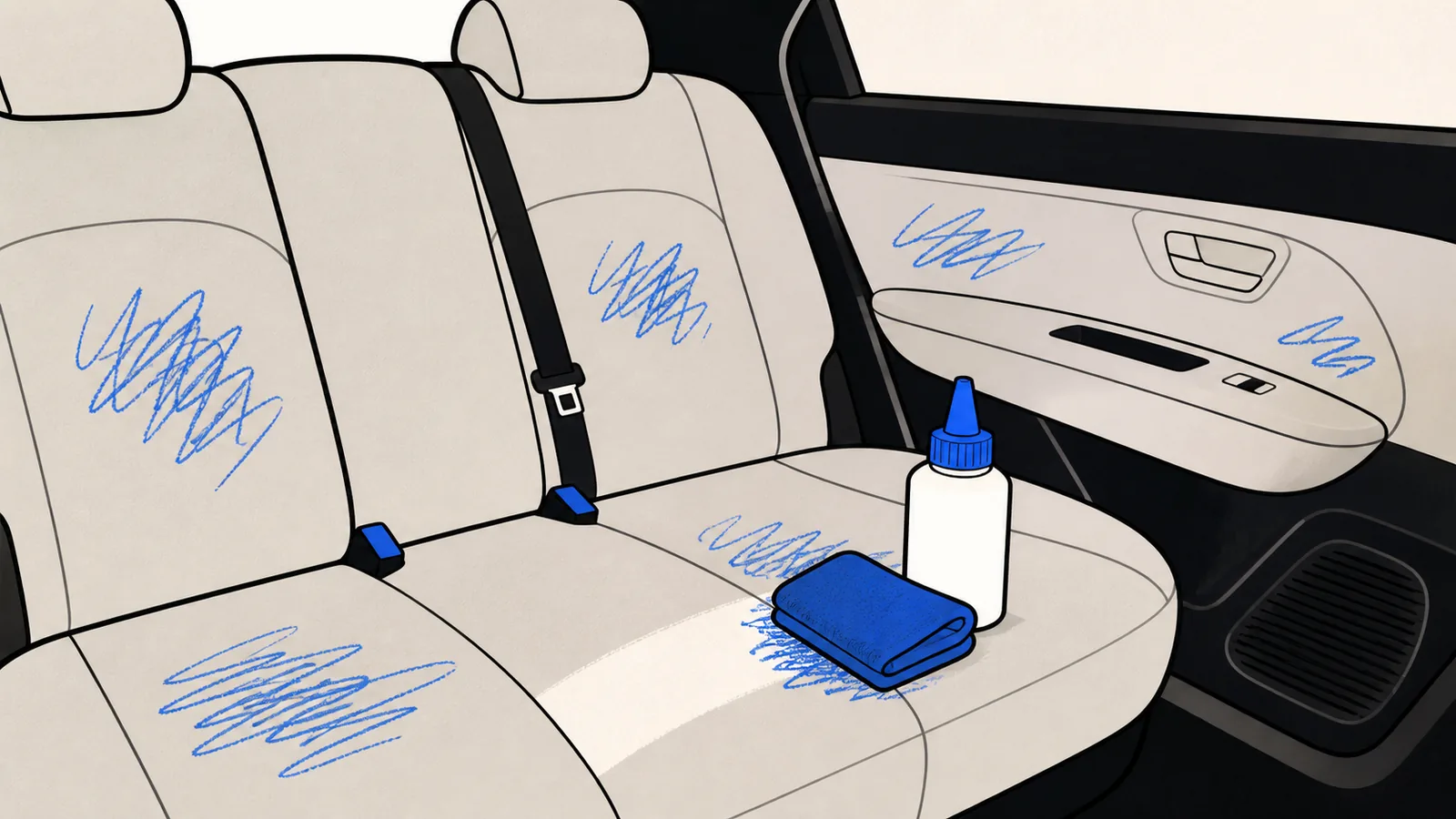
The short answer
Crayon is pigmented wax: lift the bulk off cold with a plastic edge, then dissolve the residue with a citrus or dedicated adhesive remover on a cloth. Marker is dye in a solvent carrier: it needs an alcohol-based approach, worked gently, and it may leave a shadow on porous surfaces.
Both are far easier on hard trim than on fabric, and both are much easier in the first week than after a summer of heat cycling.
Crayon, step by step
- 1Do not apply heat. Warm wax spreads and soaks in deeper.
- 2Scrape the raised wax off with a plastic card or a soft plastic scraper, working inward.
- 3Apply a citrus-based cleaner or adhesive remover to a microfiber, not to the surface.
- 4Wipe in one direction, folding to a clean face often, so you lift rather than smear.
- 5Follow with an interior cleaner to remove the solvent residue, which will otherwise attract dust.
- 6On fabric, finish with an upholstery cleaner and blot dry.
Marker, and the surfaces it ruins
Permanent marker on hard plastic usually comes off with isopropyl alcohol on a cloth, worked gently. On leather, alcohol also strips the protective coating, so it needs a dedicated leather-safe product and a light touch, and even then a shadow may remain.
On fabric, marker dye is often permanent. It can usually be lightened, and on light-colored cloth it rarely disappears completely. We say so before starting rather than after.
| Surface | Crayon | Marker |
|---|---|---|
| Hard plastic trim | Comes off completely | Usually comes off |
| Coated leather | Comes off with care | Often leaves a shadow |
| Cloth upholstery | Usually comes out | Frequently permanent |
| Headliner | Risky, foam-backed and delicate | Usually permanent |
| Painted exterior | Comes off with a wax-safe solvent | Comes off, may need polish after |
What to expect by surface
Before you try something aggressive
Solvents that lift marker also strip leather coatings and dull plastic. A Interior Detail includes steam and safe spot treatment across every surface from $149, and we will tell you honestly what will and will not come out.
Preventing round two
The realistic answer with small kids is containment rather than prohibition: a seat-back caddy that holds the crayons, washable markers only in the car, and a rule that art supplies do not travel loose.
A fabric protectant on the seats also buys time, because it slows how fast anything soaks in and gives you a wider window to catch it.
Melted crayon, which is the Texas version of this problem
A crayon left on a seat in a car parked in July does not stay a crayon. It melts into the fabric and wicks along the fibers, and by the time it is found it has cooled into a wide waxy stain.
Treat it as wax rather than as a stain. Chill the area if you can, lift the solid residue off with a plastic edge, then work a citrus-based cleaner in from the outside inward. Heat, including a hair dryer, spreads it further and is the most common way a small mark becomes a large one.
This is an educational guide written to help DFW drivers budget and decide with confidence. It is not a binding quote. Your price is confirmed up front before any work begins, with no deposit.