The short answer
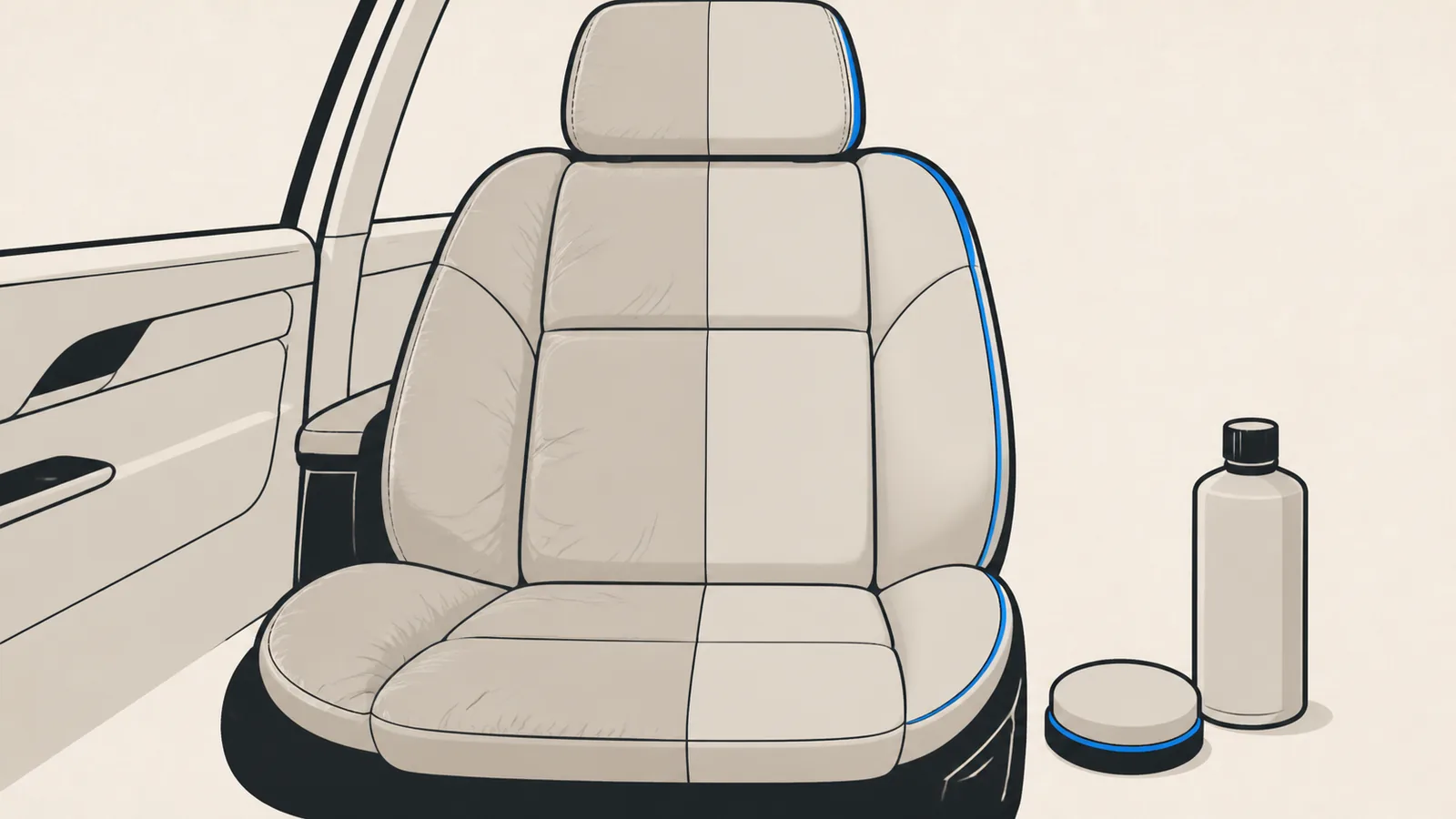
Vacuum, clean with a pH-balanced leather cleaner on a soft brush, wipe with a damp microfiber, and finish with a conditioner that leaves a matte finish rather than a shine. Two to four times a year is right in Texas.
The key fact: almost all modern automotive leather is coated, meaning there is a clear urethane layer over the hide. You are cleaning and protecting that layer, not feeding the leather underneath.
The method
- 1Vacuum the seat and the seams first, with a soft brush attachment.
- 2Spray a pH-balanced leather cleaner onto a soft brush, never directly onto perforated leather.
- 3Work one panel at a time in gentle circles until a light foam lifts the soil out of the grain.
- 4Wipe with a clean, slightly damp microfiber and check the towel: it should come away dirty.
- 5Repeat on high-contact areas, especially the driver's bolster and the steering wheel.
- 6Apply conditioner sparingly to an applicator pad, spread evenly, and buff off the excess after a few minutes.
- 7Do not leave conditioner sitting on the surface. A greasy seat is a slippery seat and it collects dust.
Perforated leather is different
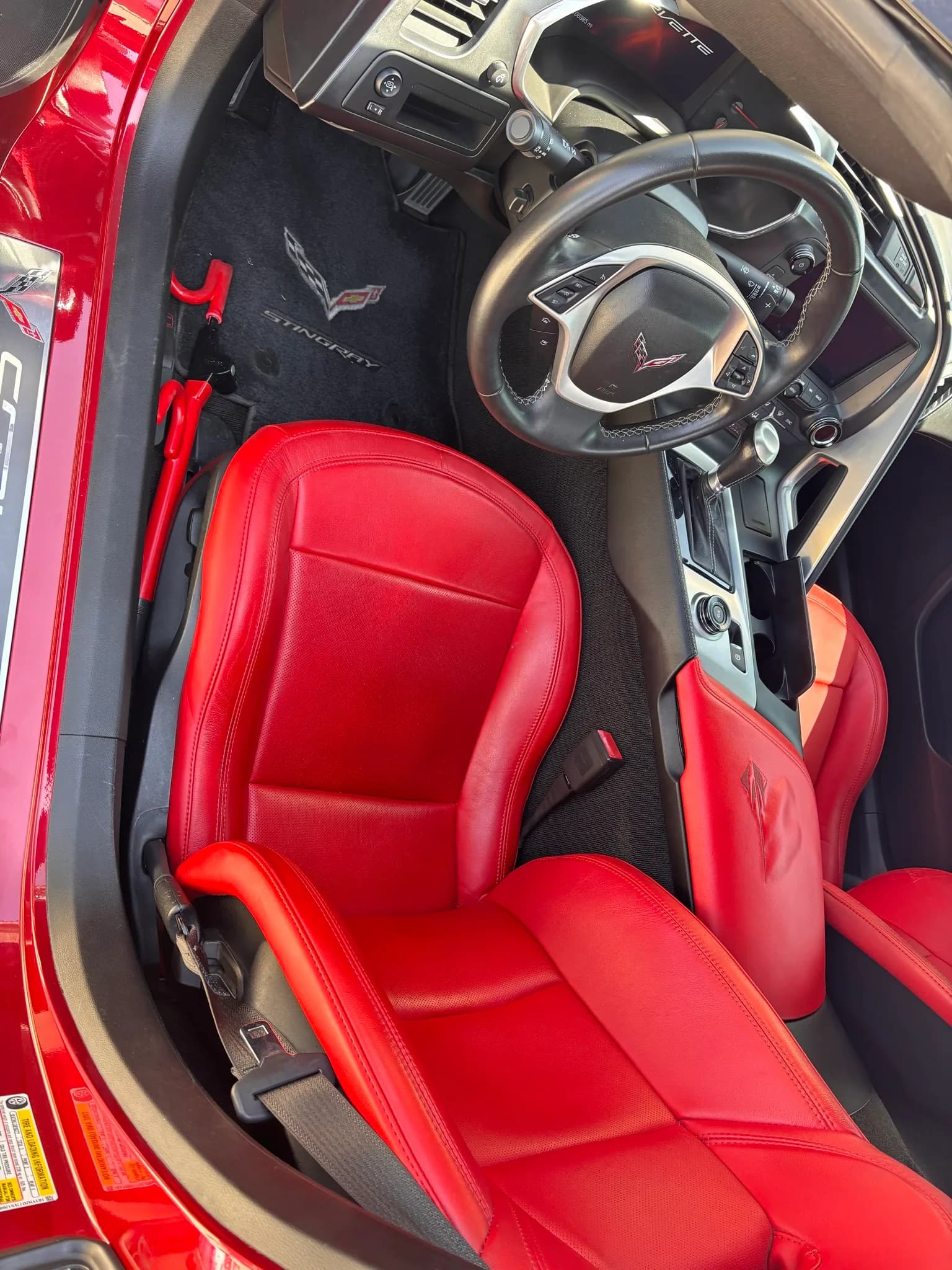
Ventilated and perforated seats have holes that lead directly into the foam and, in many cars, into the ventilation ducts. Spraying product onto them pushes liquid through the holes where it stays, and that is a smell you cannot clean out from the surface.
Always spray onto the brush or applicator. Work lightly. If foam collects in the holes, lift it out with a dry microfiber rather than pushing it in with another wipe.
The Texas-specific version
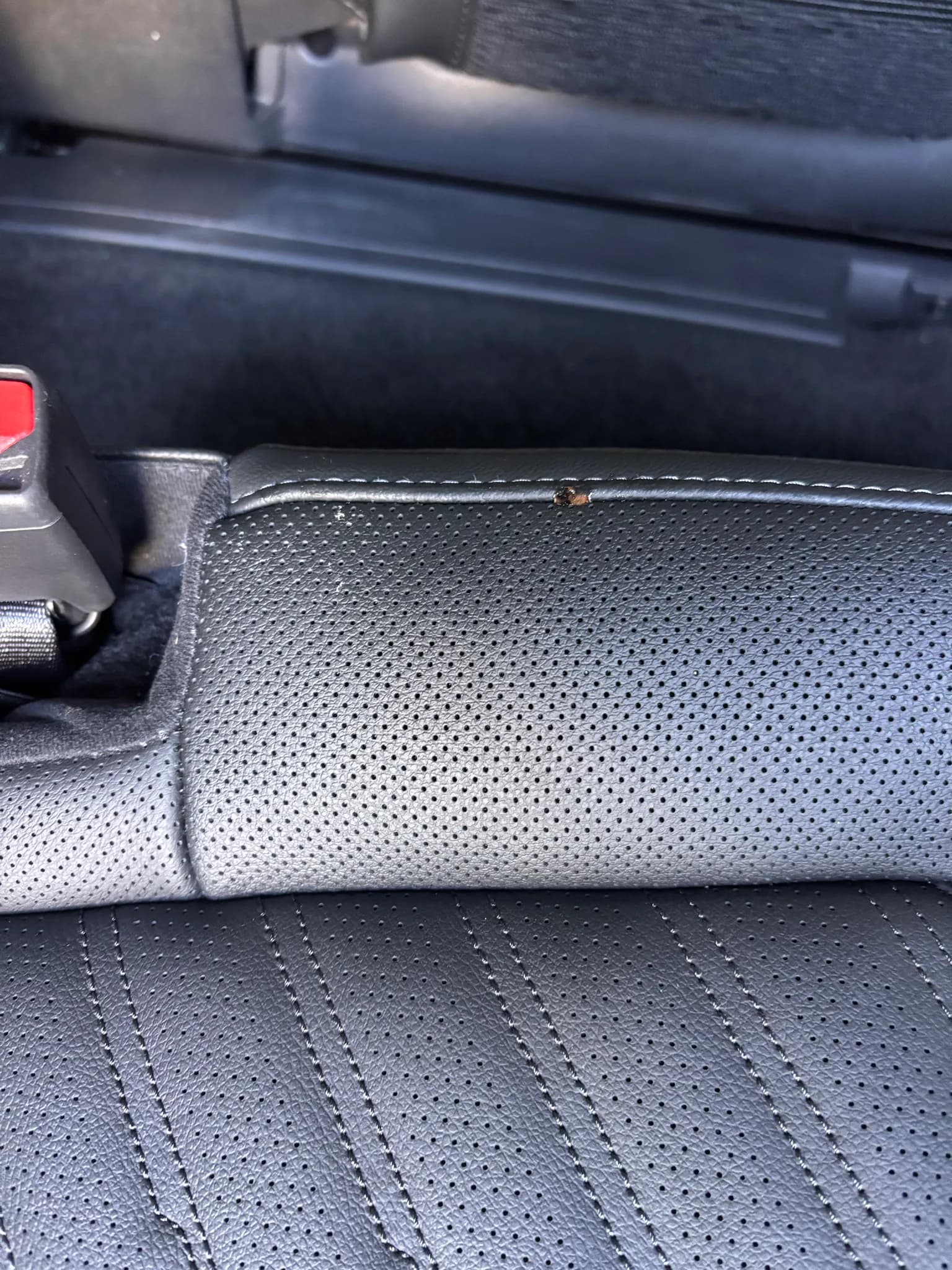
Leather in this climate dries out faster because of daily heat cycling. Leather cleaning and conditioning is included in the interior detail, or $69 as an add-on to any service.
What to avoid
| Product | What it does |
|---|---|
| All-purpose cleaner | Strips the protective coating, then the dye |
| Baby wipes | Contain surfactants that build residue and dry the coating |
| Household glass cleaner | Ammonia attacks the finish |
| Silicone-heavy dressings | Leave a slick shine that attracts dust and transfers to clothes |
| Magic-eraser style pads | Abrasive, they sand the coating off |
Products that damage automotive leather
The parts of a leather interior people skip
- The seat base sides, where jeans and bags rub and dye transfers.
- The seam channels, where cleaner and dust collect into a dark line.
- The back of the front seats, which take shoe marks from the second row.
- The steering wheel, which is leather too and takes more hand oil than any seat.
- The door armrest and pull, which wear faster than any seat surface in the car.
- The rear seat, which on most cars is barely used and is the reason a well-worn car still has one perfect row.
This is an educational guide written to help DFW drivers budget and decide with confidence. It is not a binding quote. Your price is confirmed up front before any work begins, with no deposit.