
The short answer
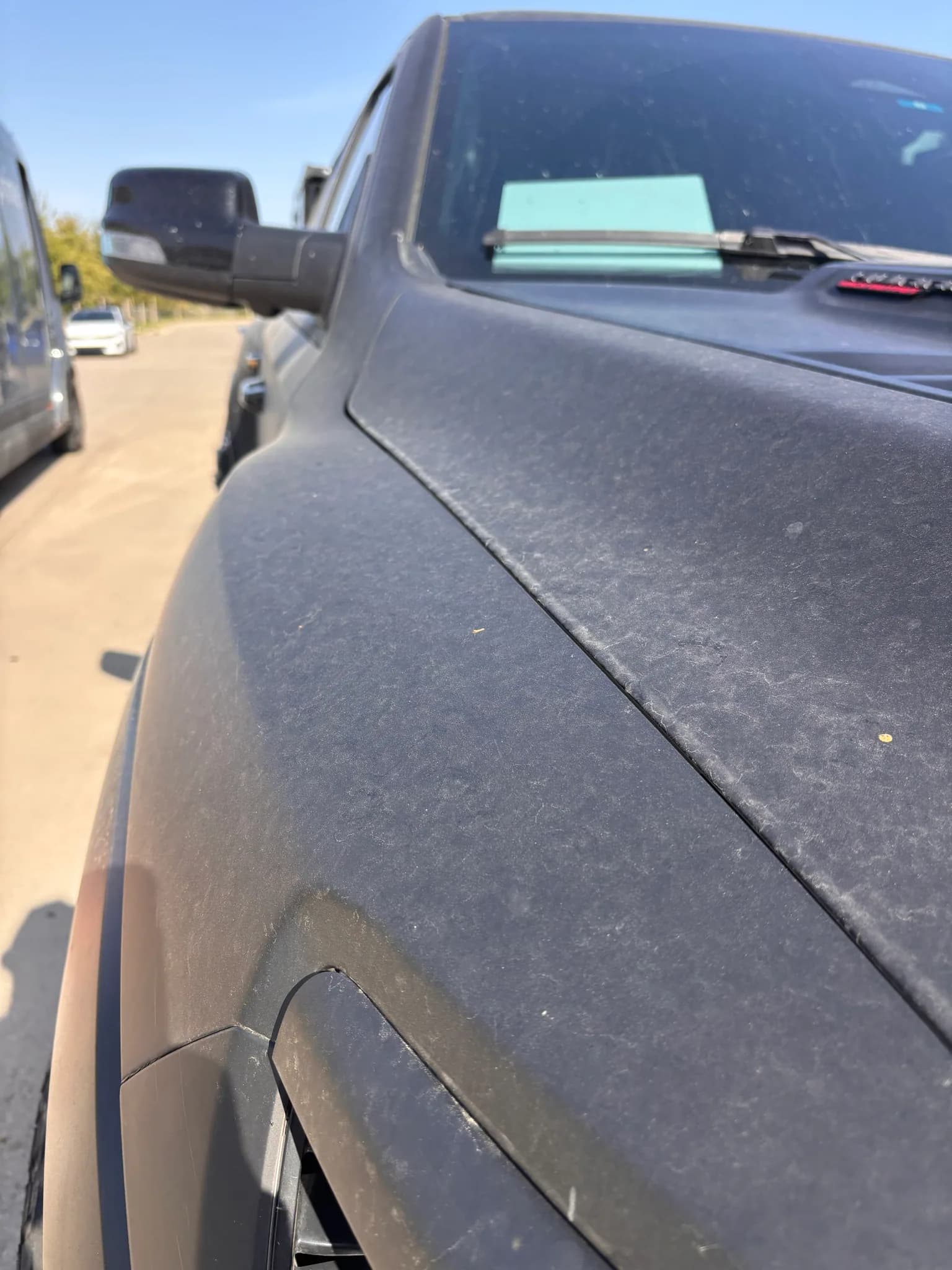
North Texas gets two long pollen waves: cedar from roughly December through February, then oak and other trees from March through May. Pollen holds moisture against your paint and is mildly acidic, so a layer left through a rain shower and a hot afternoon can leave marks behind.
Rinse it, never wipe it. Pollen grains are abrasive enough to scratch clear coat when dragged across it with a dry towel, and that is how most pollen-season paint damage actually happens.
The two pollen seasons
| Window | Source | What it means for your car |
|---|---|---|
| Dec to Feb | Mountain cedar | Fine yellow film, worst on cold clear mornings |
| Mar to May | Oak, elm, ash | Heavy visible layers plus catkins in the cowl and wells |
| Sep to Nov | Ragweed and grasses | Lighter on paint, harder on the cabin air filter |
North Texas pollen through the year
What pollen actually does
Three things. It holds moisture against the surface, which extends the time any other contaminant has to work. It is mildly acidic, which matters most when it gets wet and then bakes in the sun. And it is physically abrasive, which is what turns a dry wipe into a haze of fine scratches.
The oak catkins are their own problem. They collect in the cowl at the base of the windshield, block the drains, and hold water where you do not want it.
The pollen-season plan
- 1Rinse the car more often than you wash it. A plain water rinse removes the layer without any contact at all.
- 2Never dry-wipe pollen off paint or glass. If you must, saturate it with detail spray first.
- 3Keep protection fresh. Pollen releases far more easily from a sealed panel than from bare clear coat.
- 4Clear the cowl and wheel wells of catkins so drains stay open.
- 5Change the cabin air filter in spring. In this region it is an annual item, not a 30,000-mile one.
- 6Book the decontamination detail after the oak finishes, not during it.
Reset after pollen season, not during it
Once the oak is done, an Exterior Detail decontaminates what the season bonded and re-protects the paint before summer. From $99.
The interior half
Pollen gets in through the vents, and the cabin air filter is the only thing between it and you. A filter that has been in place through a full pollen season is loaded, and it makes the air conditioning work harder as well as smell worse.
Inside the car, pollen settles into the dash seams and vent louvers where a wipe cannot reach. A compressed-air blowout followed by a proper vacuum is the only way that comes out, and it is part of every interior detail we run.
This is an educational guide written to help DFW drivers budget and decide with confidence. It is not a binding quote. Your price is confirmed up front before any work begins, with no deposit.