The short answer
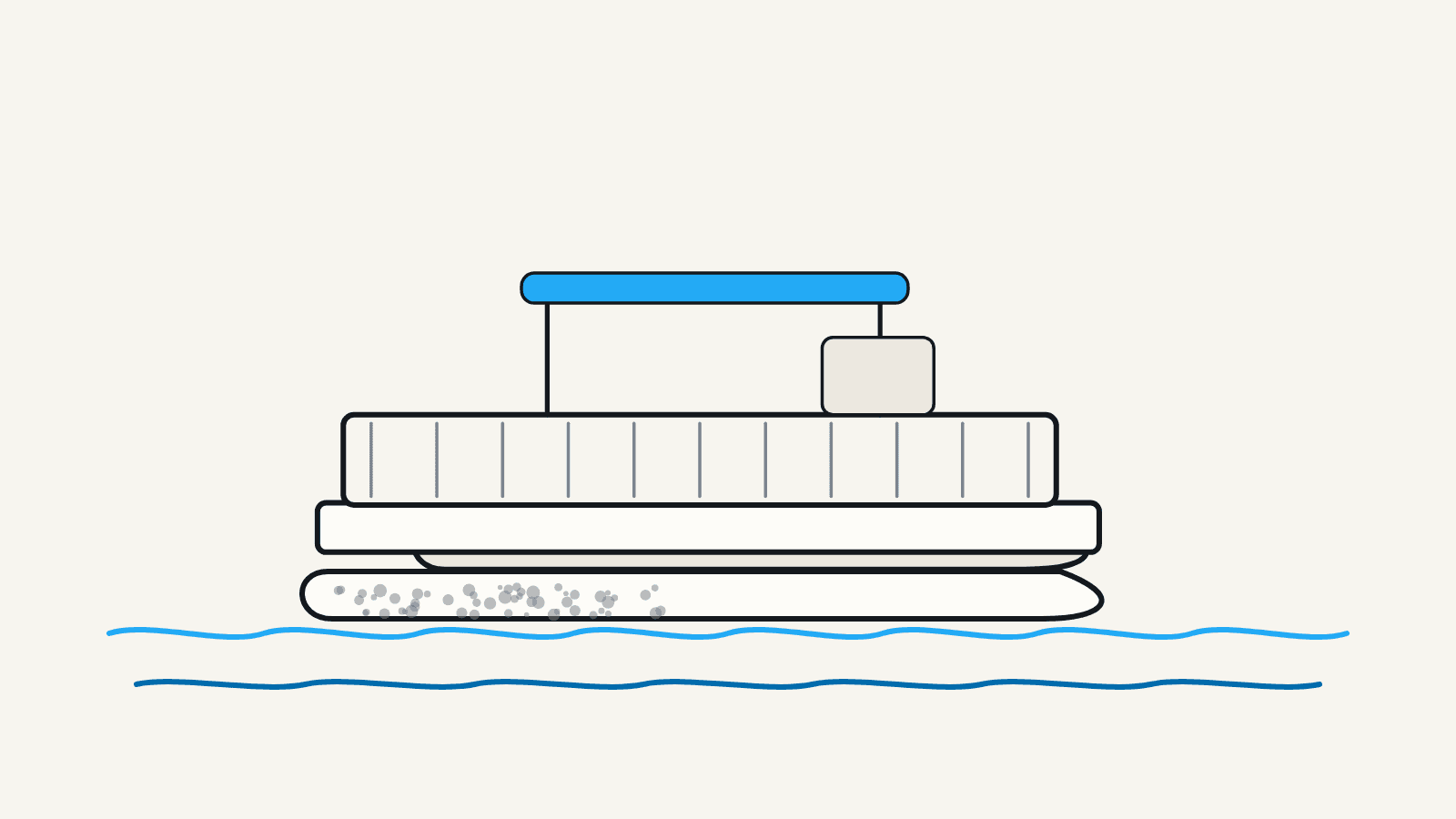
A pontoon is four materials pretending to be one boat. The tubes are usually bare mill-finish aluminum. The fence panels are usually coated or anodized aluminum. The deck is marine carpet or vinyl flooring. And the furniture is a larger area of vinyl than most cabin cruisers carry.
Each of those wants different chemistry, and the mistake that ruins pontoons is treating them as one surface. Acid hull cleaner is right for a gelcoat waterline and permanently destructive on an aluminum tube. Aluminum brightener is right for a tube and will strip a coated fence panel.
So pontoon work is less about how hard you scrub and more about knowing which square foot you are standing in front of.
What is actually happening to your tubes
Aluminum oxidizes almost instantly in air, and the oxide layer it forms is what protects the metal underneath from corroding further. That layer is doing a job. It is also dull gray, and it is why a tube that left the factory bright goes flat within a season or two.
On top of that sits everything the lake adds: a hard waterline band of mineral scale and calcium, tannin staining, and in some water a chalky white deposit that is genuinely bonded rather than sitting on the surface.
Brightening a tube means chemically removing that oxide layer and the deposits with it, exposing fresh metal. Polishing then refines the fresh metal toward a mirror. Both of those steps remove material, and both of them restart the oxidation clock, which is why the finish you choose matters more on a pontoon than on any other boat.
The four surfaces and what each one needs
| Surface | Material | What it needs | What will ruin it |
|---|---|---|---|
| Tubes below the rub line | Bare mill-finish aluminum | Aluminum cleaner or brightener, then polish or seal | Gelcoat acid hull cleaner, wire brushes, pressure washing seams |
| Fence and rail panels | Painted, powder-coated, or anodized aluminum | pH-neutral wash, polish, wax or sealant | Any brightener or acid, which strips the coating permanently |
| Deck | Marine carpet or vinyl flooring | Extraction on carpet, dedicated cleaner on vinyl flooring | Solvents and stiff brushes, which lift adhesive and seams |
| Furniture | Marine vinyl over foam | Wash off the oil film, treat mildew, protect with UV inhibitors | Bleach, which weakens seam thread and hardens the vinyl |
| Bimini and covers | Coated canvas | Wash, treat mildew, re-proof the water repellency | Machine washing, which strips the factory coating for good |
One boat, four different jobs
Tube work is quoted after we see it
Pontoon deck and interior work prices the same as any boat, $16/ft plus a $180 base for our Deluxe Boat Detail. Tube brightening and polishing is quoted separately, because oxidation depth and the finish you want swing the hours far more than length does.
Acid brighteners: the real warning
Aluminum brighteners work, and most of the strong ones are hazardous in a way ordinary detailing chemistry is not. Many contain hydrofluoric acid or its salts, which are dangerous to skin in a way that is not obvious at the time of contact, because the burn can develop hours later and go deep.
This is the one job on a boat where the correct answer for most owners is genuinely to hire it out, or to use the mildest product that will do the work with full protection: chemical gloves, eye protection, long sleeves, and moving air. Not because it is complicated, but because the consequence of a careless afternoon is a hospital rather than a redo.
There are also two rules that no product label makes prominent enough. Brightener must never touch a coated or anodized fence panel, since it strips the finish and leaves a blotchy patch that cannot be re-blended. And it must never dry on the metal, which is easy to do on a hot Texas tube and leaves permanent streaking that has to be polished out.
Satin or mirror: pick before you start, not after
There are two honest finishes for a pontoon tube and they have very different price tags and very different upkeep.
A cleaned and brightened satin finish removes the staining, evens the tone, and leaves a bright but not reflective surface. It takes a fraction of the labor, it looks clean and correct from any normal viewing distance, and sealed properly it holds up for a season.
A polished mirror finish takes the same brightened tube through multiple stages of increasingly fine polish until it reflects. It looks extraordinary, it costs several times as much because it is many hours per tube, and it is high maintenance: bare polished aluminum starts dulling immediately and wants attention every few months to stay mirrored.
There is no wrong choice, but there is a wrong sequence. Deciding you want mirror after paying for satin means paying for most of the process again. On a family boat that lives on Lewisville and gets used hard, satin plus a sealant is usually the better value, and we will say so.
The parts of a pontoon people forget
- The underside of the deck and the crossmembers, where lake spray, mud dauber nests, and corrosion accumulate out of sight.
- The inside faces of the tubes, which are shaded, rarely rinsed, and stain worse than the outside faces everyone photographs.
- The gate hinges and latches, which are usually a different alloy or a stainless fastener into aluminum and corrode where the two meet.
- Under the furniture bases, which is where standing water sits after rain and where the smell starts.
- The changing-room or head enclosure, which is fabric or vinyl in a permanently damp corner.
- The trailer, which spends its life submerged and parked wet and outlives nothing.
Keeping a pontoon clean is mostly about rinsing
More than on any other boat, pontoon maintenance is about what happens in the twenty minutes after it comes off the water. The mineral band on the tubes forms as hard water dries, and local supply is moderately hard, carrying calcium, magnesium, iron, and lime naturally. Let it evaporate on a hot tube and it bonds. Rinse and dry it and there is almost nothing to remove.
Texas law also requires draining all water from the boat, motor, and any livewell before approaching or leaving a public fresh water body, and removing visible plants and debris from the boat and trailer. On a pontoon that means the same routine that keeps standing water out of the deck seams and the furniture bases, which is where the mildew and the smell come from.
Do that after every outing and a pontoon needs an annual detail rather than a rescue. Skip it for two seasons and the tubes need brightening, which costs real money and real material.
This is an educational guide written to help DFW drivers budget and decide with confidence. It is not a binding quote. Your price is confirmed up front before any work begins, with no deposit.