The short answer
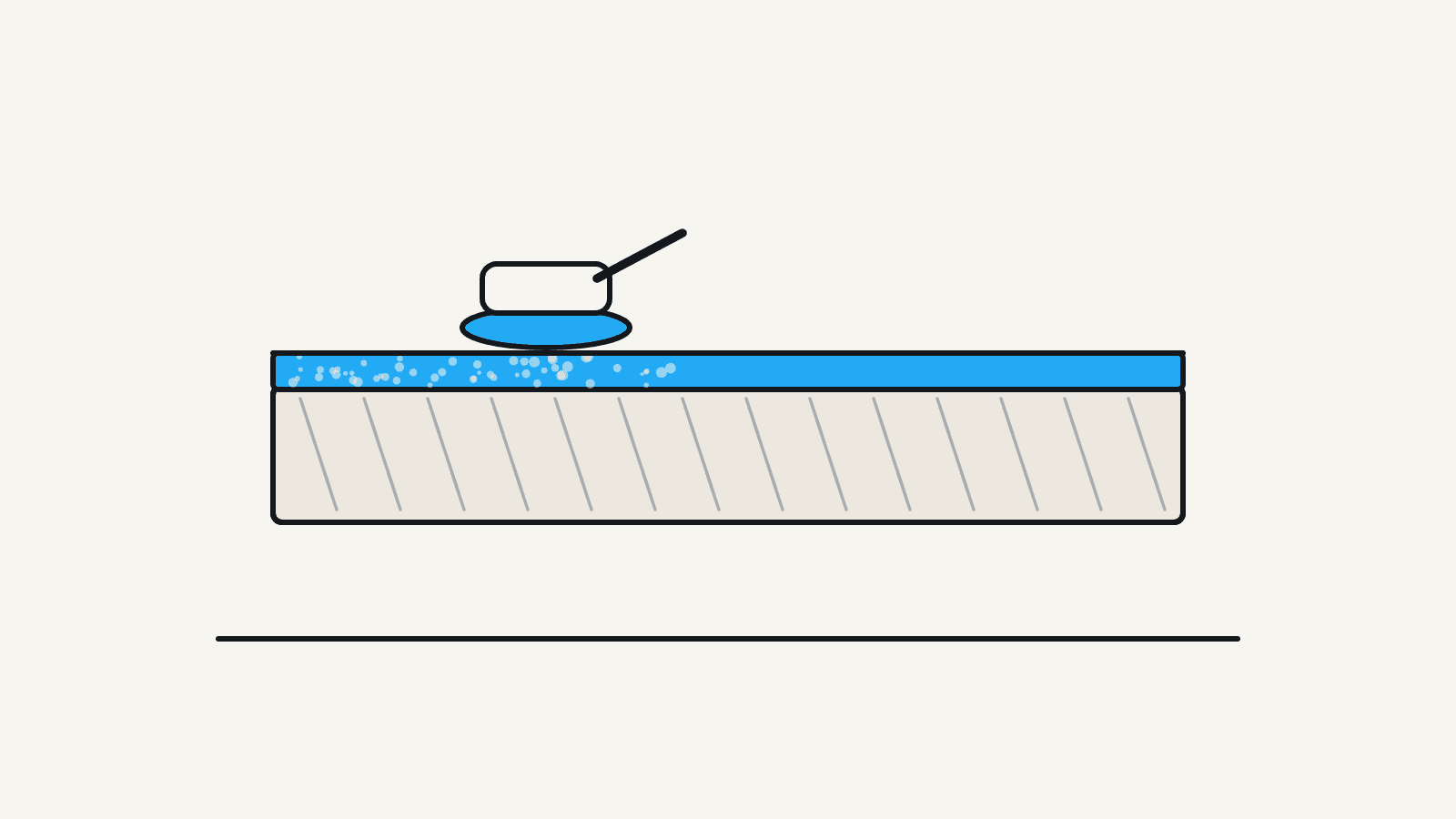
Gelcoat is pigmented polyester resin sprayed into the mold before the laminate goes in. It is the color and the weather surface in one layer, and unlike car paint there is no clear coat sitting over the top of it protecting it.
Oxidation is that resin breaking down under ultraviolet light. The binder degrades, releases the pigment and filler it was holding, and leaves a porous chalky layer that scatters light instead of reflecting it. That is why an oxidized hull looks flat and pale rather than dirty.
Compounding removes that dead layer and exposes intact gelcoat underneath, then polishing refines it and a sealant protects it. It works, it works dramatically, and it works only while there is still enough gelcoat left to spend. That job is Gelcoat Restoration, $28/ft plus a $350 base.
Why there is less material than you think
Factory gelcoat goes on thin, and it does not get thicker with age. Every wet sand, every compound, and every aggressive polish across a boat's life spends some of it, and none of it comes back.
That is the fundamental difference from correcting a car. On automotive paint you are cutting clear coat, and the color underneath is protected by design. On a hull the cutting layer and the color layer are the same layer. Go too far and you do not haze the finish, you go through the color and expose the laminate, which is a repair rather than a mistake you polish out.
So the discipline in marine correction is different. You use the least aggressive combination that will do the job, you test a small area first, and you accept a very good result over chasing a perfect one on a hull that has already been cut back twice.
The wet test grades it in one bucket of water
Wet a dull section of hull and watch it. Water fills the pores in the degraded layer and refracts light almost exactly the way a polished surface would, which makes it a genuinely good preview of what correction can achieve.
| What you see | Grade | What it takes | Honest expectation |
|---|---|---|---|
| Glossy dry, slight haze in low sun | None to trace | Deluxe Boat Detail with a marine wax | Full gloss, and stays that way with annual wax |
| Dull dry, deep and glossy wet | Light | Single-stage polish and sealant | Very close to new. This is the best value job in marine detailing |
| Chalky, mostly glossy wet | Moderate | Compound, then refine, then seal | Strong gloss returns. Some deeper staining may remain |
| Chalky, stays milky even wet | Heavy | Wet sand plus multi-stage, $14/ft | Big improvement, but not showroom, and it costs gelcoat |
| Fiber pattern visible through the surface | Past correction | Stop. Protect it and price a respray or wrap | Polishing here exposes laminate. Do not do it |
Grading oxidation before anyone quotes it
Send a photo of a wet panel and a dry one
It is the fastest honest grade anyone can give you, and it takes us thirty seconds to read. We will tell you which tier you are in, including when the cheap one is the right one.
Why waxing an oxidized hull is a three-week fix
Every owner tries this first, and it half works, which is the confusing part. Wax fills the pores in the chalky layer the same way water does, so the hull genuinely looks better for a couple of weeks.
But wax bonds to a solid surface, and there is not one. It has soaked into a layer of loose, degraded resin, and when it wears off it takes some of that layer with it. The hull comes back looking worse than before, and the owner concludes their wax was bad. The wax was fine. It was applied to something that could not hold it.
The same logic applies harder to ceramic sealants, because a sealant is designed to lock in whatever it is applied over. Sealing an oxidized hull buys you an oxidized hull with a twelve month bond on it. Correct first, then protect, in that order, every time.
When wet sanding is justified, and when it is showing off
Wet sanding cuts far faster than any compound, which is exactly why it is both the right tool for heavy oxidation and the wrong tool for anything less. On a badly chalked hull, starting with a fine wet sand and working back up through compound and polish is genuinely the efficient path, and it produces a result compounding alone will not reach.
On a moderately oxidized hull it is unnecessary aggression. It removes more gelcoat than the job requires, and gelcoat is the one thing you cannot get back. A shop that reaches for sandpaper on every boat is spending your hull's remaining life to save its own labor hours.
Ask which grit, ask why, and ask what the alternative was. There is a good answer to all three when it is justified, and there is an evasive one when it is not.
Colored hulls, dark stripes, and why they go first
Look at almost any older boat on a DFW lake and the white gelcoat is tired while the dark blue or black hull stripe is genuinely dead. There are two reasons for that and both are physics.
Dark pigment absorbs far more solar energy, so the surface runs much hotter and the resin degrades faster. And white gelcoat hides oxidation well, because the chalk it produces is roughly the same color as the surface it came from, while on a dark stripe the same chalk reads as a gray film against black.
Practically, that means a dark hull or a colored stripe needs its protection renewed more often than the white it sits next to, and it is usually the area that decides whether a boat needs a correction at all. If the stripe is the only dead part, say so when you get a quote. Correcting one band is a different job from correcting a whole hull.
How long a corrected hull holds
Freshly cut gelcoat is bare, open, and will re-oxidize faster than the original factory surface did if it is left that way. What decides longevity is the protection that goes on immediately afterward and what happens over the following year.
A marine ceramic sealant gives twelve months or more of real UV defense, which is a different category from a paste wax at three to four months in this climate. The EPA rates UV Index 8 and above as very high to extreme exposure, and North Texas holds that through the summer, which is exactly the load that ends a wax early.
Beyond product choice, covered storage does more for a hull than anything in a bottle. A boat under a cover or in a stall that gets washed after use and re-waxed once a season will likely never need a second correction. A boat that lives uncovered on a trailer in an open lot is on a four to six year cycle back to where it started, no matter what went on it.
This is an educational guide written to help DFW drivers budget and decide with confidence. It is not a binding quote. Your price is confirmed up front before any work begins, with no deposit.