The short answer
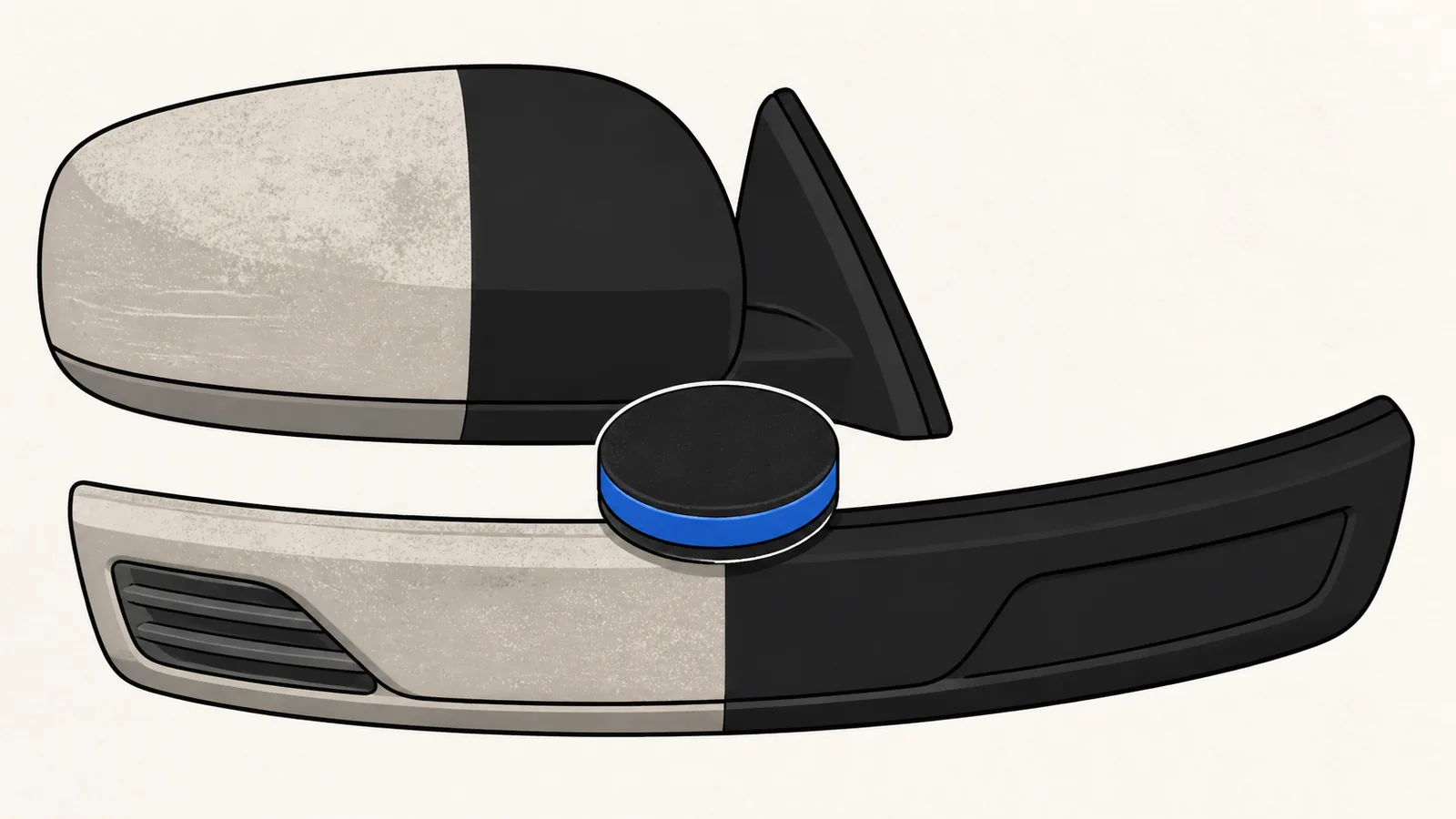
Fading is UV breaking down the surface of the plastic and leaving an oxidized chalky layer. Clean that layer off first, then either dress the trim, which lasts weeks to months, or use a trim restorer or dye, which penetrates and lasts far longer.
Trim restoration is $59 as an add-on and included in the Exterior Detail, which also restores and dress every piece of exterior trim.
Why it happens faster here
Unpainted exterior plastic has UV stabilizers built into it, and those deplete over time. In North Texas sun that happens years earlier than in a mild climate, which is why so many cars here have grey mirror caps and cowl panels while the paint still looks fine.
Heat accelerates it, and repeated washing with strong degreasers strips both the remaining stabilizers and any dressing that was protecting the surface.
The options, honestly
| Approach | How long it lasts | Notes |
|---|---|---|
| Water-based dressing | Weeks | Cheap and easy, needs reapplying constantly |
| Solvent trim dressing | 1 to 3 months | Better durability, can look glossy |
| Trim restorer or coating | 6 to 12 months | Bonds to the plastic, matte factory look |
| Trim dye | Years | Effectively a re-color, best on badly faded plastic |
| Heat gun trick | Not recommended | Brings oils to the surface briefly and can warp the part |
What each approach gives you
The quickest visual win on an older car
Restored trim changes how a whole car reads, more than most people expect. It is $59 as an add-on, or included in the Exterior Detail from $99.
Preparation is most of the result
Whatever you apply, it will only be as good as the surface underneath. That means cleaning the oxidized layer off with an all-purpose cleaner and a brush, rinsing thoroughly, and letting the plastic dry completely before applying anything.
Dressing applied over chalky oxidation looks good for two days and then goes patchy, which is the usual reason people conclude trim products do not work.
Preparation, which is most of the result
Whatever product you choose, it will only be as durable as the surface under it, and the surface under faded trim is a layer of oxidized plastic that has to come off first.
- 1Clean the trim with an all-purpose cleaner and a soft brush until the chalky residue stops transferring to the towel.
- 2Rinse thoroughly, because leftover cleaner stops any restorer bonding.
- 3Let the plastic dry completely, which takes longer than paint does in the textured areas.
- 4Mask adjacent paint if you are using a bonded restorer or a dye.
- 5Apply thin and even, then remove the excess before it sets rather than after.
This is an educational guide written to help DFW drivers budget and decide with confidence. It is not a binding quote. Your price is confirmed up front before any work begins, with no deposit.