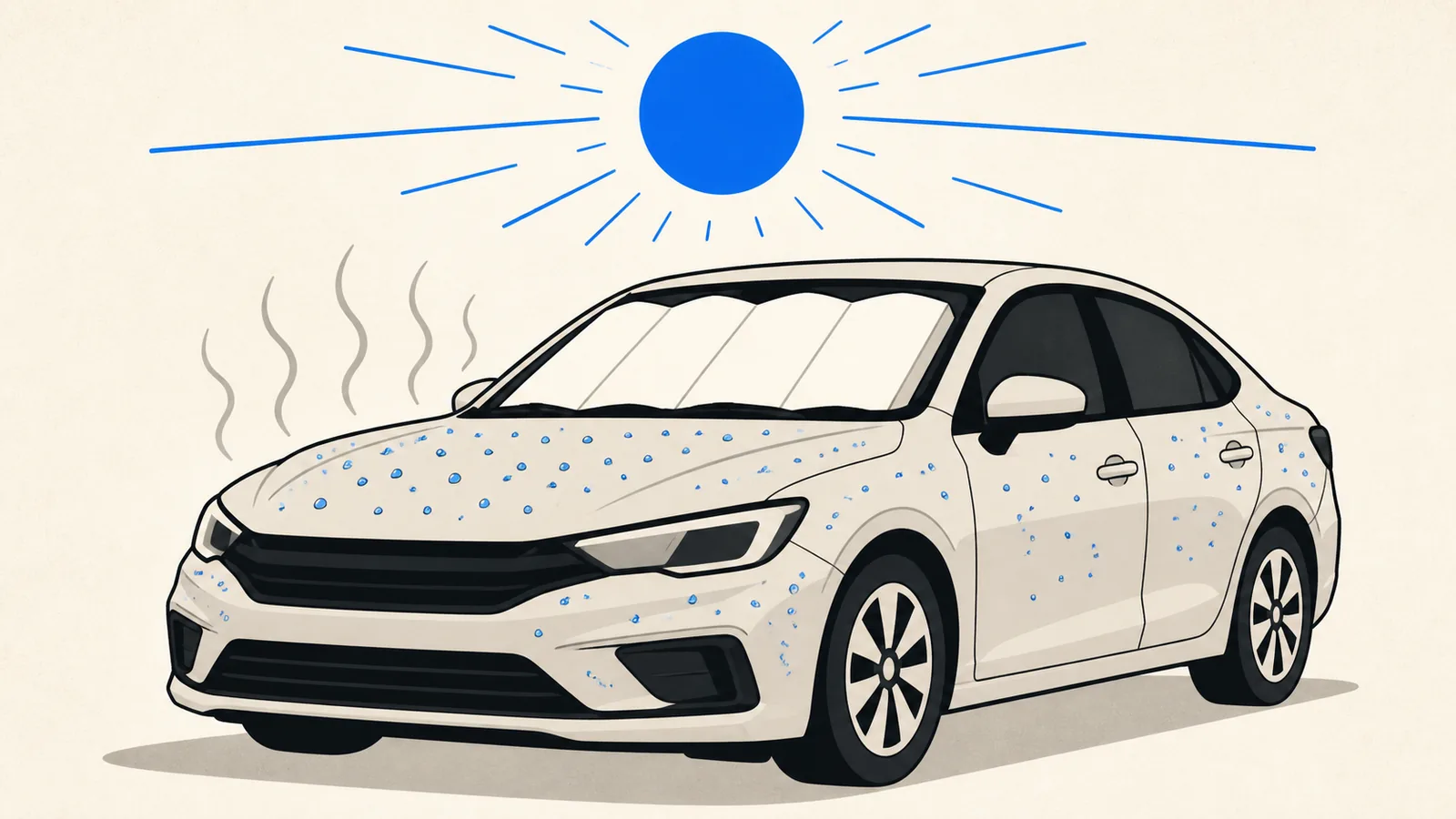
The short answer
Get a durable sealant on the paint before June, put UV protectant on every interior plastic and leather surface, use a windshield sunshade every single day, and wash early or late rather than in the middle of the day.
Those four things prevent most of what a Texas summer does to a car, and three of them are nearly free.
What heat actually damages
| Area | What happens | Prevention |
|---|---|---|
| Paint | UV oxidation, fading on red and black first | Sealant refreshed before summer, park in shade |
| Wax layer | Softens and washes away quickly | Use a synthetic sealant instead |
| Dash top | Surface temperatures well above air temperature, cracking over time | UV protectant plus a sunshade |
| Leather | Coating dries and cracks at the bolsters | Condition two to four times a year |
| Tires and trim | Dry out, sidewalls crack, trim goes chalky | Dressing and trim protection |
| Cabin air | Damp evaporator plus heat means odor | Fan-only for the last minutes of each drive |
Summer damage by area
The daily habits
- Use a windshield sunshade every time you park in the sun. It is the single most effective thing on this list.
- Park facing away from the afternoon sun where you can, so the dash gets less direct exposure.
- Crack the windows a few millimetres in a safe location to reduce the oven effect.
- Run the A/C on fan only for the last few minutes of each drive to dry the evaporator.
- Never leave bottled drinks, aerosols, or electronics in a closed car in July.
Get the protection on before June
A Full Detail decontaminates, applies a sealant good for up to six months, and puts UV protectant on every interior surface, from $225. Booked in May, it covers the whole summer.
Washing in summer
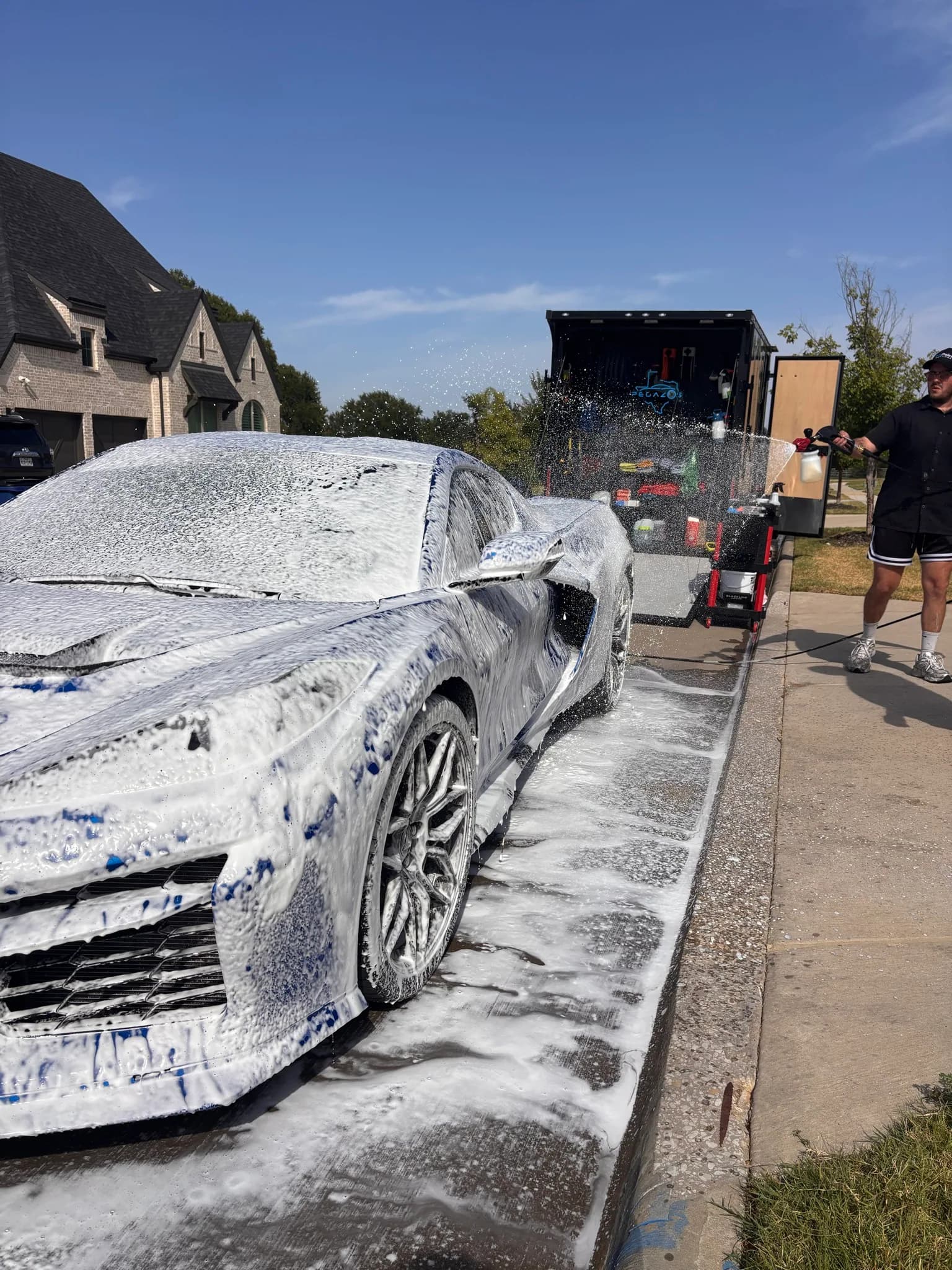
Before 10 a.m. or after 6 p.m., or in shade. On a hot panel, water and product evaporate before they can be worked or dried, which leaves hard-water spots and streaks that then need correcting.
Rinse the whole car first to cool the panels, work one section at a time, and dry immediately. If the hood is too hot to rest your hand on, it is too hot to wash.
Cabin temperature, and what it does to what you leave inside
A closed car parked in Texas sun becomes far hotter than the outside air within an hour, and it stays that way well into the evening. That has consequences beyond comfort.
- Aerosols, lighters, and pressurized cans should never be left in a parked car in summer.
- Electronics and batteries degrade quickly at cabin temperatures, and phone mounts on a windshield cook whatever is in them.
- Bottled drinks left in the car for weeks are not a health idea, and a leaking one on carpet in that heat becomes an odor problem within days.
- Sunglasses, adhesives, and dash-mounted accessories warp and release, which is how dash marks appear.
- Medication stored in a glovebox is exposed to temperatures far outside its stated range.
This is an educational guide written to help DFW drivers budget and decide with confidence. It is not a binding quote. Your price is confirmed up front before any work begins, with no deposit.