The short answer
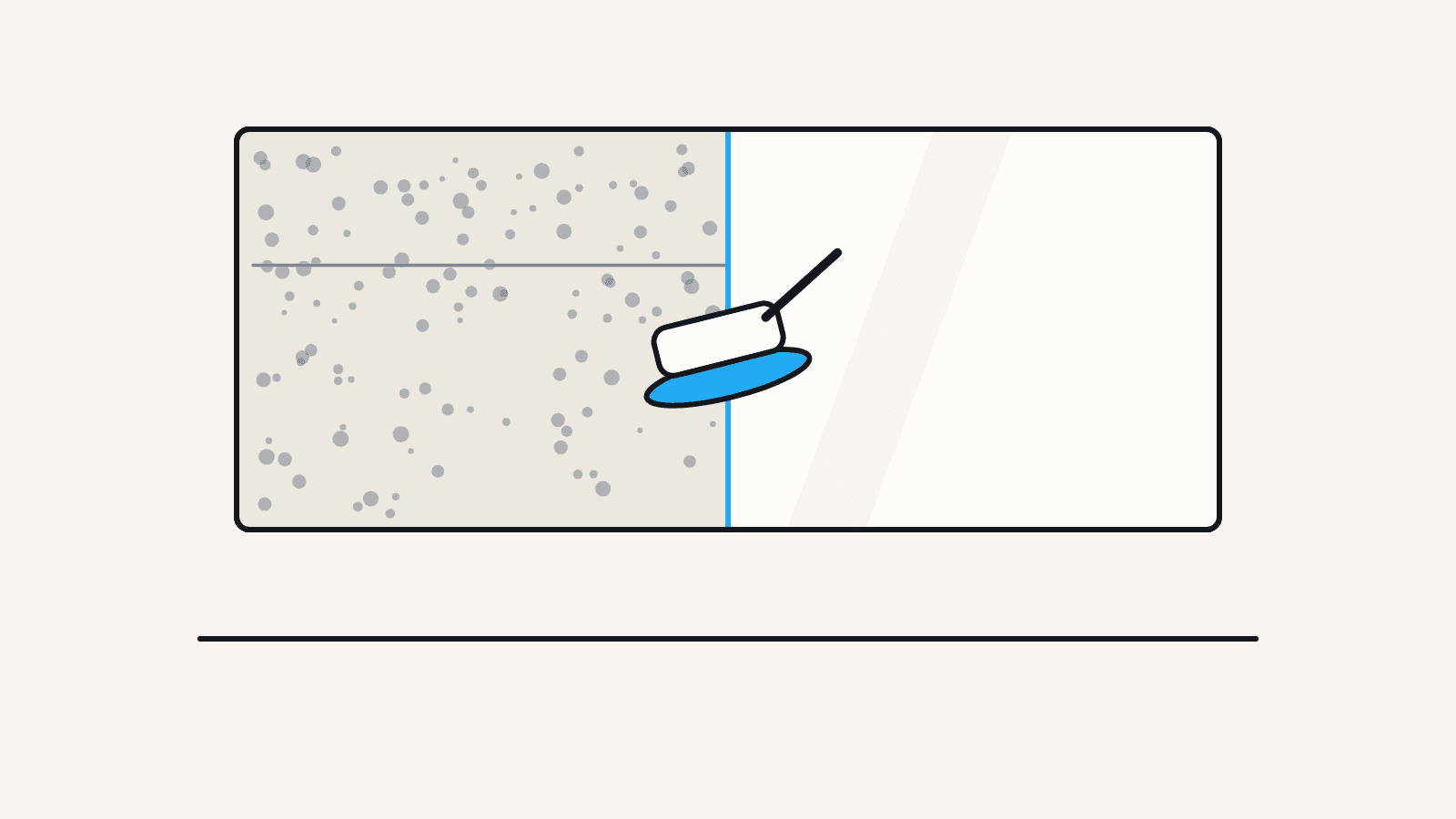
Oxidation is not a layer of dirt on your RV. It is the top of the gelcoat itself breaking down. UV light degrades the resin that binds the surface together, the resin releases the pigment and filler it was holding, and what is left is a porous, chalky layer with no gloss in it at all.
You cannot clean that off and you cannot wax over it, because there is nothing solid underneath the wax to bond to. The only thing that restores it is removing the dead layer mechanically and protecting the fresh gelcoat you expose. That is what RV Oxidation Restoration is: $24/ft plus a $400 base, about $1,170 on a 32 foot rig, and 1 to 3 days of work.
The two-second test
Wipe a clean, dark cloth firmly down a sun-facing sidewall. What comes back on the cloth tells you almost everything about what the rig needs and roughly what it will cost.
| What comes off on the cloth | What that means | What it takes |
|---|---|---|
| Dirt and road film, no white | Surface soiling only | RV Wash & Rinse, $5/ft plus a $85 base |
| Faint chalk, gloss returns when wet | Early oxidation, still shallow | RV Wash & Wax, $15/ft plus a $240 base |
| Heavy white chalk, wall stays dull wet | Established oxidation through the top layer | RV Oxidation Restoration, $24/ft plus a $400 base |
| Chalk plus visible fiber pattern | Gelcoat is nearly gone in that area | Assessment first. Polishing may not be the right answer |
Reading the wipe test
Not sure which one you have?
Send us a photo of a sun-facing panel and what the wipe test looked like. We will tell you honestly which tier your rig is in, including when the answer is the cheap one.
Why the wet-look test matters
There is a reason the table asks whether gloss returns when the panel is wet. Water temporarily fills the pores in the degraded layer and refracts light the way an intact surface would, which is exactly what a polish does permanently.
So if a panel looks genuinely deep and glossy while it is wet, the good gelcoat is still down there and the damaged layer is thin enough to cut through. If it stays flat and milky even soaking wet, the degradation runs deeper than a polish will reach in one stage, and that is a multi-stage job.
It is the single most useful thing an owner can check before calling anyone, and it costs a bucket of water.
What the restoration actually involves
The stages are not optional and they are not interchangeable. Each one exists to undo the damage the previous one deliberately caused.
- 1Wash and decontaminate first, because compounding a dirty panel drags grit under the pad and puts scratches into the surface you are trying to save.
- 2Compound. An aggressive pad and cutting compound remove the oxidized layer. This is the stage that actually restores the finish, and it is the stage that leaves its own haze behind.
- 3Polish. A finer pad and compound refine away the compounding haze and bring up true reflection. Skipping this is why some restored rigs look bright in the shade and streaky in direct sun.
- 4Work every decal edge by hand. A machine head run across a faded graphic will burn through it in seconds, and RV decals are not something you replace casually.
- 5Seal. Freshly cut gelcoat is bare and porous and will re-oxidize faster than the original did if you leave it open. A ceramic-polymer sealant gives twelve months or more of UV defense.
- 6Photograph the corrected panels before and after. On a job this size that is your only real proof of what was done.
When it cannot be restored, and why we will tell you
Gelcoat is a finite thickness, usually well under a millimeter on an RV sidewall, and every restoration spends some of it. That has honest limits.
If the weave of the fiberglass is visible through the surface, the gelcoat in that area is essentially gone and polishing will expose bare fiber rather than restore gloss. If the rig has already been heavily buffed two or three times, there may not be enough left to cut safely. And if the panel is a laminated sidewall that has started to delaminate, the problem is structural and cosmetics are the wrong conversation entirely.
In those cases the honest answer is a good wash, a sealant to slow further damage, and a recommendation to price out paint or a wrap rather than a restoration that ends in disappointment. We would rather lose the job than sell a customer a result the surface cannot physically produce.
Fiberglass, aluminum, and full-body paint are three different jobs
Most fiberglass sidewalls, the ones on the majority of travel trailers, fifth wheels, and Class C rigs, are gelcoat, and everything above applies to them directly.
Corrugated aluminum siding does not oxidize the same way. It hazes and pits, and it is treated with an aluminum-specific polish rather than a gelcoat compound. Using a heavy cutting compound on it is a good way to create swirl patterns in a soft metal.
Full-body paint rigs, common on higher-end Class A coaches, are clear-coated exactly like a car, just enormous. They correct beautifully, they respond to the same one-step and two-step logic as automotive paint correction, and they are far less forgiving of a burned-through edge because the repair is a body shop job. We treat them as paint work, not as RV work, and we say so on the quote.
How long it lasts, and what makes it last longer
A properly compounded, polished, and sealed sidewall holds its gloss for years, not months, but only if the surface is not left bare again. Sealant is what buys that time, and the sealant is the part with an expiry date.
Two things extend the result more than any product choice. The first is covered storage, which removes the UV load that caused the problem, and in North Texas that is worth more than any coating. The EPA treats a UV Index of 8 and above as very high to extreme exposure, and DFW sits in that range through most of the summer. The second is annual maintenance: a wash and a fresh layer of protection once a year keeps a restored rig restored, and it costs a fraction of doing the correction twice.
Restoring an RV and then leaving it uncovered and unwashed for four years puts you back where you started. Restoring it and washing it twice a year means you likely never buy another correction.
This is an educational guide written to help DFW drivers budget and decide with confidence. It is not a binding quote. Your price is confirmed up front before any work begins, with no deposit.