The short answer
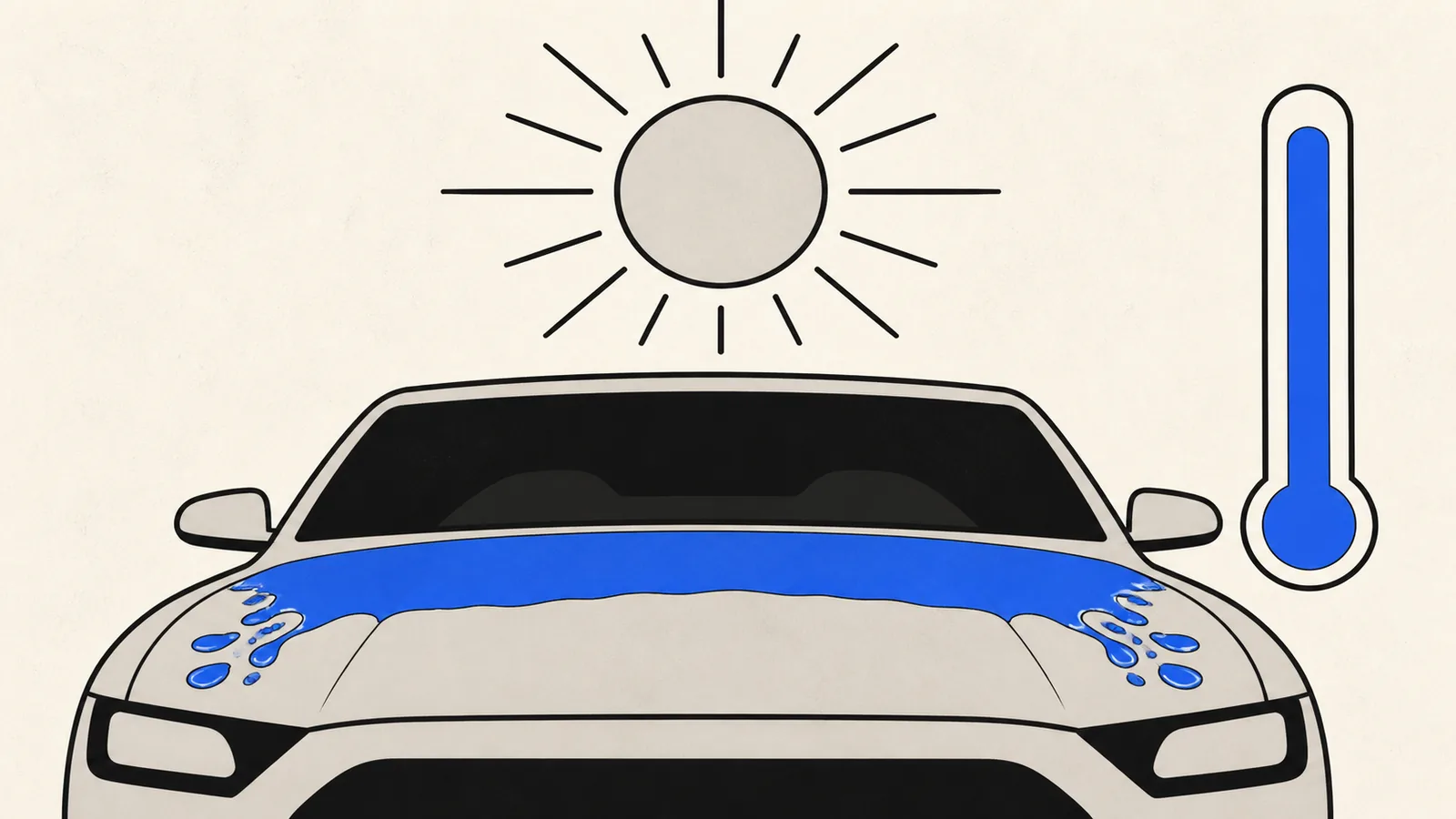
Air temperature in a North Texas summer regularly runs 100F and above, and a dark hood in direct sun runs far hotter than the air. Carnauba wax softens well below that, so it stops behaving like a protective layer long before it visually disappears.
The answer is not a better wax. It is a synthetic sealant, which is engineered to stay stable at those temperatures.
What heat does to a wax layer
- It softens, so contamination presses into it rather than sitting on it.
- It thins unevenly, which is why a car can bead on the doors and not on the hood.
- It washes away faster, because a softened layer has far less mechanical resistance.
- UV degrades the natural oils in it, dulling the look it was applied for.
- It fails first exactly where you need it most: horizontal surfaces taking direct sun.
The tell
Look at how the water behaves on the hood versus the doors after a wash. If the doors still bead and the hood does not, the wax has not washed off the car, it has cooked off the top.
That pattern is the clearest sign it is time to move to a sealant rather than reapply the same product.
What survives a Texas summer
A hand-applied sealant after full decontamination holds up to six months, including through July and August, and is included in every Signature tier from $99.
The rest of the heat problem
Paint protection is only half of what Texas heat attacks. The other half is inside: the dash top, the door tops, and the leather all take direct UV through the glass, and they fail permanently rather than washing off.
A UV protectant on interior surfaces and a windshield sunshade are the cheapest protection in this entire subject area, and they do more for a car's long-term condition than any wax ever will.
How to make protection last through a Texas summer
- 1Decontaminate before applying anything, so the product bonds to clear coat rather than to fallout.
- 2Choose a synthetic sealant rather than a carnauba wax for anything parked outside from May to September.
- 3Apply in the shade on cool panels and let it cure fully before the car sees water.
- 4Wash with a pH-neutral shampoo, since strong detergents strip protection faster than sunlight does.
- 5Refresh in April and again in October rather than waiting for the beading to disappear entirely.
This is an educational guide written to help DFW drivers budget and decide with confidence. It is not a binding quote. Your price is confirmed up front before any work begins, with no deposit.