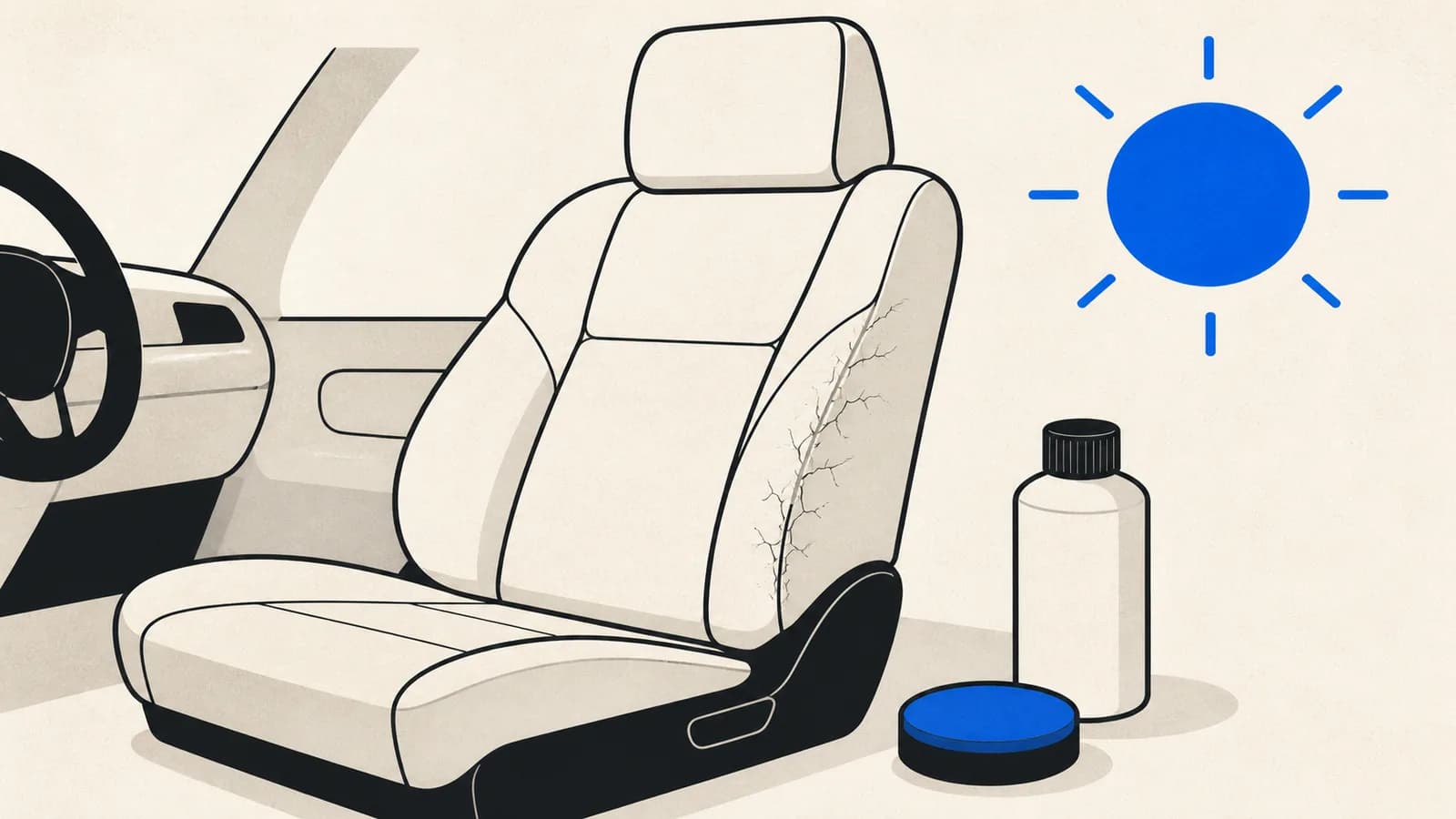
The short answer
Two to four times a year in Texas, not once. Clean first, then condition with a product that leaves a matte finish, applied thin and buffed off. Over-conditioning does not help: the leather takes what it can absorb and the rest sits on the surface collecting dust.
Leather cleaning and conditioning is included in our interior detail, or $69 as an add-on.
What heat actually does
Coated automotive leather fails through the coating, not the hide. Daily heat cycling makes the coating expand and contract, UV degrades it, and the plasticizers that keep it flexible slowly leave. The result is a surface that becomes brittle, then develops fine hairline cracks, usually on the driver's outer bolster first.
Once the coating cracks, the damage is mechanical and permanent. Conditioning after that point slows further loss but does not close the cracks.
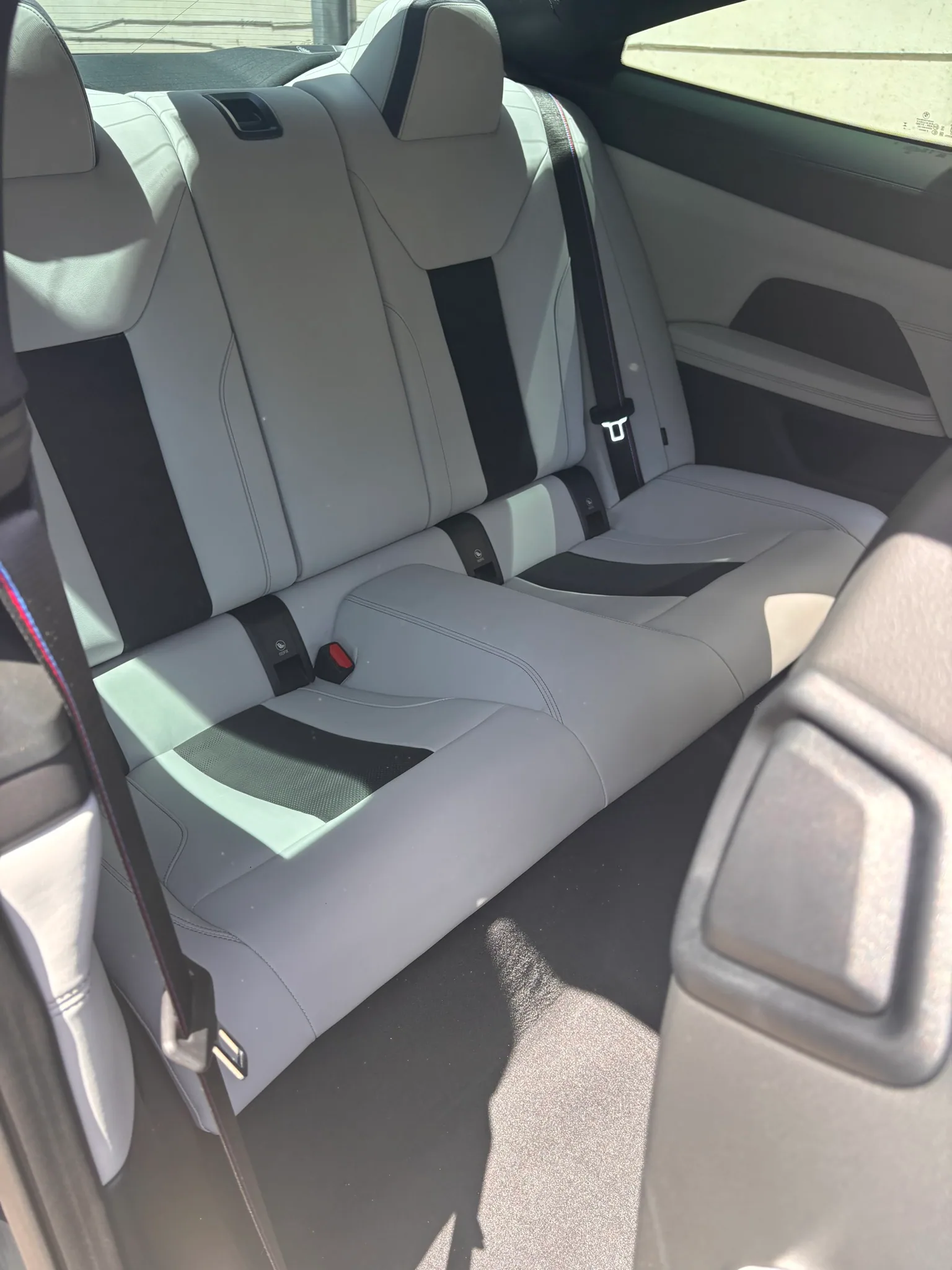
The routine that works here
| When | What | Why |
|---|---|---|
| Every 3 to 6 months | Clean and condition | Replaces what heat cycling drives out |
| Before June | UV protectant on dash and door tops | Peak surface temperatures arrive |
| After any long parking spell in sun | Inspect the driver's bolster | It fails first, and early is fixable |
| Year round | Sunshade in the windshield | The cheapest intervention there is |
A Texas leather schedule
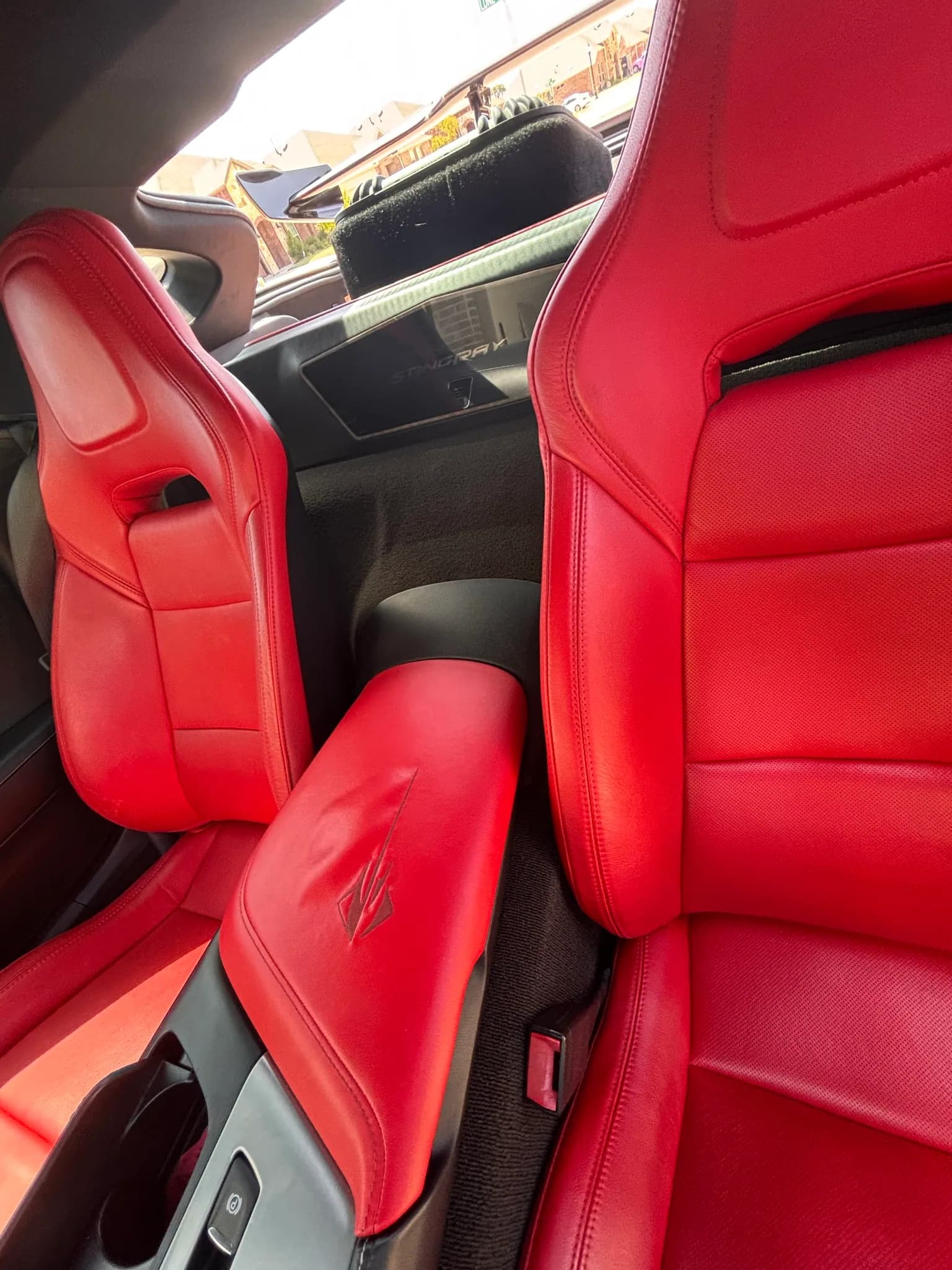
Prevention is the only cure here
Cracked leather is a re-dye or a replacement, not a cleaning problem. Regular cleaning and conditioning is $69 added to any service, and it is included in the Interior Detail from $149.
Product choice, briefly
Water-based conditioners with UV inhibitors are the right choice for coated automotive leather. Heavy oils and waxes marketed for saddles and boots are formulated for uncoated hide and sit on top of a coated seat, leaving a greasy shine that transfers to clothes.
The test for whether you used the right amount is simple: after buffing, the seat should feel dry and look matte. If it feels slick, there is too much on it.
How to tell conditioning is overdue
Leather does not announce that it is drying out, and by the time it looks bad the damage is mechanical. These are the earlier signals worth checking on the driver's bolster every few months.
- The surface has gone slightly matte and chalky compared with the passenger seat.
- The grain looks stretched or flattened where you sit and pivot to get out.
- Creases feel stiff rather than supple when you press them flat.
- The color looks lighter along the bolster edge, which is the coating thinning rather than the dye fading.
- Water beads sit rather than absorbing slowly, which sounds good and actually means the surface is sealed with old product rather than clean.
This is an educational guide written to help DFW drivers budget and decide with confidence. It is not a binding quote. Your price is confirmed up front before any work begins, with no deposit.