The short answer
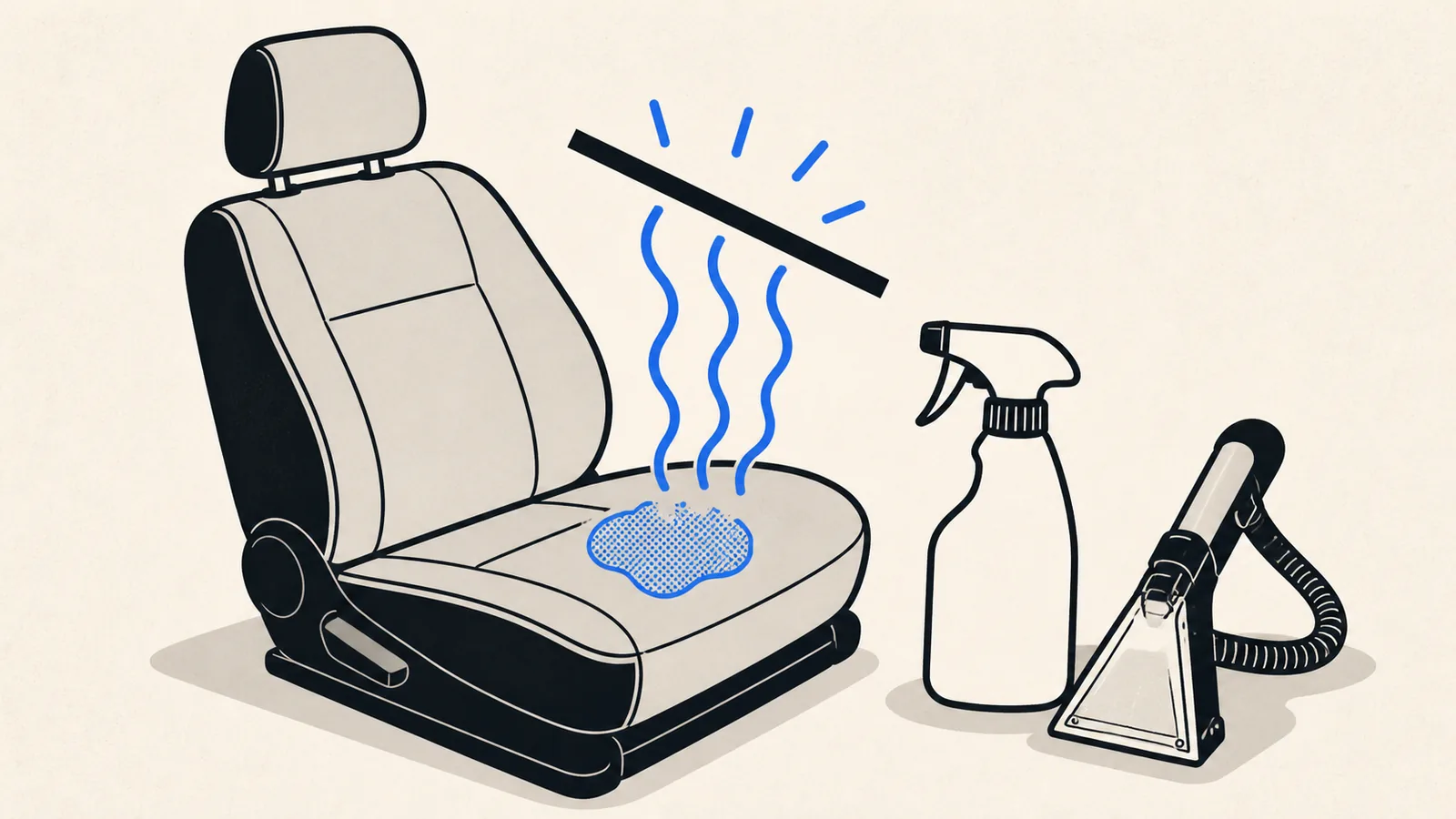
Remove the solids, blot the liquid with cool water, then treat with an enzyme cleaner and let it dwell. Do not use hot water, do not use bleach, and do not spray an air freshener over it. Get the moisture back out and dry the area fast.
The smell comes from stomach acid and protein soaked into the foam. Enzymes digest that residue. Everything else just masks it until the next hot day.
The first ten minutes
- 1Wear gloves and get the solids off with a plastic scraper or a stiff card, working inward.
- 2Blot the liquid with dry towels, pressing rather than rubbing, and bag them as you go.
- 3Rinse lightly with cool water and blot again. Repeat until the towel comes back mostly clean.
- 4Apply an enzyme cleaner generously enough to reach as deep as the spill went, and let it dwell for the time on the label, usually 10 to 30 minutes.
- 5Blot it back out with clean towels.
- 6Open the doors and get air moving across the area until it is dry to the touch.
Why enzymes and not bleach
Stomach acid leaves protein residue that ordinary detergent does not break down, which is why a seat can be visually clean and smell again the moment the car heats up. Enzyme cleaners contain proteases that digest that residue, which is a different mechanism from washing it away.
Bleach and oxygen cleaners can strip the dye from upholstery and are harsh on car interiors. Hot water sets the protein. Air freshener adds a second smell on top of the first, which is the version people usually regret.
When it has gone through to the foam
If the spill was large or it has been more than a day, surface work will not reach it. Full odor elimination combines extraction, enzyme treatment, HVAC work, and ozone for $199, or $50 for ozone alone.
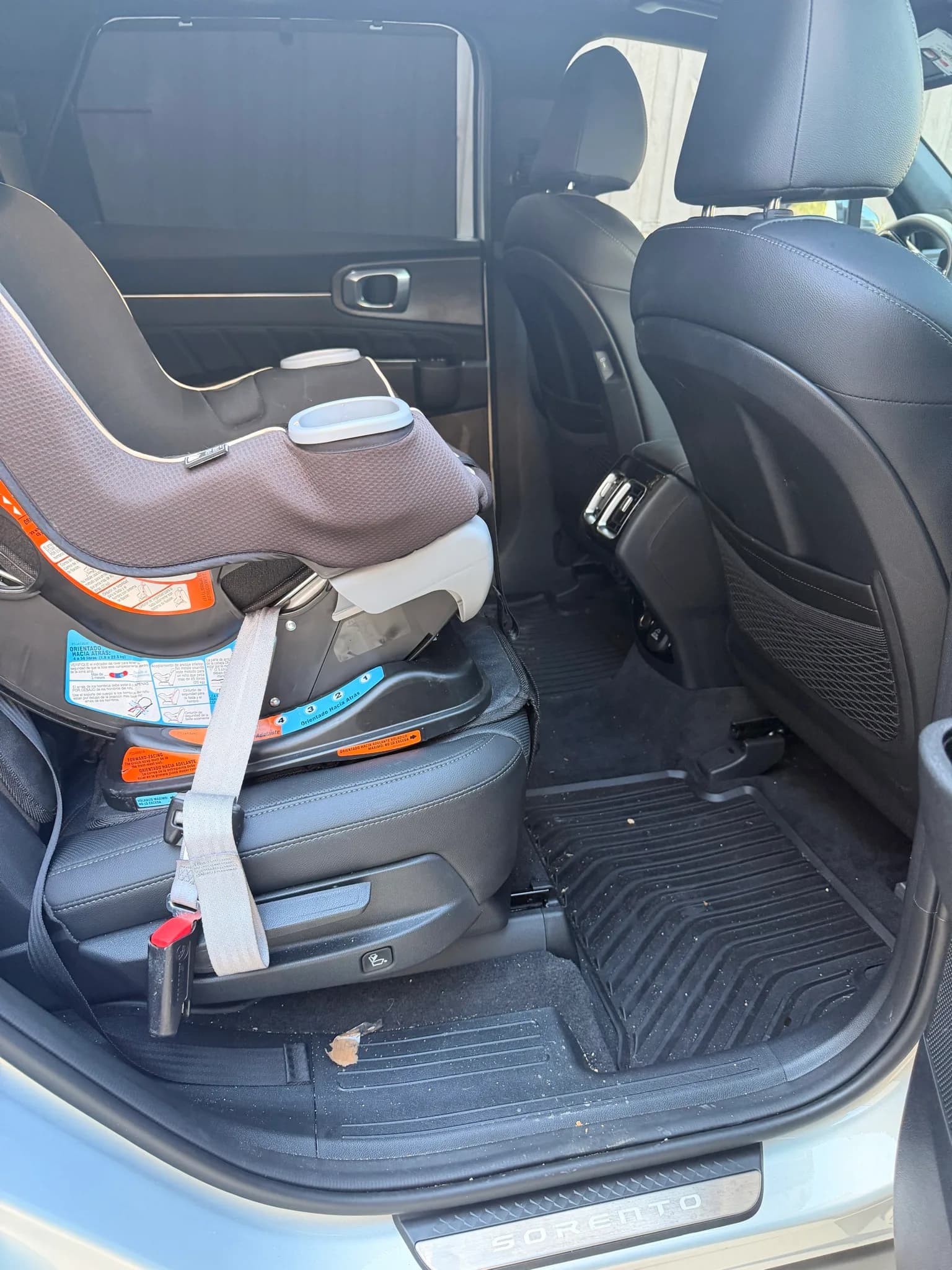
Child seats and seat belts
Child seat covers usually come off and are washable, but check the manufacturer's instructions: harness straps generally must not be machine washed or treated with detergent, because it can weaken the webbing. Wipe them with mild soap and water only.
Seat belts are the same. Clean them with mild soap and water, never solvent, and never retract a wet belt into the pillar, because it will stay damp and smell.
The kit worth keeping in the car
If you have children, drive rideshare, or transport pets, this happens eventually. Ten dollars of supplies in the trunk turns a crisis into a fifteen-minute job.
- Nitrile gloves and a roll of paper towels.
- Heavy-duty bags that seal, for the solids and the used towels.
- A small bottle of enzyme cleaner, which is the only product that addresses the smell rather than covering it.
- A plastic scraper or an old card for lifting solids off fabric.
- A spare towel and a bottle of water for the initial rinse.
This is an educational guide written to help DFW drivers budget and decide with confidence. It is not a binding quote. Your price is confirmed up front before any work begins, with no deposit.