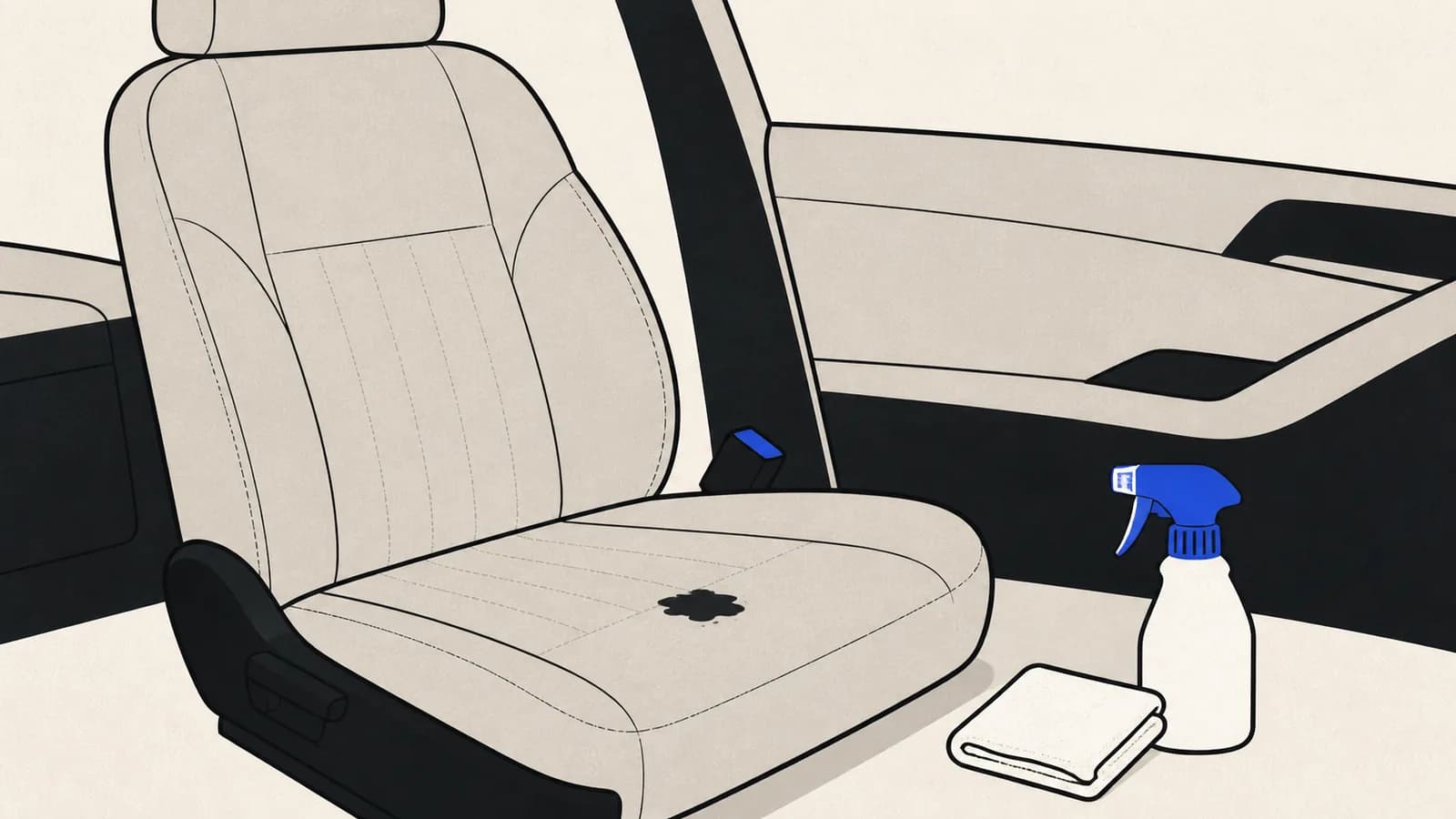
The short answer
Cold water and blotting, then an enzyme cleaner if the stain resists. Never warm or hot water: heat coagulates the protein in blood and bonds it to the fibers, which is what makes a fresh, easy stain into a permanent one.
Work from the outside of the stain inward, blot rather than rub, and be patient. Several light passes beat one aggressive attempt every time.
On fabric
- 1Blot up anything still wet with a dry white towel, pressing straight down.
- 2Dampen a clean towel with cold water and blot the stain, working inward.
- 3Repeat with fresh cold water until the towel stops picking up color.
- 4If it remains, apply an enzyme cleaner and let it dwell for the full time on the label.
- 5Blot it back out, then rinse lightly with cold water and blot dry.
- 6Dry with airflow, and check the area again after it has fully dried.
On coated leather
Coated leather is more forgiving because the blood sits on the finish rather than soaking in, provided it is caught reasonably soon. Wipe with a cold damp microfiber, then clean with a pH-balanced leather cleaner and condition afterward.
What you must not use is alcohol, hydrogen peroxide, or an all-purpose cleaner, all of which strip the coating. On uncoated or aniline leather, which is rare in cars, get professional help rather than experimenting.
For anything that soaked through
A stain that reached the foam needs extraction and enzyme treatment rather than surface work, and biological cleanup has its own protocol. Interior Detail with extraction starts at $149, and a biohazard tier is available at $150.
When to stop and call someone
If the spill is large, if it has soaked through to the foam or the floor pan, or if it involves anyone other than your own household, treat it as a biohazard job rather than a stain. That means gloves, proper disposal, and an antimicrobial protocol rather than an upholstery cleaner.
Old, dried blood on fabric is often lightenable rather than removable. We will tell you which category yours is in before starting.
Seat belts, child seats, and the parts you cannot soak
Some surfaces in a car cannot be treated the way a seat cushion can, and getting this wrong creates a safety problem rather than a cleaning one.
- Seat belt webbing: cold water and mild soap only. Never solvent, never bleach, and never retract a wet belt into the pillar.
- Child restraint harness straps: follow the manufacturer's instructions, which almost always prohibit detergent and machine washing.
- Airbag covers and seams: clean the surface only, and keep liquid away from the seam lines.
- Headliner: dab, never soak, since moisture releases the adhesive holding the fabric to its backing.
This is an educational guide written to help DFW drivers budget and decide with confidence. It is not a binding quote. Your price is confirmed up front before any work begins, with no deposit.