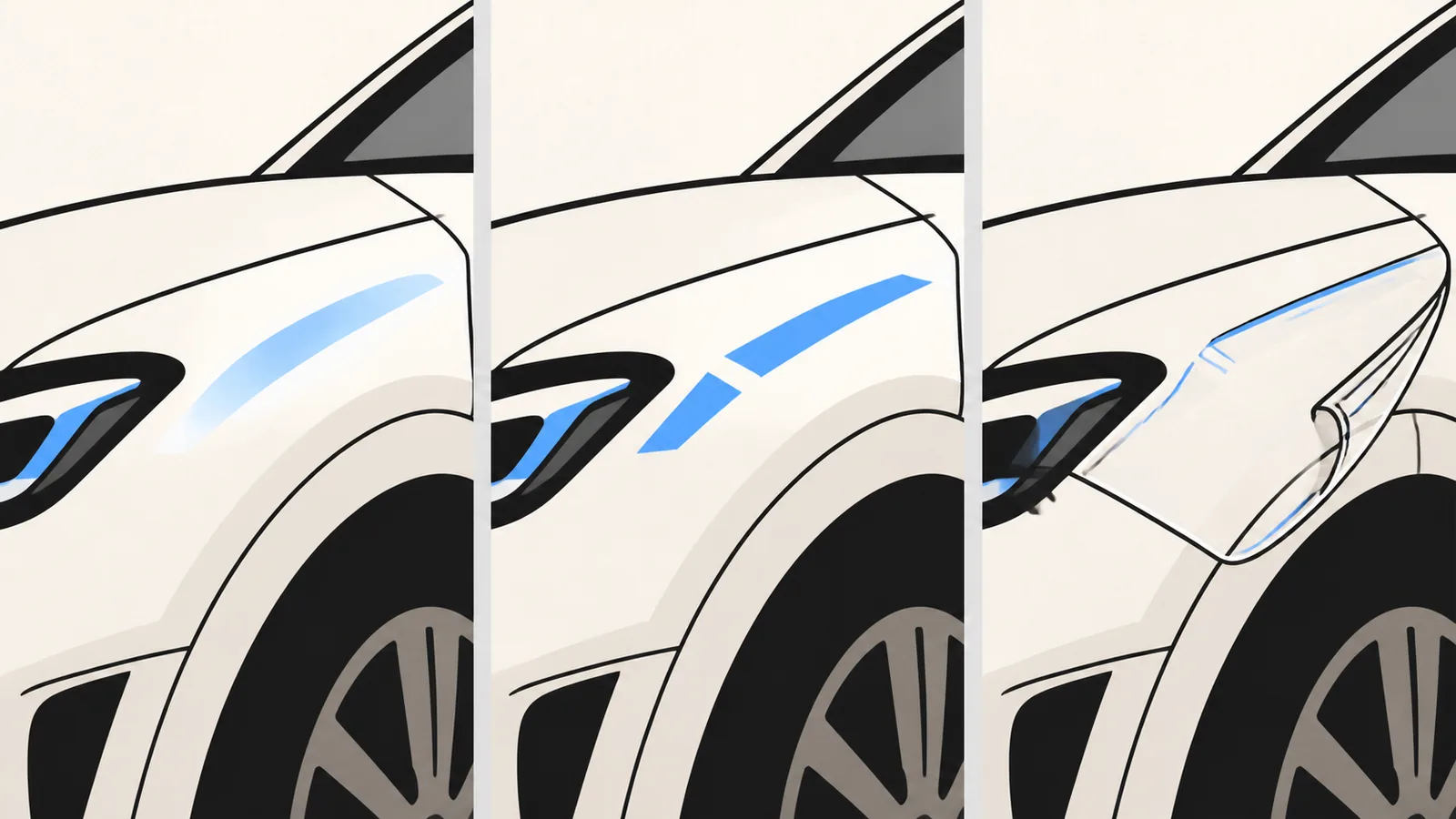
The short answer
Wax is a sacrificial gloss layer measured in weeks. A ceramic coating is a chemically bonded layer measured in years that resists etching and makes washing easier. Paint protection film is a physical urethane film that is the only one of the three that stops rock chips.
For a North Texas daily driver, the practical ranking is: protection of some kind always, film on the front end if you drive a lot of highway miles, and a coating only if the paint has been corrected first.
What each one is for
| Wax or sealant | Ceramic coating | PPF | |
|---|---|---|---|
| Stops rock chips | No | No | Yes |
| Resists chemical etching | Somewhat | Yes | Yes |
| UV protection | Yes, briefly | Yes | Yes |
| Makes washing easier | Somewhat | Significantly | Yes |
| Typical life | Weeks to months | 2 to 5 years | 5 to 10 years |
| Relative cost | Low | High | Highest |
| Removable later | Yes, easily | Needs polishing | Yes, professionally |
Three products, three jobs
The DFW-specific view
Three local factors change this calculation. Heat and UV are severe here, which shortens wax dramatically and makes the durability of a coating more valuable. Hard water is everywhere, and a coated or sealed surface releases mineral deposits far more easily than bare clear coat. And highway speeds on 75, 121, and the tollway mean front-end rock chips are a real, recurring cost.
That last point is why, if you are going to spend serious money on protection here, film on the front bumper, hood leading edge, and mirrors is often the better first purchase than a full-car coating.
Where we fit in this picture
We do not install ceramic coatings or PPF. What we do is decontaminate and apply a hand-applied sealant that holds up to six months, from $99, and hydrophobic glass coatings at $89. For a well-kept daily driver that combination covers most of the practical benefit.
The honest recommendation by situation
- Lease returning within two years: sealant only. Anything more is money you will not recover.
- Daily driver you will keep five years: sealant twice a year, film on the front end if you commute on highways.
- Weekend or garage-kept car: sealant is plenty, and a coating is a reasonable luxury if the paint is corrected first.
- Neglected paint with visible swirls: correction first, protection second. A coating over swirls is money wasted.
- New car: decontaminate and protect immediately, then decide about a coating once you know how you use the car.
Combining them, which is what most owners actually do
These are not mutually exclusive, and the common setup on a well-kept car uses two of the three in the places each is strongest.
| Area | Protection | Why |
|---|---|---|
| Front bumper, hood edge, mirrors | Paint protection film | Rock chips at highway speed |
| Rest of the paint | Coating or sealant | UV, etching, and easier washing |
| Glass | Hydrophobic coating | Rain shedding and easier bug removal |
| Wheels | Wheel sealant | Brake dust releases instead of bonding |
| Interior | Fabric or leather protection | Spills bead rather than soak |
A typical combination
This is an educational guide written to help DFW drivers budget and decide with confidence. It is not a binding quote. Your price is confirmed up front before any work begins, with no deposit.