The short answer
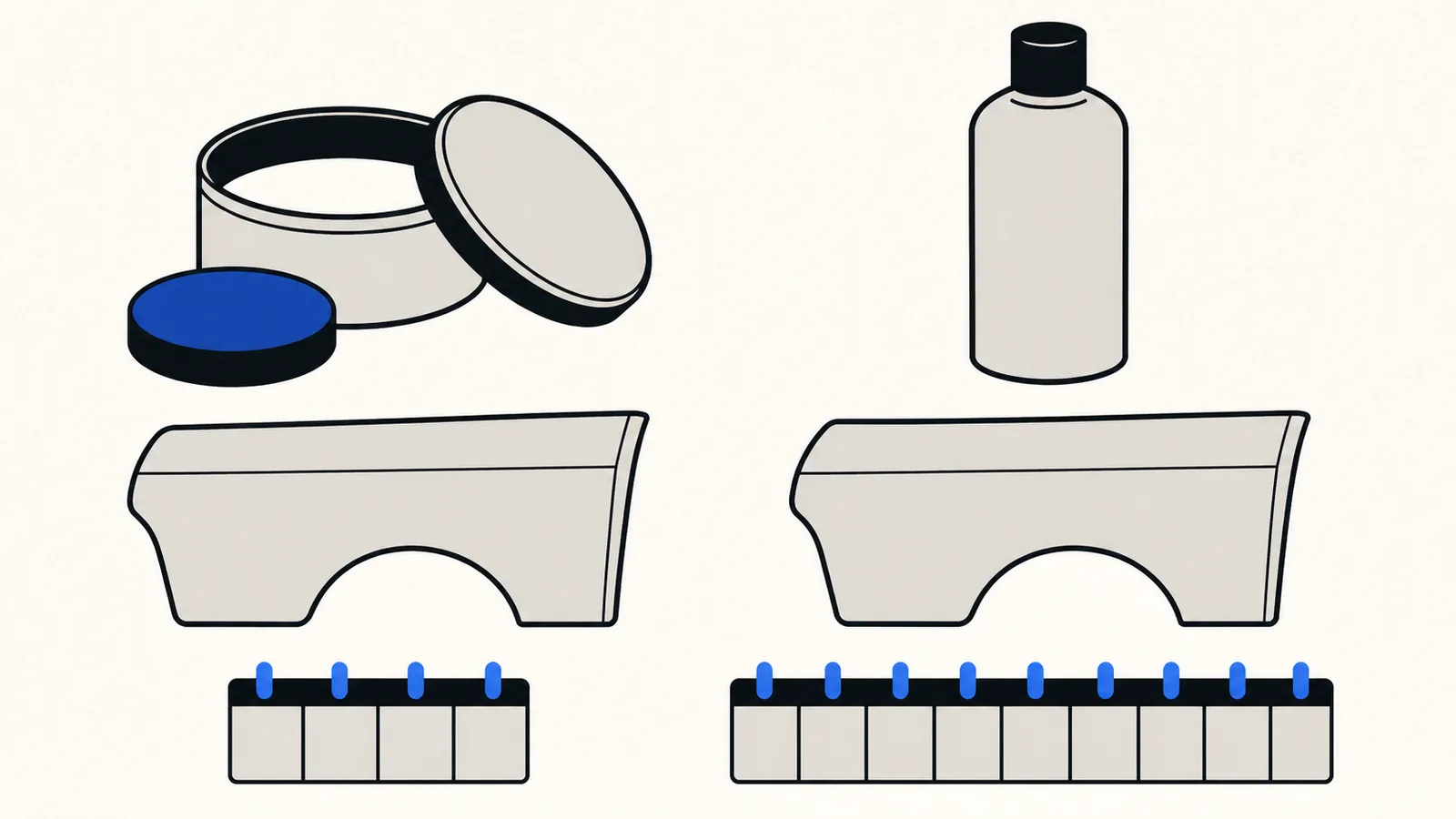
Carnauba wax is a natural product that gives a warm glow and lasts four to eight weeks, less in a Texas summer. A synthetic sealant is a polymer that bonds to the paint, resists heat and UV far better, and lasts three to six months.
For a daily driver in North Texas, sealant wins on every practical measure. Our exterior work applies a hand-applied sealant that holds up to six months, from $99.
How they differ
| Carnauba wax | Synthetic sealant | |
|---|---|---|
| Life in Texas | 3 to 6 weeks | 3 to 6 months |
| Heat tolerance | Softens on hot panels | Stable |
| Look | Warm, deep glow, best on dark paint | Sharp, reflective, slightly cooler |
| Water behavior | Beads well while fresh | Beads and sheets, holds longer |
| Application | Easy, forgiving | Easy, but wants a clean surface |
| Best use | Show cars, weekend cars, enthusiasts | Daily drivers in hot climates |
Wax versus sealant
Why wax struggles here specifically
Carnauba has a melting point that a Texas hood surface can approach on a July afternoon. Long before it visibly fails it softens, collects contamination, and washes off faster. That is why the same wax that lasts a season in a mild climate is gone in a month here.
Sealants are engineered around that: the polymer cross-links onto the surface and does not soften with heat in the same way, which is the whole reason to use one in this region.
What we apply, and why
Every exterior detail gets a hand-applied sealant rated up to six months, applied after full decontamination so it bonds to clean paint. From $99 for exterior only and $225 for the full detail.
Can you use both?
Yes, and enthusiasts do: a sealant as the durable base, then a carnauba wax on top for the look before a show or a photo session. The wax adds depth for a few weeks and the sealant keeps protecting underneath.
For everyone else this is unnecessary work. Pick the sealant, keep it fresh, and spend the saved effort on washing correctly instead.
Applying either one without wasting it
Most complaints about durability trace back to application rather than product. Three rules cover almost all of it.
- 1Apply to decontaminated paint. Anything laid over bonded contamination bonds to the contamination, not the clear coat.
- 2Apply thin. A thick layer does not last longer, it just wastes product and makes removal harder.
- 3Work on cool paint out of direct sun, and let it cure for the time the label states before the car sees water.
How to tell which one is currently on your car
If you inherited the car or cannot remember, the water tells you. Wax tends to bead tight and round for a few weeks and then stops abruptly. A sealant beads slightly flatter but sheets water off the panel as you drive and keeps doing it for months.
If water lies flat and dries in place, whatever was there is gone, and the next step is decontamination before anything new goes on.
This is an educational guide written to help DFW drivers budget and decide with confidence. It is not a binding quote. Your price is confirmed up front before any work begins, with no deposit.