The short answer
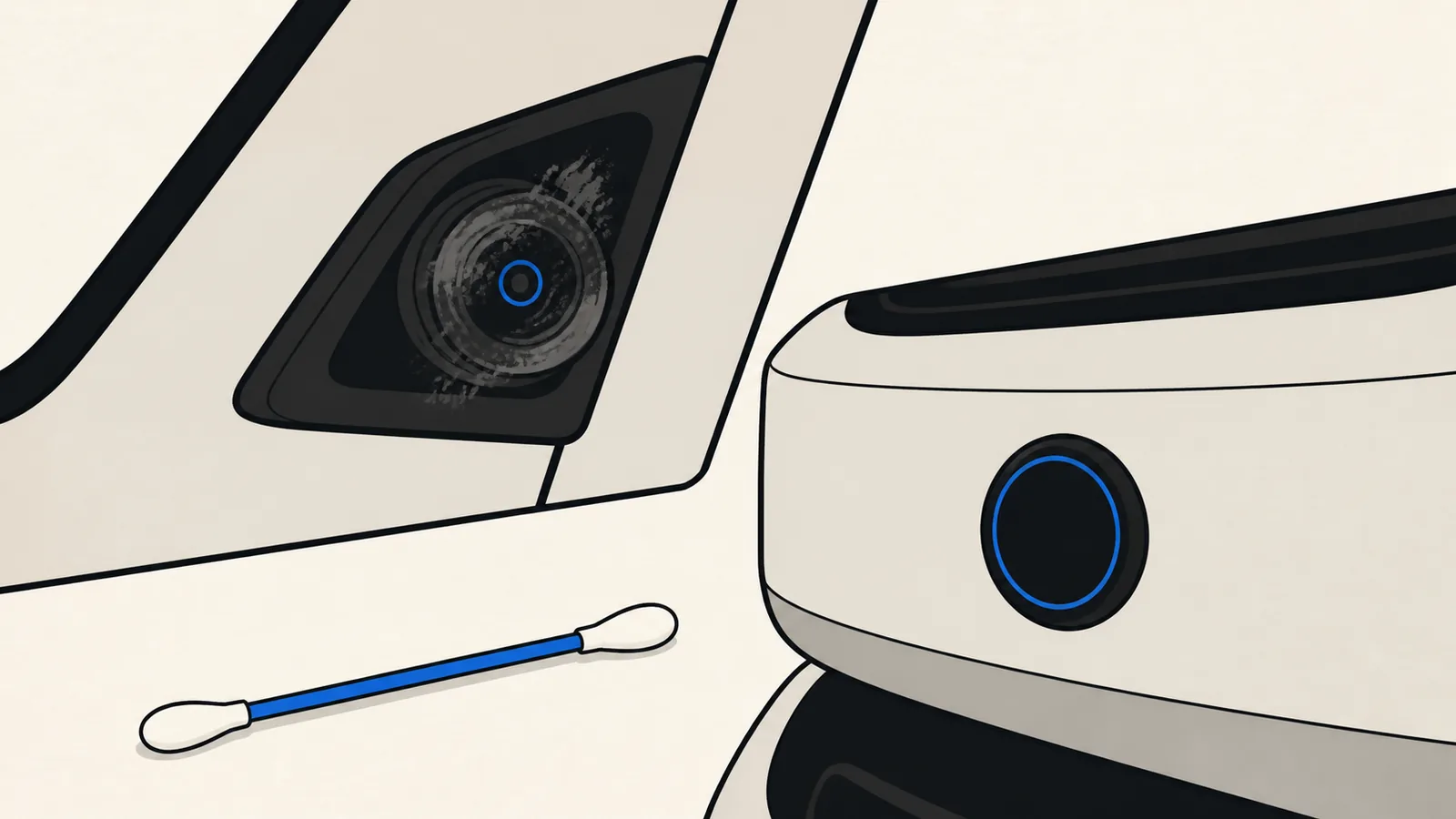
Clean camera lenses and sensor faces by hand with a damp, clean microfiber or a dedicated lens swab, using plain water or a mild glass cleaner sprayed onto the cloth. Never use an abrasive, never use a pressure washer, and never wipe a dry, gritty lens.
Do it whenever you wash the car, and immediately if a driver assistance warning appears after rain, bugs, or road film.
Where they are
- Windshield behind the rearview mirror: the forward-facing camera cluster.
- Front bumper and grille: radar and, on some cars, a front camera.
- Door mirrors: side and surround-view cameras.
- B-pillars on some EVs: side-facing cameras.
- Rear bumper and tailgate: reversing camera and parking sensors.
- Corners of the bumpers: ultrasonic parking sensor pucks, which look like small circles.
How to clean them safely
| Do | Do not |
|---|---|
| Spray onto the cloth, then wipe | Spray directly at the housing |
| Use plain water or mild glass cleaner | Use solvent, alcohol, or polish |
| Rinse grit off first | Wipe a dry, dusty lens |
| Use a fresh microfiber or lens swab | Use the towel that just did the wheels |
| Dry gently with a clean corner | Scrub at stubborn bug residue |
Do and do not
Included in every detail we do
Cameras, sensors, and glass get cleaned by hand on every service, and a hydrophobic glass coating at $89 keeps the windshield in front of the forward camera clearer for longer.
The windshield matters more than the lens
On most cars the main forward camera looks through the windshield, which means road film on the glass in front of it degrades what it sees even when the lens itself is spotless.
This is one of the strongest practical arguments for keeping the windshield decontaminated and coated: it is not only about your visibility, it is about the camera's.
When cleaning does not fix it
If warnings persist after the lenses and windshield are genuinely clean, the issue is not dirt. Camera calibration can be disturbed by a windshield replacement, an impact, or suspension work, and that needs a dealer or a calibration specialist.
Persistent radar warnings can also come from a bent bracket or a badge or license plate frame partially blocking the sensor. Worth a look before booking anything.
Winter, rain, and the times they need cleaning most
Camera warnings cluster around specific conditions, and knowing them saves a trip to a service center.
- After a rainstorm, when road film sprays onto lenses and dries as a haze.
- After a highway drive in bug season, since a single splatter on a lens is enough.
- After any ice event, when road treatment leaves a salt film on the front sensors.
- After a car wash with brushes, which can leave residue and occasionally knock a sensor's aim.
- In low winter sun, when a hazy windshield in front of the forward camera produces glare warnings.
This is an educational guide written to help DFW drivers budget and decide with confidence. It is not a binding quote. Your price is confirmed up front before any work begins, with no deposit.