The short answer
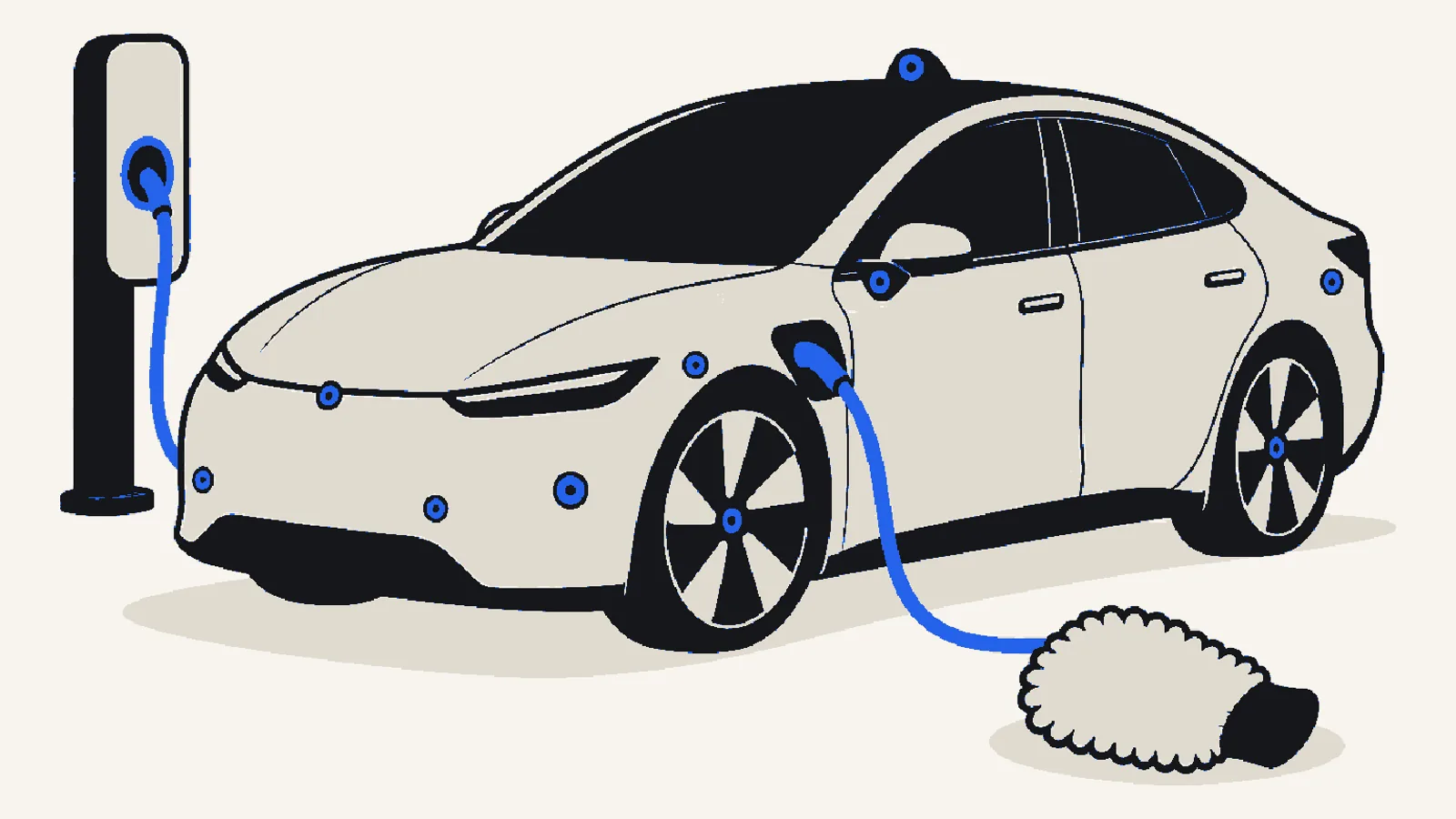
Ninety percent of an EV detail is identical to any other car. The five real differences are the charge port, the camera and sensor array, softer factory paint on some models, light synthetic upholstery, and wheels that collect tire and rail dust rather than brake dust.
What you can skip is every product marketed specifically as EV-safe. There is no chemistry difference that matters. There is a technique difference.
The five real differences
| Area | Why it is different | What we do |
|---|---|---|
| Charge port | It is an electrical connector on the exterior | Closed, dry, and out of direct spray |
| Cameras and sensors | A smeared lens degrades driver assistance | Cleaned by hand with a dedicated swab, never blasted |
| Paint hardness | Some EV paint is softer and marks more easily | Extra care on wash media and drying |
| Light synthetic upholstery | Stains differently from leather, shows dye transfer | Dedicated cleaner and a gentler process |
| Wheels | Regen braking means less brake dust, more tire and rail dust | Iron remover rather than more scrubbing |
What actually changes on an electric car
Regenerative braking changes the wheels
EVs use the motor for most deceleration, so the friction brakes do far less work and produce far less brake dust. What replaces it is tire particulate and rail dust, both of which are heavier and stickier than people expect on a car with a reputation for clean wheels.
The practical difference is the product. Brake dust responds to iron removers because it is iron. Tire particulate is rubber and oil and responds to a proper wheel cleaner and agitation.
Detailed at home, while it charges
An EV detail runs the same as any other, with the charge port kept dry and sensors cleaned by hand. Full Details from $225, and hydrophobic glass coatings at $89.
What to skip
- EV-specific soaps and waxes. Paint chemistry does not know what drives the car.
- Engine bay cleaning, since there generally is not one, though the frunk and its seals do collect debris.
- Anything claiming to improve range through aerodynamics or surface friction.
- High-pressure washing near the charge port, sensors, and panel gaps.
The DFW angle
North Texas has a high EV density, particularly in Frisco, Plano, Southlake, and Prosper, and most of those cars are white or light gray with light interiors. That combination puts the interior work front and center: dye transfer from jeans, scuffs on white bolsters, and sun exposure on large glass roofs.
The glass roof is worth a mention on its own. It is a large horizontal surface that shows every water spot, and it is exactly where hard-water deposits bond hardest in this climate.
Glass roofs, which need their own plan
A full-length glass roof is the largest horizontal surface on the car and the one most exposed to sun, hard water, and tree debris. It also shows every mark from both sides.
Treat it as a panel rather than a window: decontaminate it along with the paint, keep a hydrophobic coating on it so water sheds rather than evaporating in place, and clean the inside with the two-towel method when interior film starts producing glare on a low sun.
This is an educational guide written to help DFW drivers budget and decide with confidence. It is not a binding quote. Your price is confirmed up front before any work begins, with no deposit.