The short answer
Professional restoration with a UV coating is $149 a pair on most vehicles and $149 on XL or three-row vehicles. A store kit is $20 to $40 plus a couple of hours of your time. New OEM housings usually run several hundred dollars each plus installation.
For a lens that is yellowed but structurally sound, restoration is the obvious answer. Replacement is for cracked lenses, internal condensation, and failed reflectors.
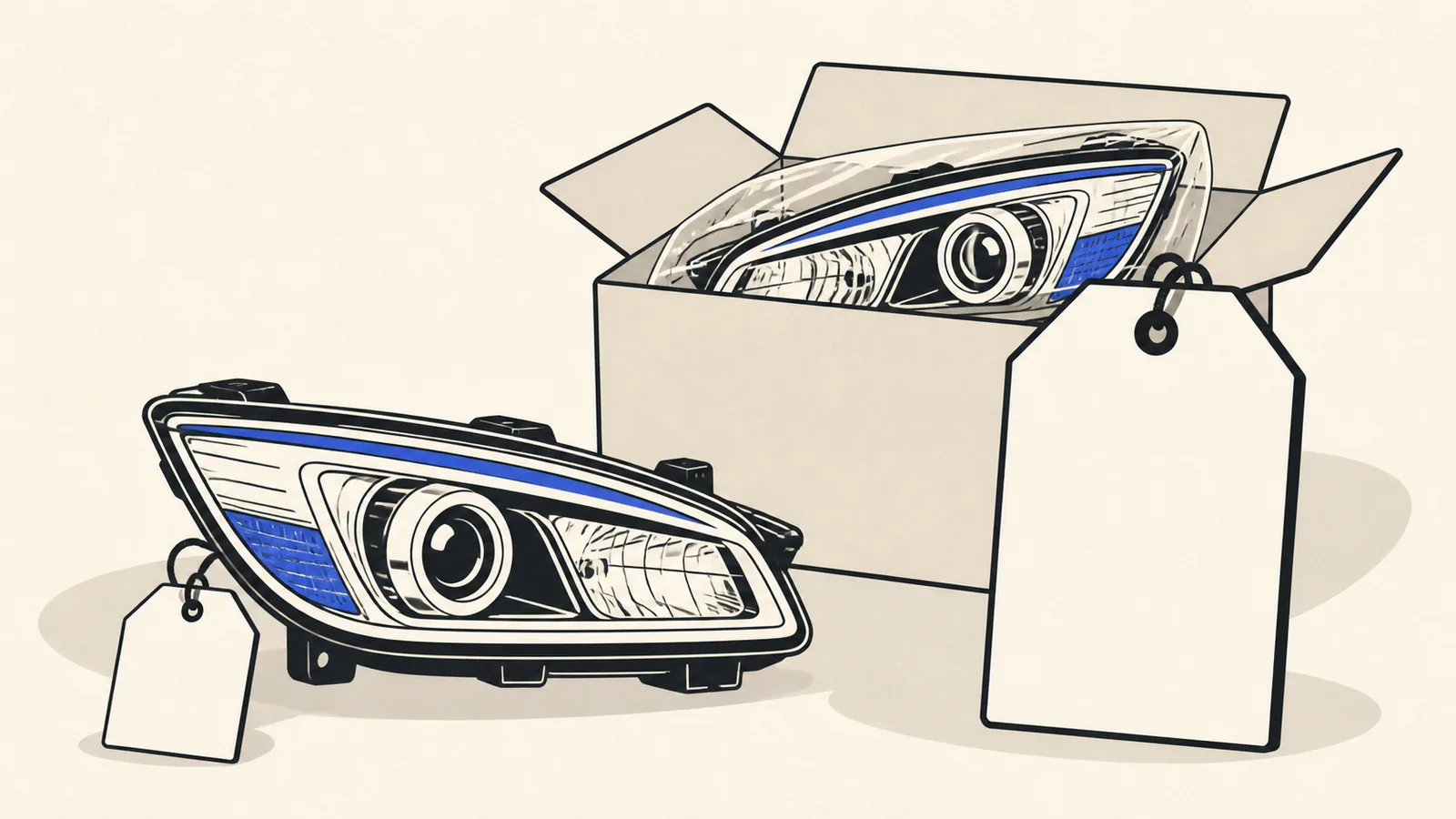
The three options priced
| Option | Cost | Lasts | Best for |
|---|---|---|---|
| Store kit | $20 to $40 plus your time | 2 to 12 months | A car being sold soon |
| Professional restoration | $149 a pair | 1 to 3 years | Any yellowed but sound lens |
| Aftermarket housings | Varies widely | Years | Cracked lenses on common vehicles |
| OEM housings | Several hundred each plus fitting | Years | Internal failure, or a car you keep long term |
What each option costs and gives you
When replacement wins
- The lens is cracked, not just hazy.
- There is condensation or standing water inside the housing.
- The reflector coating inside has blistered or gone dull.
- A previous restoration has already removed a lot of lens material.
- The mounting tabs are broken, which affects aim.
Add it to a detail you were booking anyway
Headlight restoration is $149 a pair and takes about an hour, so it fits inside almost any appointment. It is one of the biggest visual changes per dollar on an older car.
The resale angle
Yellowed headlights make an otherwise well-kept car look neglected in photos and in person, and they are one of the first things a private buyer points at. For a car being listed, restoration is one of the highest-return items on the list.
It is also the cheapest of the three visual fixes that change a listing: headlights, wheels, and a proper interior clean.
What you are paying for in that hour
The price looks high for an hour until you see the sequence. Most of it is preparation and the coating, not the polishing everyone pictures.
- 1Masking the surrounding paint and trim, because the sanding stage marks anything it touches.
- 2Wet sanding through several grades, each removing the scratch pattern the previous grade left.
- 3Machine polishing to optical clarity, which is slower on a curved lens than on a flat panel.
- 4A solvent wipe so nothing is trapped under the coating.
- 5A UV coating applied evenly and left to cure, which is what separates a one-year result from a two-month one.
Why quotes vary so widely
The cheap end of the market usually skips the coating and sometimes skips grades in the sanding stage. Both are invisible on the day and obvious in three months, which is why the same service can be quoted at half the price and still leave you paying twice.
When comparing quotes, ask one question: what UV protection goes on afterward, and how long is it expected to hold. A provider who cannot answer that is quoting for polishing, not restoration.
This is an educational guide written to help DFW drivers budget and decide with confidence. It is not a binding quote. Your price is confirmed up front before any work begins, with no deposit.