The short answer
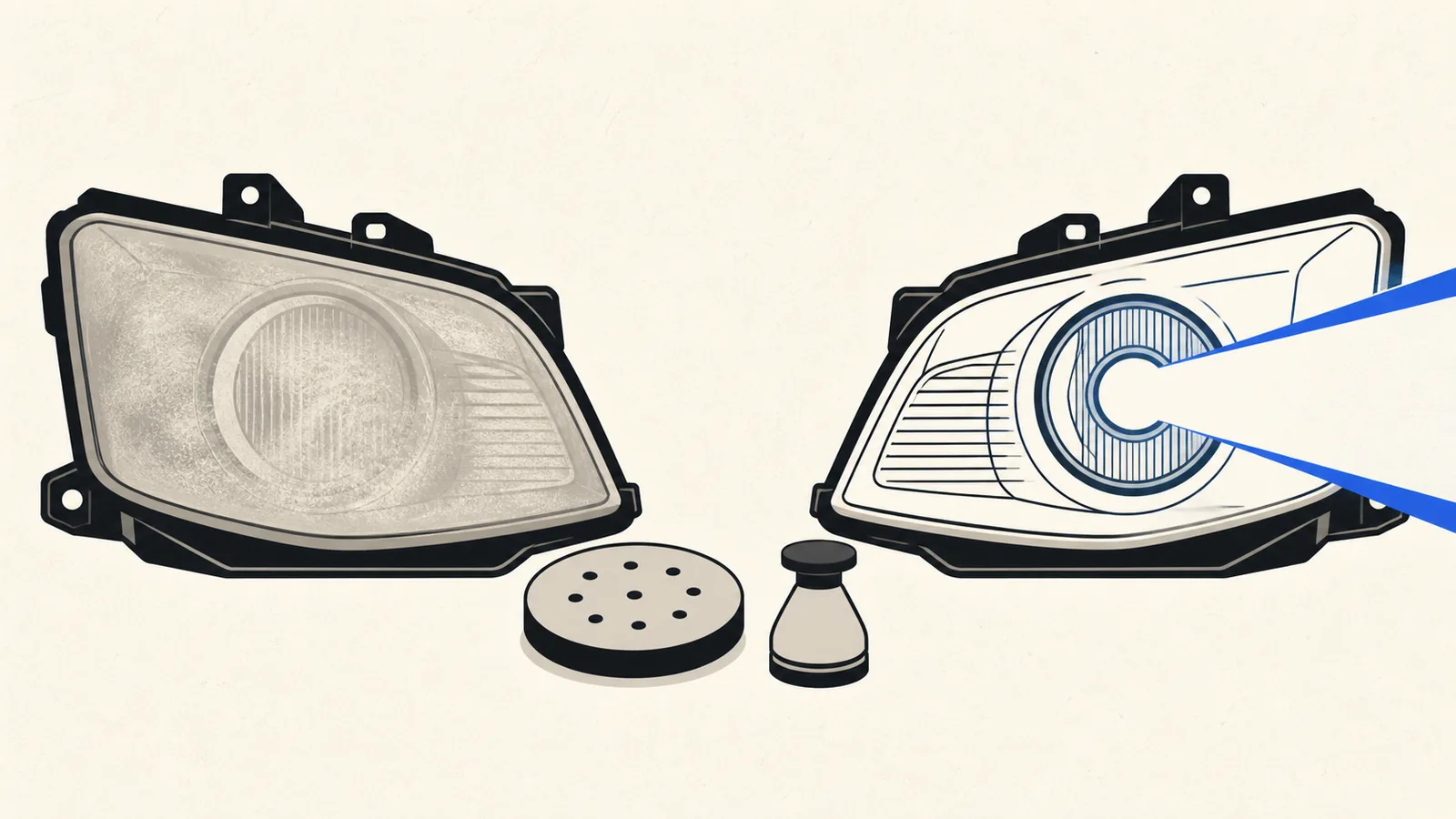
Modern headlights are polycarbonate with a factory UV coating. Sun degrades that coating, and once it fails the plastic underneath oxidizes and yellows. Restoration means sanding the damaged layer off, polishing the lens back to clarity, and applying a new UV protective coating.
Cleaning does nothing, because the haze is inside the surface. Professional headlight restoration is $149 a pair and takes about an hour.
Why toothpaste and bug spray fail
Toothpaste is a mild abrasive, so it does remove a small amount of oxidation and briefly improves clarity. It does not reach the depth of the damage and it leaves no UV protection, so the lens re-yellows within weeks, usually worse than before.
Bug spray works by softening the plastic surface. That is not cleaning, it is chemical damage, and it accelerates the failure it appears to fix.
What restoration actually involves
- 1Mask the surrounding paint, because the sanding stage will otherwise mark it.
- 2Wet sand progressively through grades to remove the failed coating and the oxidized layer.
- 3Polish the lens back to optical clarity with a machine and a dedicated compound.
- 4Clean and prep the surface so nothing is left on it.
- 5Apply a UV protective coating, which is the step that determines how long the result lasts.
- 6Let it cure before the car sees water.
The step that decides how long it lasts
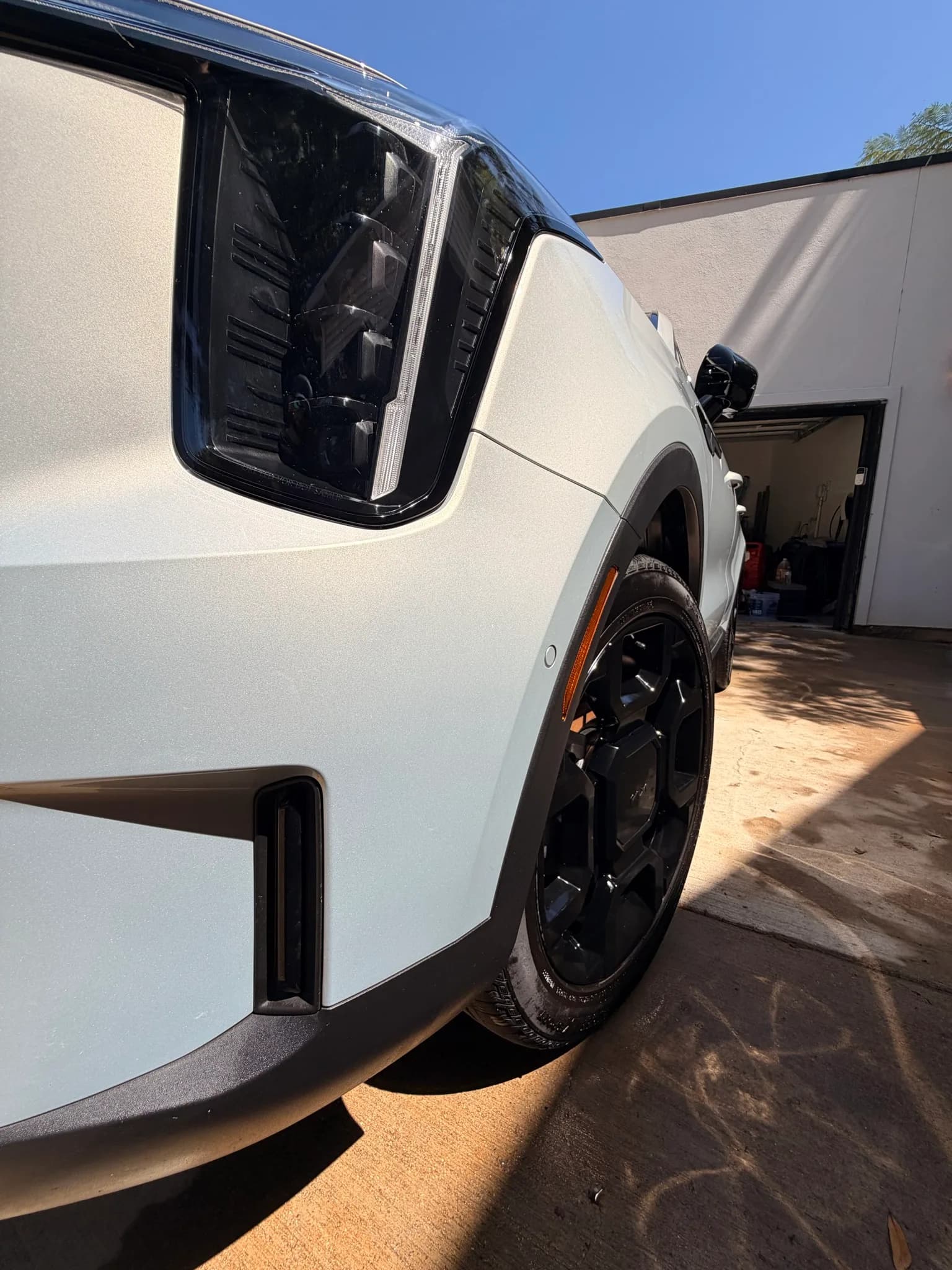
Sanding and polishing is the easy part. Without a proper UV coating the lens yellows again within months. Our headlight restoration includes the coating, $149 a pair.
How long it lasts
| Method | How long it looks good | Notes |
|---|---|---|
| Toothpaste or household abrasive | Days to weeks | No UV protection at all |
| Store kit, no sealant | 2 to 6 months | Fast re-yellowing in Texas sun |
| Store kit with the included sealant | 6 to 12 months | Depends heavily on prep |
| Professional restoration with UV coating | 1 to 3 years | Parking in shade extends it substantially |
| New OEM housings | Years | Far more expensive, and often unnecessary |
Realistic durability by method
When restoration is not the answer
If the haze is on the inside of the lens, restoration will not touch it. Internal condensation or a failed housing seal needs the unit replaced or resealed, and you can tell the difference by wiping the outside: if it stays hazy in one specific area and the surface feels smooth, look inside.
Cracked lenses, delaminated reflectors, and moisture pooling inside are all replacement territory, and we will say so rather than sand a housing that needs replacing.
Preventing the next round
Restoration resets the clock. What sets how fast it runs down again is exposure and protection, both of which are within your control.
- Park facing away from the afternoon sun where you can, since the lenses take direct UV all afternoon otherwise.
- Keep the coating maintained rather than waiting for visible yellowing to return.
- Wash the lenses as part of every wash, since road film accelerates the surface breakdown.
- Avoid harsh degreasers and wheel cleaners on the front end, which strip the UV coating.
- A dedicated headlight film is worth considering on a car you keep long term, since it takes the UV instead of the lens.
This is an educational guide written to help DFW drivers budget and decide with confidence. It is not a binding quote. Your price is confirmed up front before any work begins, with no deposit.