Luxury

Luxury SUV Leather and Wood-Trim Care (Escalade, GX, Range Rover)

Niv GurfinkelUpdated 3 min read
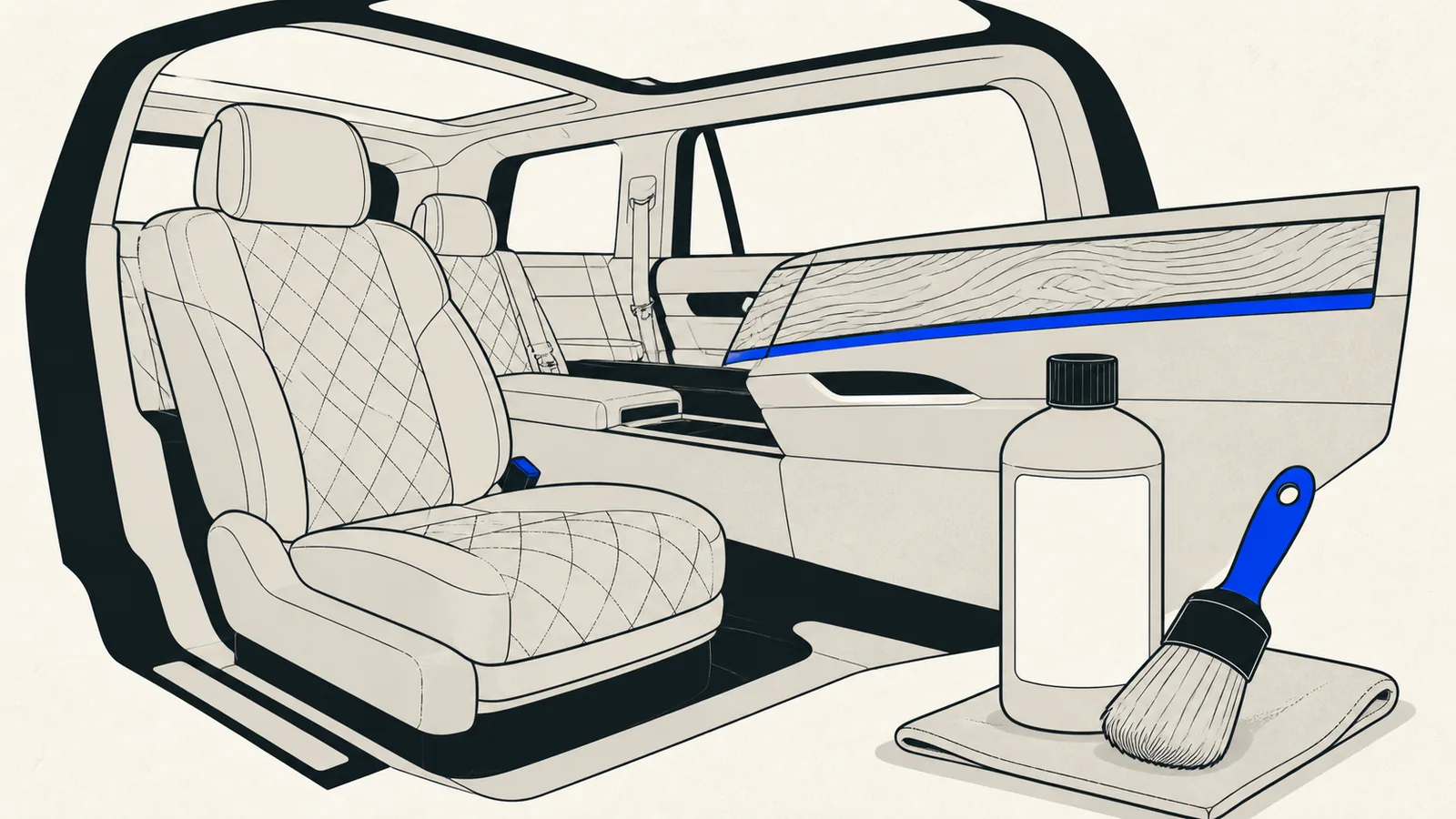
Flat cutaway illustration of a large SUV cabin showing a quilted leather seat and a wood trim panel, with a conditioner bottle and a soft brush beside them.

The short answer

Clean and condition the leather two to four times a year, keep wood trim to a damp microfiber and nothing else, and treat the third row and cargo area as a real cleaning job rather than an afterthought. Interior Details on a three-row start at $149.

Large SUVs also have the most sun-exposed interior surface of anything on the road, which makes UV protectant on the dash and door tops more than cosmetic here.

The third-row problem

Third rows collect food, drinks, and the things that fall between folded seats, and they are the hardest area in the vehicle to reach with a vacuum. That combination is why the smell in a family SUV usually starts behind the second row.

The fix is mechanical: fold the seats forward, get compressed air into the rails and seat backs, vacuum properly, then extract if anything has soaked in. It takes real time, which is why a neglected third row is one of the things that moves a price at the inspection.
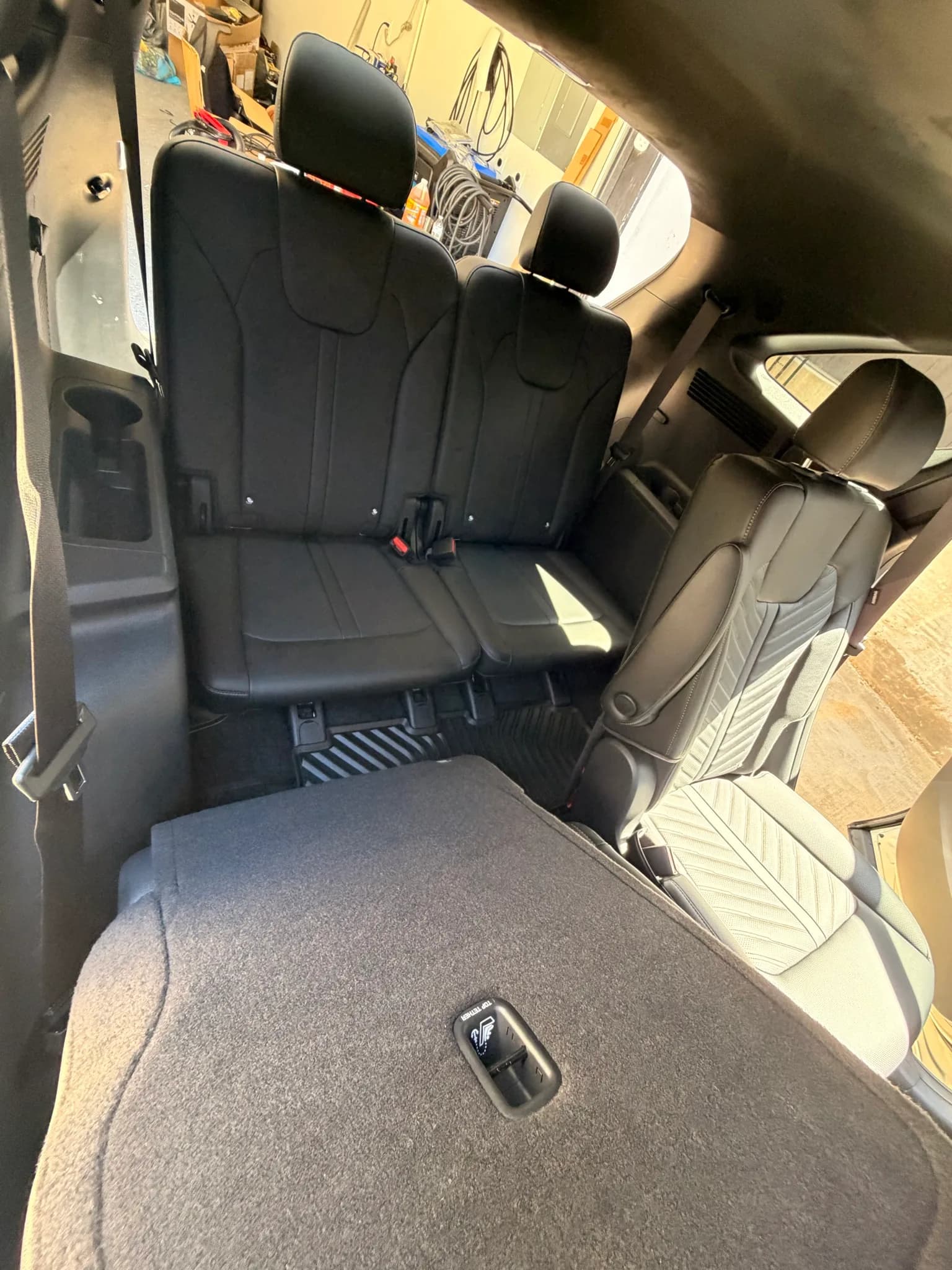
Third-row seats and folded second row of a Kia Sorento after a full interior clean.
A third row after a full interior clean. On any three-row SUV this is the area that gets skipped between details and then starts to smell.

Leather in a big cabin

AreaAttentionWhy
Driver's seat bolsterEvery cleanHighest contact wear, fails first
Second-row outboard seatsEvery cleanChild seat pressure and buckle marks
Third rowTwice a year minimumNeglected, and where odor starts
Door tops and armrestsEvery clean plus UV protectantDirect sun through the glass
Steering wheelEvery cleanHand oils, and it goes shiny before it cracks

What each leather area needs

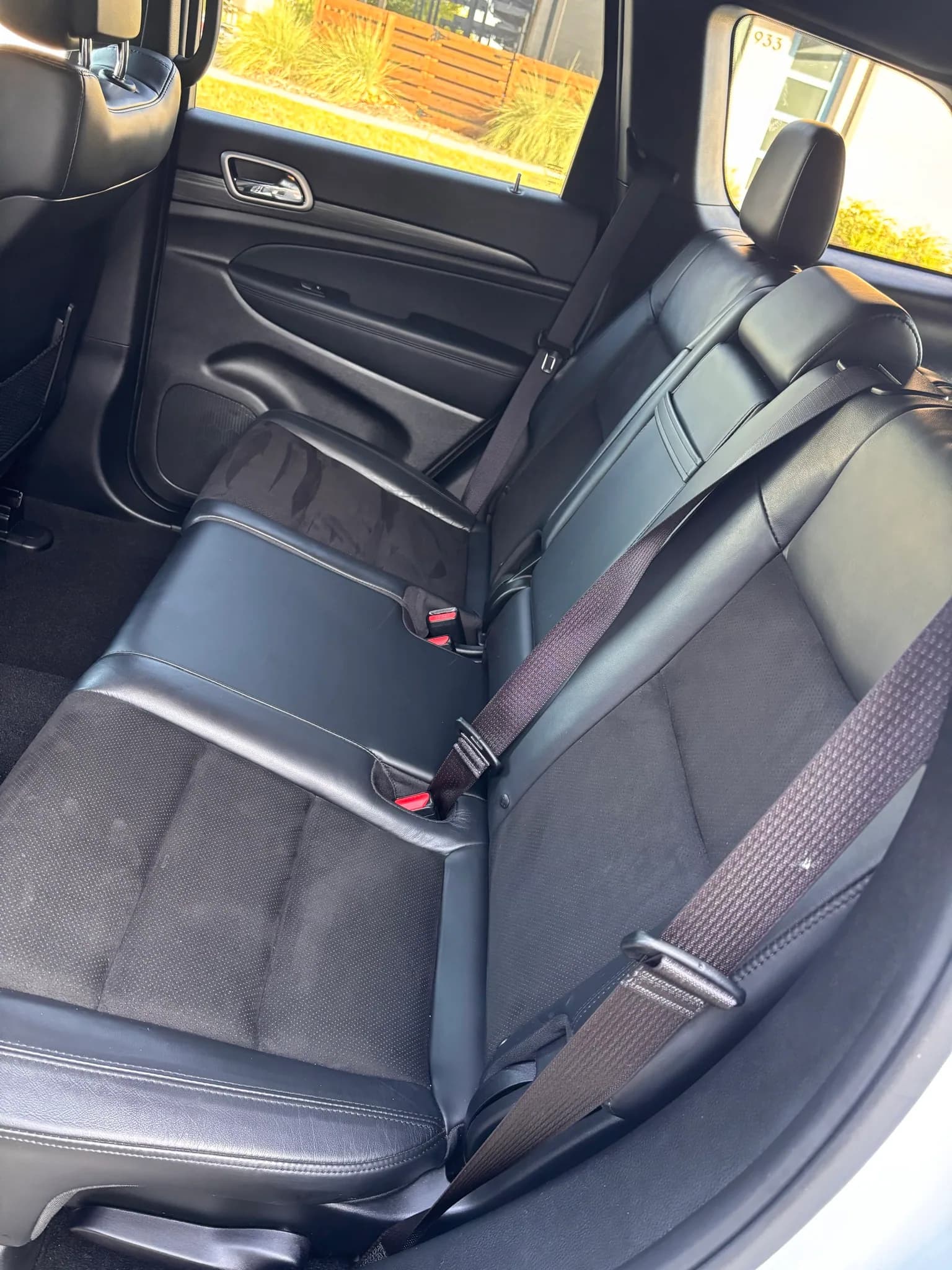
Cleaned rear leather bench seats inside a white Jeep Grand Cherokee.
Second-row leather in a customer Grand Cherokee after cleaning.

The whole cabin, including the parts you avoid

interior detail include leather cleaning and conditioning, steam, and extraction across all three rows. From $149, whatever the vehicle.

Wood and metal trim

Wood trim in modern luxury SUVs is either a lacquered veneer or an open-pore finish. Lacquered handles a damp microfiber and mild interior cleaner; open-pore should see nothing but a damp cloth. Neither wants a dressing, which leaves a plastic-looking sheen on something chosen for its natural finish.

Brushed and knurled metal trim needs wiping with the grain and a brush for the knurling, and nothing abrasive at all.
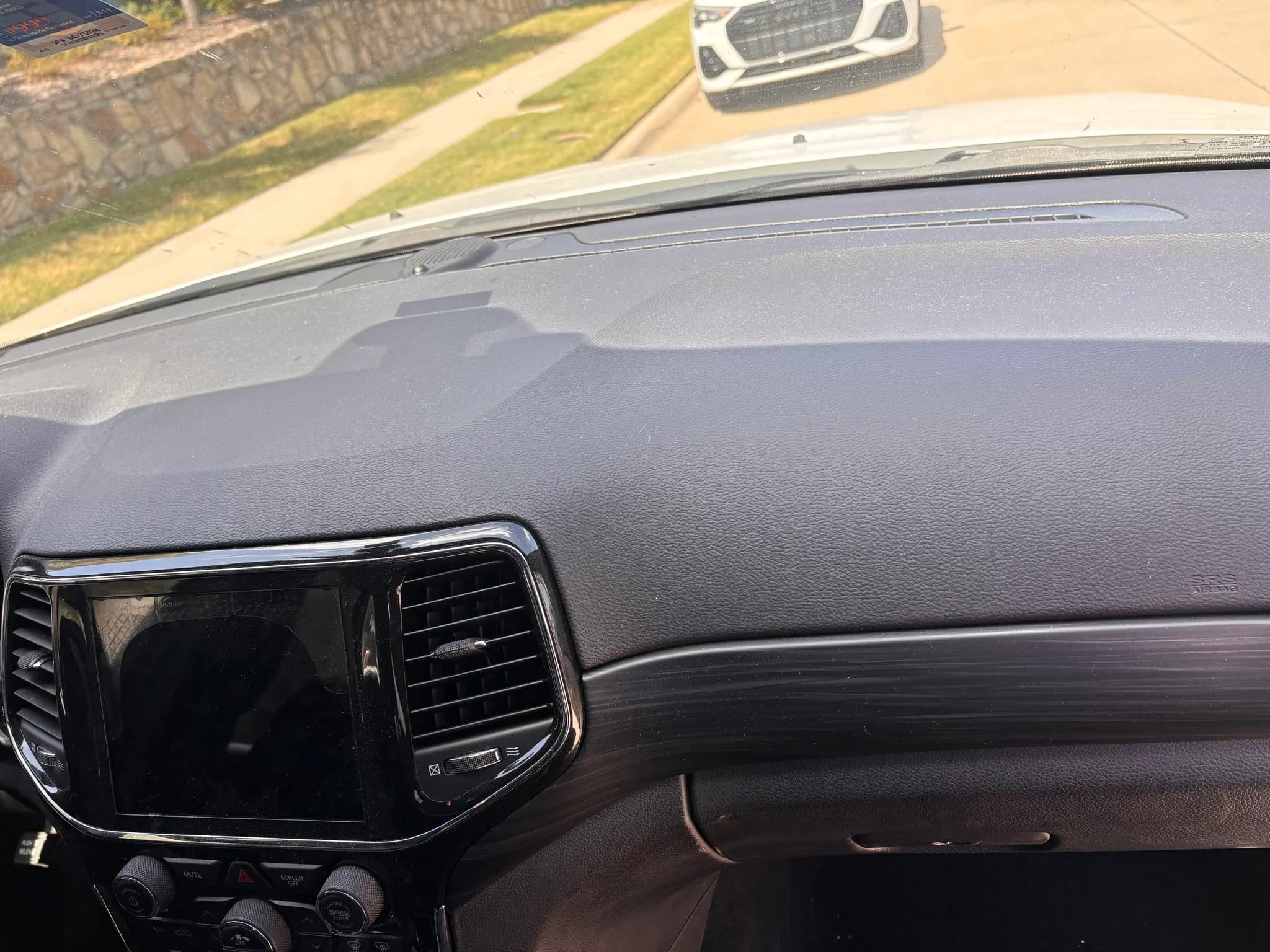
Dashboard, vents and infotainment screen inside a Jeep Grand Cherokee.
Dash, vents, and screen on the same vehicle. Trim and screens want different products and different towels.

Child seats in a premium interior

Large luxury SUVs carry child seats more often than any other premium vehicle, and the damage pattern is predictable: compression marks under the base, scuffing on the seat back from feet, and buckle scratches on the outboard bolster.

A seat protector under the base handles most of it, provided it is a thin one that does not interfere with the restraint's installation. Check the vehicle and restraint instructions, since some manufacturers restrict what can go between the seat and the base.

This is an educational guide written to help DFW drivers budget and decide with confidence. It is not a binding quote. Your price is confirmed up front before any work begins, with no deposit.

Common questions

  • Fold the seats forward, blow the seat rails and seat backs out with compressed air, then vacuum thoroughly before any wet cleaning. Third rows are the hardest area to reach and the most common source of odor in a family SUV.

  • With a damp microfiber. Lacquered veneer also tolerates a mild interior cleaner, but open-pore wood should see nothing else. No dressing belongs on either, since it leaves an artificial sheen on a natural finish.

  • Two to four times a year in Texas, more often than the manual suggests, because a large glass area and long sun exposure dry the coating faster. Focus on the driver's bolster, door tops, and steering wheel, which fail first.

  • They compress and mark it, particularly on the seat base and the outboard bolster where the buckle sits. A thin seat protector prevents most of it, but check both the vehicle and restraint instructions first, since some manufacturers restrict what may be placed underneath.

Get your up-front price in minutes.

See your published starting price, with no deposit and no surprise charges. You pay only after the work is done right.

Your car deserves the Pegazos treatment.

Get an instant quote and book in under two minutes. We text back in minutes.

No deposit · No surprise charges · On-time guarantee