The short answer
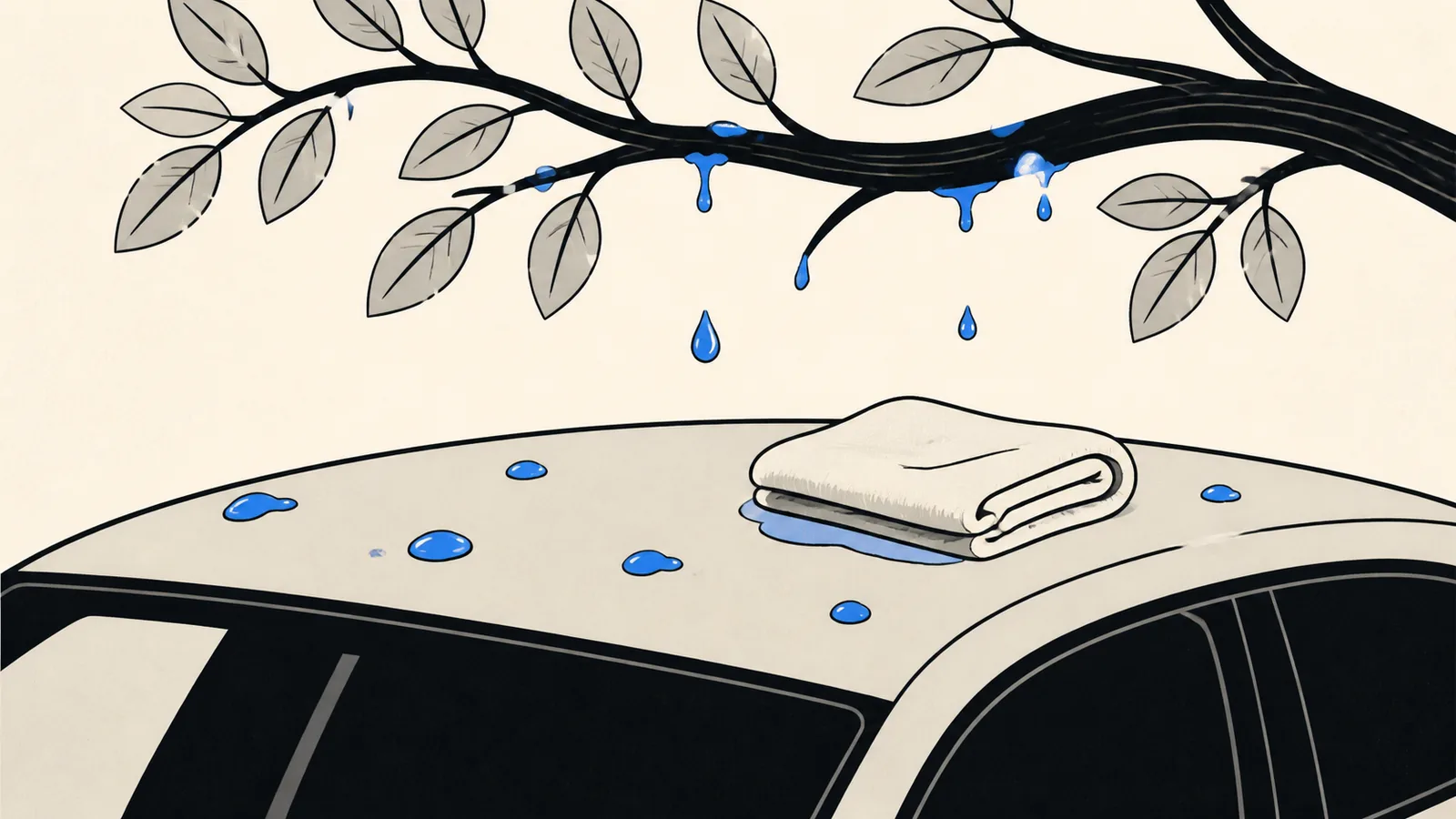
Soak the sap with a dedicated sap or tar remover on a microfiber, give it a minute, and lift it straight up. Never pick it, never scrape it, and never attack it dry. Repeat the soak rather than adding pressure.
Then re-protect the spot, because whatever removed the sap also removed the sealant that was there.
Why sap is worse in summer
Fresh sap is soft and comes off easily. Within a day or two on a hot panel it hardens into a resin that has keyed into the texture of the clear coat, and in the process the acids in some sap etch the surface underneath.
That is why the same drop that would wipe off on a mild morning becomes a permanent ring after a July weekend in a driveway.
The method
- 1Work in the shade on a cool panel.
- 2Wash the area first so you are not dragging grit around when you start.
- 3Apply a dedicated sap or tar remover to a folded microfiber, then hold it against the sap for a full minute.
- 4Lift the softened sap straight up rather than wiping across the panel.
- 5Repeat the soak on any residue rather than escalating pressure.
- 6Wash the area to remove solvent residue, dry it, and re-apply protection.
For sap that has already left a mark
A dull ring after the sap is gone means the clear coat has been etched. Iron decontamination and a clay-bar pass remove light etching, and both are included in the Exterior Detail from $99.
Glass and trim
Sap on glass is easier: the same remover works, and glass tolerates a plastic razor at a low angle if the deposit is heavy, provided the glass is not tinted or coated on that side.
Sap on plastic trim needs more care, because some solvents dull or stain textured plastic. Test somewhere hidden and use the mildest product that shifts it.
The parking trade-off
The shade of a tree is worth less than the sap and bird droppings it delivers. In a Texas summer that is a genuinely close call, and the honest answer is that a covered spot beats both.
If you park under trees regularly, keep protection fresh. Sap on a sealed panel lifts far more easily than sap on bare clear coat.
Sap that has been there for months
Old sap that has hardened and been baked through a summer behaves differently from a fresh drop, and it needs patience rather than force.
- 1Soak repeatedly rather than once. Several one-minute soaks beat a single long scrub every time.
- 2Alternate between a sap remover and a clay pass, which shears off what the solvent softened.
- 3Expect a ring or a dull spot underneath, which is etching rather than remaining sap.
- 4Stop when the deposit is gone. Continuing to work the spot removes clear coat, not the mark.
- 5Re-protect the area, then have the etching assessed if it is still visible in direct sun.
This is an educational guide written to help DFW drivers budget and decide with confidence. It is not a binding quote. Your price is confirmed up front before any work begins, with no deposit.