The short answer
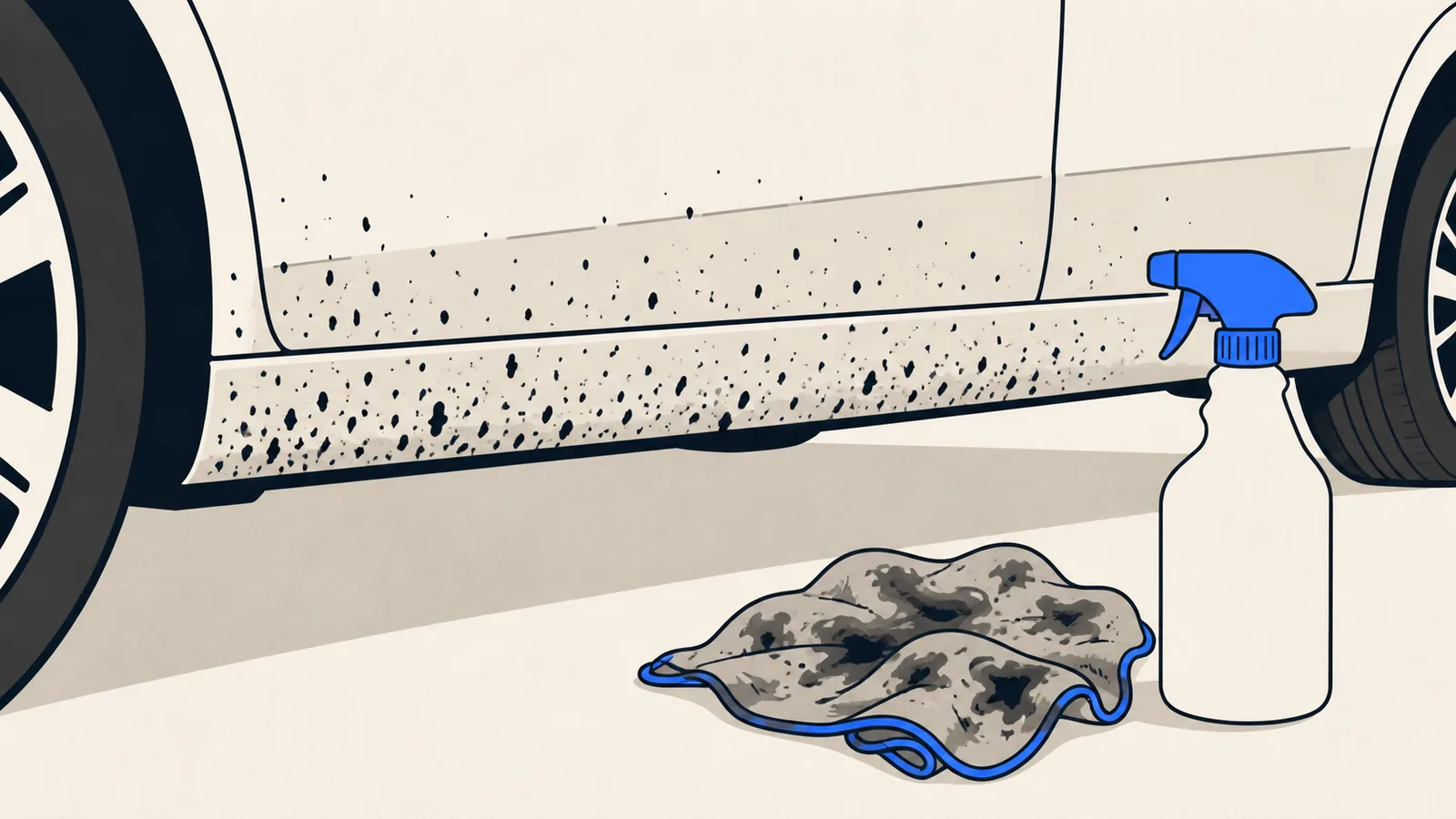
Wash first, then apply a dedicated tar remover to a microfiber, let it dwell for a minute, and lift the softened tar away. Repeat rather than scrubbing. Finish by washing the area again and re-protecting it, because the solvent removes any sealant.
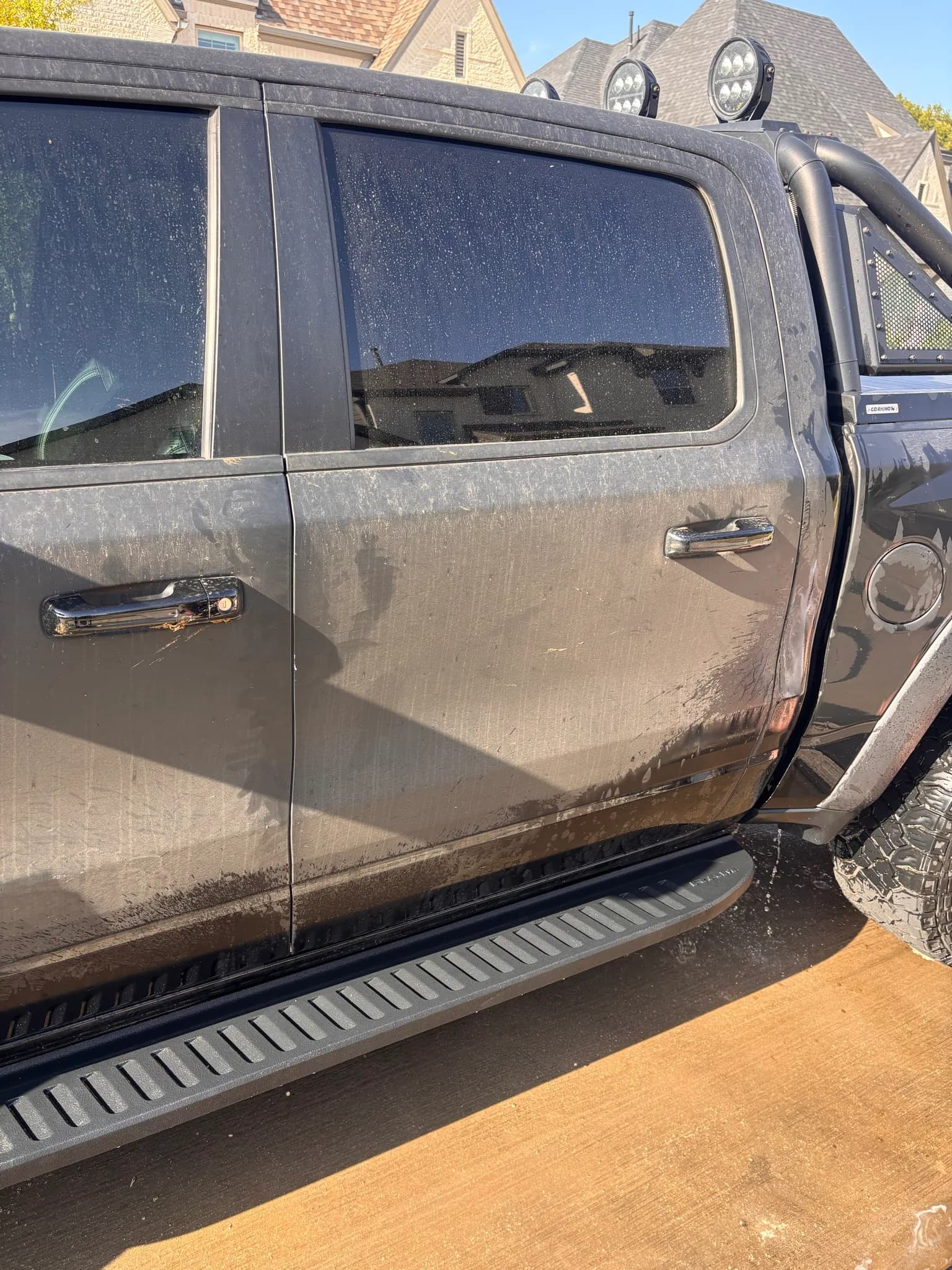
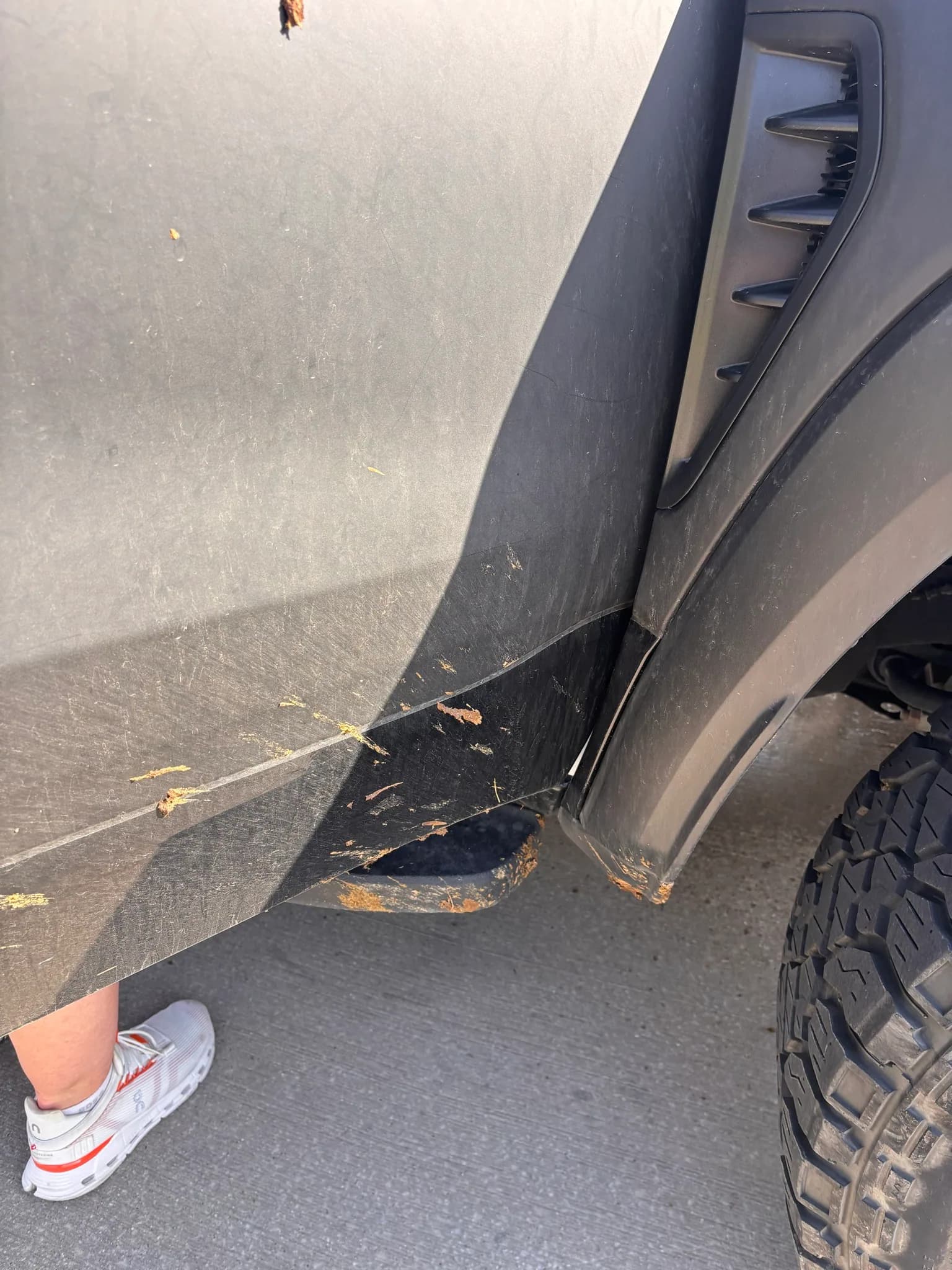
Tar collects on the lower quarter of the car: rockers, behind the wheels, lower doors, and the rear bumper. That is where it should be attacked, and where protection matters most.
Where it comes from
Fresh asphalt work, chip seal, and hot road surfaces in summer all throw softened bitumen up onto the lower panels. In North Texas the worst of it arrives after road resurfacing season and during heat waves when the surface is soft.
The same deposits collect on the wheels, which is why the lower barrels often look worse than the faces.
Safe removal
- 1Wash the panel first so you are not grinding grit into the paint.
- 2Work in the shade on cool paint. Solvent flashing off hot paint leaves marks.
- 3Apply tar remover to a folded microfiber and hold it against the deposit for a minute.
- 4Wipe in one direction with light pressure, refolding to a clean face frequently.
- 5Repeat rather than scrubbing. Clay can help with what remains after the solvent stage.
- 6Wash, dry, and re-apply sealant to the treated area.
It comes off in a decontamination detail
Bug and tar removal plus iron and clay decontamination are included in our exterior detail, from $99. The lower panels are where most of the visible improvement comes from.
Keeping it off
Protection on the lower panels is the whole answer. A sealed rocker releases tar with a soak; a bare one holds it. That is also the reason mud flaps and splash guards are more useful than they look on a car that spends time on fresh asphalt.
Avoid pressure washing tar at close range. It does not dissolve, so all high pressure does is drive grit across the paint at speed.
Where tar hides after you think you are finished
- The inside lip of the wheel arch, where spray collects and nobody looks.
- Behind the mud flaps, which trap what they deflect.
- The lower edge of the rear bumper, which catches everything the rear tires throw.
- The fuel filler surround on the driver's side of many vehicles.
- The wheel faces and barrels, where tar mixes with brake dust into a film that resists both wheel cleaner and tar remover alone.
Protecting the lower panels so it stops sticking
The lower quarter of a car takes the most abuse and gets the least protection, usually because people stop applying sealant where they can comfortably reach.
Sealing the rockers, the lower doors, and the area behind the wheels changes tar from a bonded deposit into something that soaks off. On a car that spends time on fresh asphalt, that single habit removes most of the work this post describes.
This is an educational guide written to help DFW drivers budget and decide with confidence. It is not a binding quote. Your price is confirmed up front before any work begins, with no deposit.