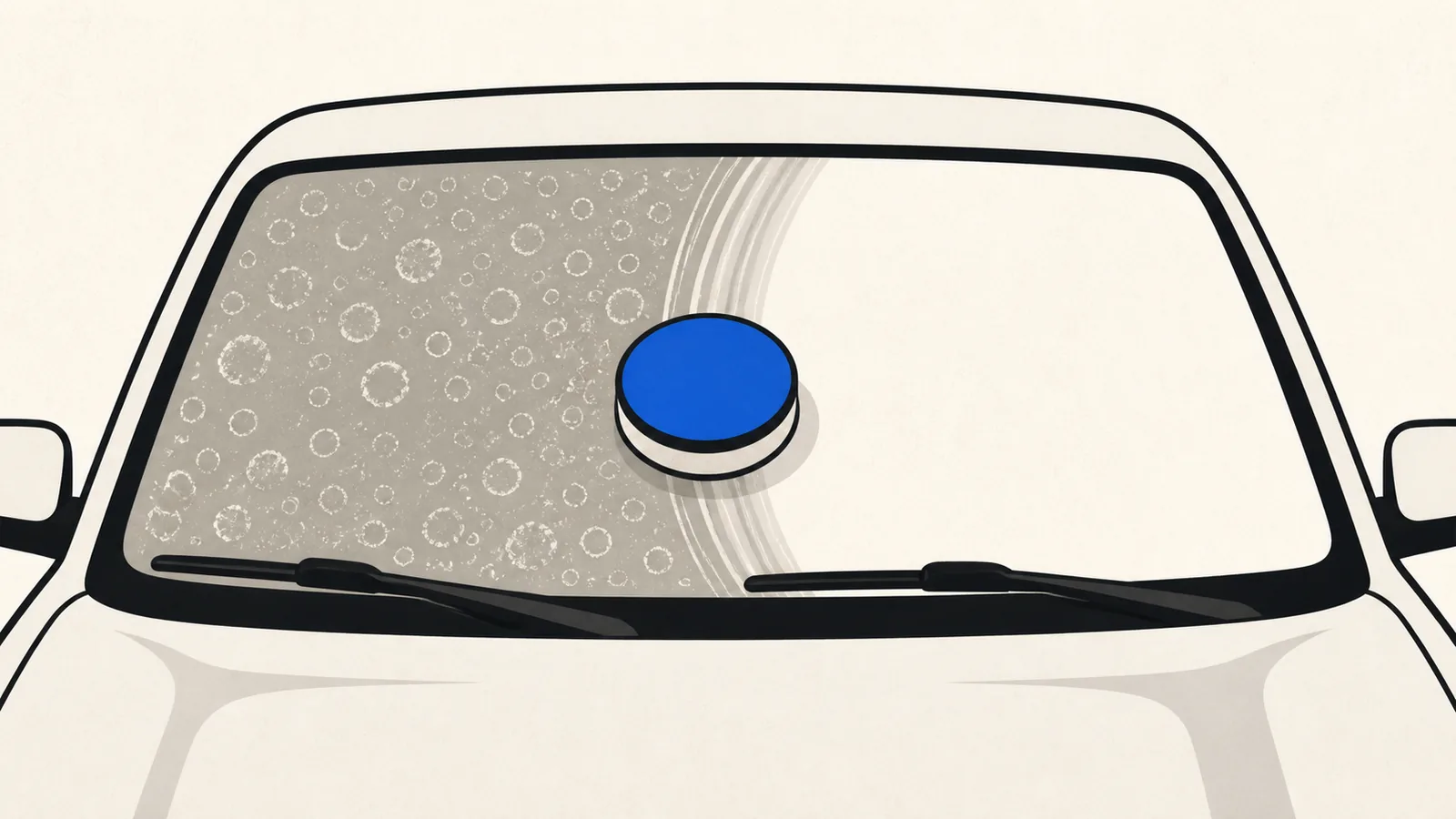
The short answer
Start mild and escalate only as needed: a dedicated water spot remover first, then a mild acidic cleaner, then a machine glass polish with cerium oxide for what remains. Never start with an abrasive, and never use a razor blade on modern coated glass.
Then protect it. A hydrophobic glass coating stops the next round from bonding, which is the only way to stop repeating this job every few months.
Why glass is worse than paint
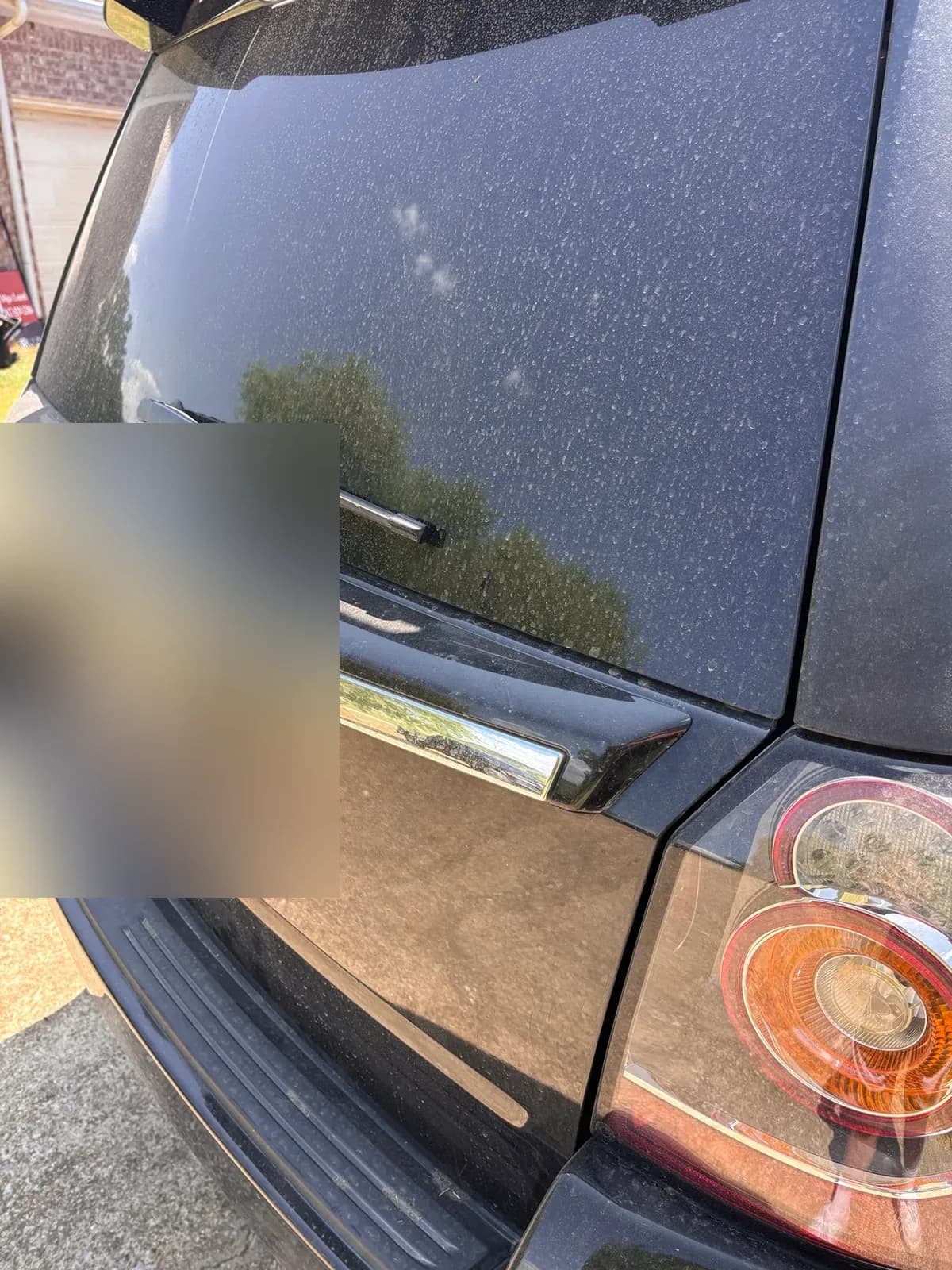
Glass has a microscopically porous surface, and mineral deposits key into it rather than sitting on top the way they do on a sealed paint surface. Left long enough on a hot windshield, the deposit etches into the glass itself, and at that point it is a polishing job rather than a cleaning one.
Sprinkler overspray is the usual cause. A car parked in range of an irrigation system gets a mineral-loaded mist several mornings a week, which is far more aggressive on glass than rain ever is.
The escalation ladder
| Step | What it removes | Risk |
|---|---|---|
| Dedicated water spot remover | Fresh and light deposits | Minimal |
| Mild acidic glass cleaner | Moderate bonded deposits | Keep it off paint and trim |
| Clay bar with lubricant | Bonded surface contamination | Low if properly lubricated |
| Machine glass polish, cerium oxide | Etching in the glass | Slow, and can distort if overdone |
| Razor blade | Not recommended | Scratches coated and tinted glass |
Try these in order
Then stop it happening again
A hydrophobic glass coating at $89 makes water bead and roll off above about 40 mph, so deposits do not sit and bond. It is included with our glass coating service and is the fix that lasts.
What to be careful with
Acidic cleaners on trim and paint. What removes deposits from glass will stain aluminum, etch some plastics, and strip wax, so mask or rinse adjacent surfaces and never let it dry on anything.
Rear glass with a defroster grid, and any tinted window, both of which are damaged by aggressive mechanical work. The grid lines are printed on the inside surface and come off if scrubbed, and tint film scratches easily.
Tinted glass, defroster grids, and rain sensors
The inside of your rear glass carries things that do not survive aggressive cleaning, and they are easy to damage while chasing a spot that is on the outside anyway.
- Defroster grid lines are printed on the inside surface and lift if scrubbed or scraped.
- Window tint is a film on the inside, so ammonia and abrasives damage it rather than the glass.
- Rain and light sensors sit behind a gel pad on the windshield: clean around them, never lever at them.
- Antenna elements are often printed into rear glass alongside the grid lines.
- Aftermarket ceramic tint is still a film, however premium it was, and it scratches like one.
This is an educational guide written to help DFW drivers budget and decide with confidence. It is not a binding quote. Your price is confirmed up front before any work begins, with no deposit.